English
  日本語
日本語  العربية
  Deutsch
  Español
  Français
  한국어
한국어  Português
  Татар теле
  Русский
 A kitchen island can look simple in a rendering: a clean stone slab, a few seats, maybe a waterfall side and a warm wood dining extension. The support question is less visible. Before the countertop is fabricated, kitchen island countertop overhang support should be checked as part of the design, not treated as an installation detail that can be solved later.
The practical support check is not one universal rule. It is a sequence of questions: What will the overhang do? What material is being used? How far does it project? Where does the load travel into the cabinet base? Can support be hidden without blocking knees? Do the countertop and cabinet drawings show the same support positions? When those questions are answered early, the island is easier to build, sit at and maintain.
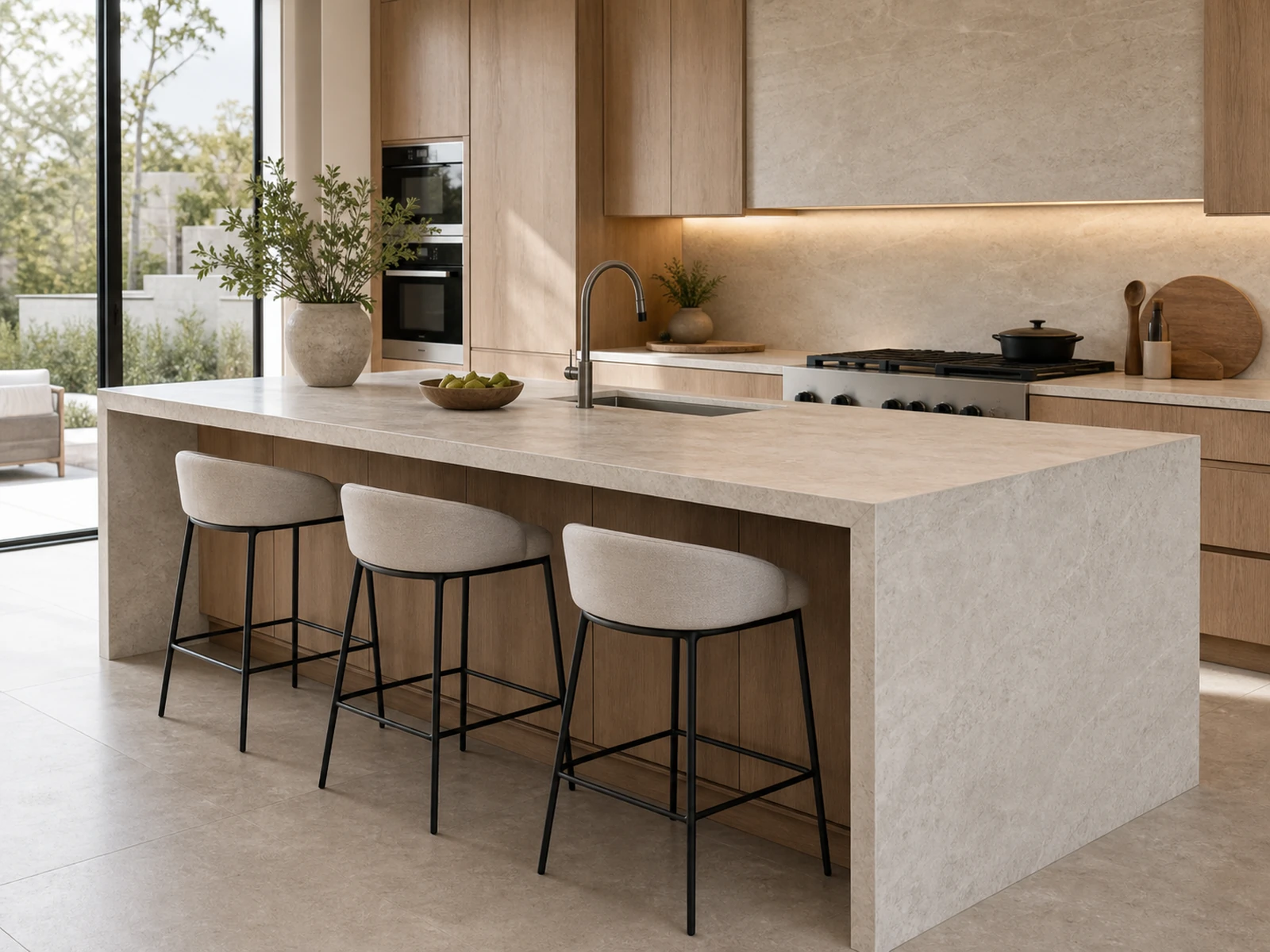
Start With What the Overhang Will Do
The first question is not the stone color or the final edge profile. The first question is what the overhang is expected to do. A small decorative projection around the island is different from a seating overhang where people lean, pull stools in and out, rest their arms, and use the edge every day.
If the overhang is mainly decorative, the support discussion may stay close to the countertop fabricator’s standard edge and installation rules. If it is used for seating, the support plan needs more attention because the overhang becomes part of daily use. People will sit under it, move around it and expect it to feel stable without awkward brackets in the knee space.
Seating overhang is different from a decorative edge
A seating overhang needs to be reviewed as a functional zone. The design team should check how many seats are planned, where the knees go, how stools are stored, and whether the island base provides enough structure below the slab. This is where kitchen island countertop overhang support becomes more than a countertop question. It is also a cabinet-base, layout and comfort question.
For a custom island, the seating plan should be shown on the drawings before production. If the support is added after the island is already built, the result may be a visible bracket where the client expected a clean look, or reduced knee space where the seating was meant to feel comfortable.
Comfort and support must be planned together
Support should not be treated as the opposite of comfort. A well-planned support detail can protect the countertop while preserving the experience of sitting at the island. Concealed brackets, steel plates, reinforced cabinet framing or a carefully placed end panel may all be discussed, depending on the material and project requirements.
The important point is timing. Support decisions should be made before the countertop is measured and fabricated, because bracket positions, cabinet carcass reinforcement and slab details may affect the final drawings.
Check the Countertop Material, Thickness and Edge Detail
Countertop materials do not behave in exactly the same way. Natural stone, quartz, porcelain and engineered stone can differ in weight, brittleness, edge treatment and fabrication requirements. A support detail that is acceptable for one material may not be suitable for another.
This is why a useful support check should include both the material and the thickness. A thick-looking edge may be a built-up edge detail rather than a solid thick slab. A slim porcelain surface may need a different support conversation than a heavier stone top. Even when two islands look similar in photos, the support requirement can be different behind the finished surface.
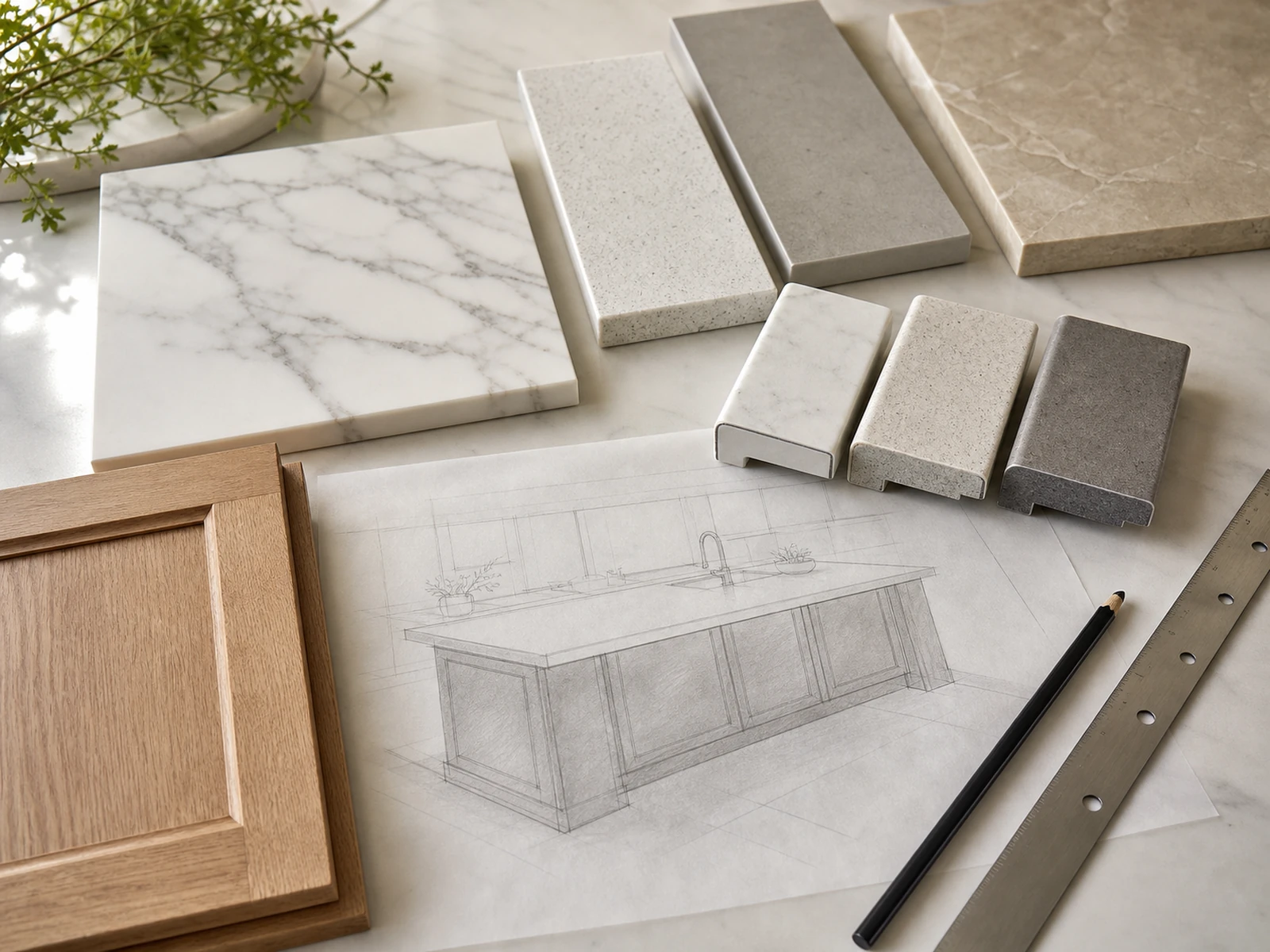
Natural stone, quartz, porcelain and engineered stone behave differently
Natural stone can vary from slab to slab. Quartz and engineered stone have their own manufacturer and fabricator requirements. Porcelain surfaces can offer a refined look, but their thinness and brittleness may require careful support and edge planning. The article should never pretend that one casual rule applies to every material.
For a reliable decision, ask the countertop fabricator what overhang range, support spacing and edge conditions are acceptable for the selected material. The cabinet supplier should then coordinate the base structure and support positions with those requirements.
Why universal overhang rules can be risky
Many homeowners search for a simple number: “How far can a countertop overhang without support?” That question is understandable, but it can become risky if the answer ignores material, thickness, support direction, seating use, cabinet base and installation conditions.
A more useful approach is to ask: What material is selected? What is the overhang depth? Is it used for seating? Does the island have side support, end panels or a waterfall panel? Are hidden brackets or steel plates planned? Do the drawings show the same information? These questions create a safer planning process than relying on a single rule copied from another project.
Follow the Load Path Into the Cabinet Base
An overhang is only as reliable as the path that carries its load. The countertop may rest on a cabinet base, side panels, end panels, brackets, a steel plate or a combination of details. If those pieces do not work together, the finished island can look complete while the support logic remains weak.
The load path should be visible in the project drawings. A plan view may show overhang depth and seating. A section drawing should show how the slab is supported below. A cabinet drawing should show whether the base, side panels or internal framing are designed to receive that support.
Base width, side panels and internal framing
The cabinet base matters because it is usually the structure below the slab. A wider, well-framed base can support more of the countertop than a shallow or lightly built cabinet. Side panels and end panels may also contribute, but they need to be designed for that role rather than assumed to work automatically.
For custom cabinetry, confirm carcass material, panel thickness, reinforcement positions and how the countertop will sit on the base. The support plan should not depend on a beautiful exterior finish alone. The hidden structure is what makes the overhang practical.
When the cabinet base is not enough by itself
Some designs need additional support because the cabinet base does not extend far enough under the overhang, the seating zone is deep, the material is heavy or brittle, or the visual design removes obvious side support. In those cases, the design team should consider concealed brackets, metal plates, internal framing, support legs, side panels or a revised island layout.
This does not mean every overhang needs visible brackets. It means the support method should be selected before production, not improvised on site.
Decide How the Support Will Be Hidden or Exposed
Many clients prefer a clean island with no visible bracket under the seating edge. That look is possible in many projects, but it still needs a support strategy. Hidden support is not the same as no support.
Concealed supports may include metal brackets recessed into the cabinet structure, steel plates under the slab, reinforced internal framing or support integrated into side panels. The correct method depends on the countertop material, overhang depth, cabinet construction and fabricator instructions.
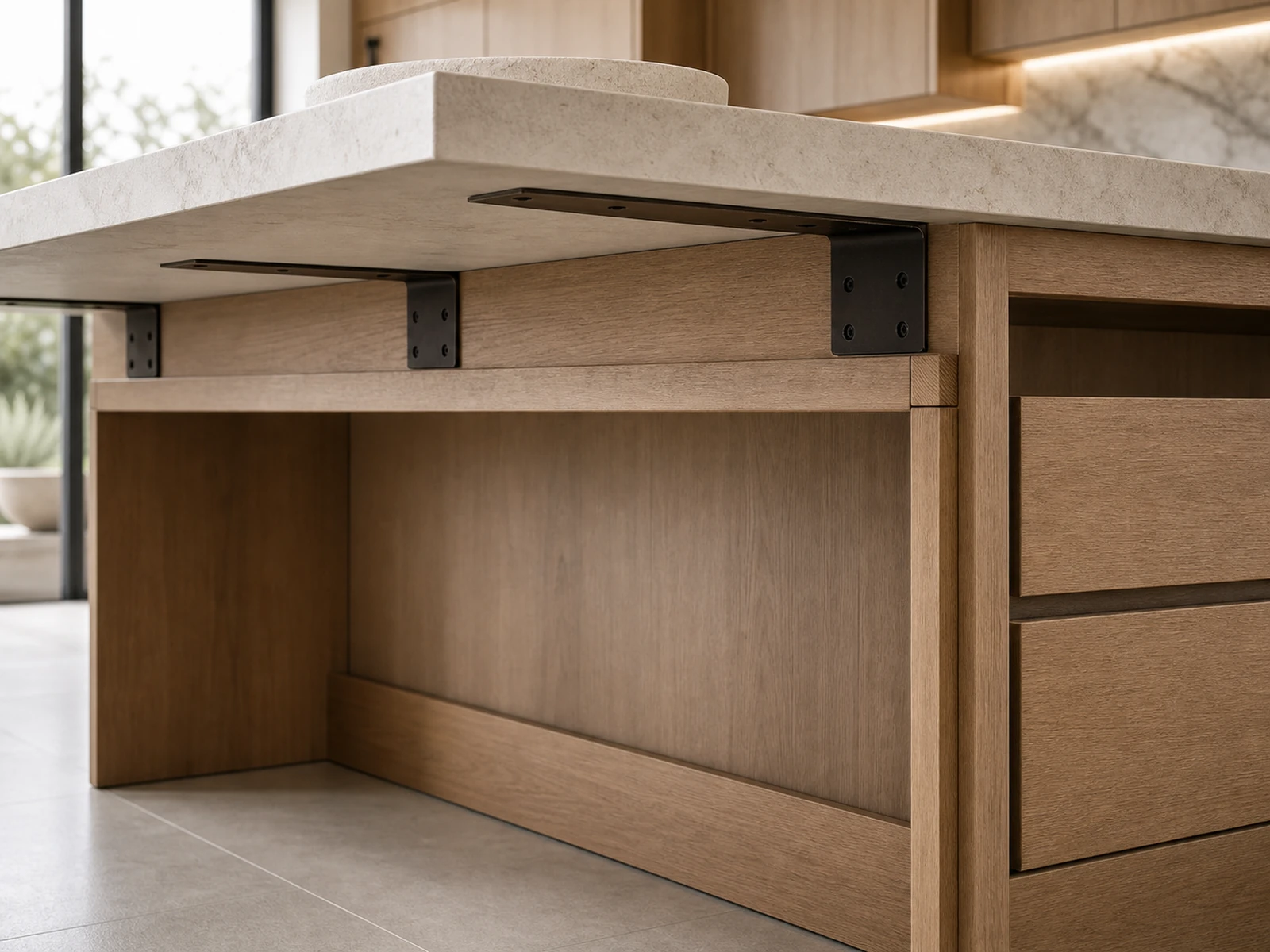
Brackets, steel plates and concealed supports
Visible brackets can be practical, but they may interrupt the clean look of a high-end island. Concealed supports can preserve the design language, but they must be planned into the cabinet and countertop details. A steel plate may need enough bearing area. A bracket may need a structural fixing point. Internal framing may need to be added before the cabinet is finished.
For overseas custom projects, these decisions should be written clearly in the drawings and production notes. The countertop fabricator, cabinet maker and installer should all understand where the support is located and how it will be fixed.
Keep knee space in the support plan
Support that blocks knee space can make island seating uncomfortable. If a bracket projects into the sitting area, the island may still be structurally supported but unpleasant to use. That is why seating drawings and support drawings should be reviewed together.
Before confirming the design, check stool position, knee clearance, bracket location and the finished face of the cabinet. A clean support solution should protect the slab and allow the seating zone to work naturally.
Treat Waterfall Ends and Dining Extensions as Separate Checks
Waterfall ends and dining extensions add another layer to the support check. A waterfall stone side panel can change how the island looks and may contribute to support in some layouts, but it should not be treated as a universal structural answer. The side panel, joint locations, base cabinet and countertop slab still need to be coordinated.
An oak dining extension is a different material and often a different structural condition. It may connect to the stone island, extend from the base, or use its own support. The connection method matters because wood and stone have different thickness, movement, fixing and visual requirements.
What waterfall side panels can and cannot do
A waterfall side panel can visually carry the countertop down to the floor and create a strong architectural line. In some designs, it also helps define the end of the island. But the panel’s role should be confirmed in the drawings. Does it support the slab? Is it mainly a finish? Where are the joints? How is it connected to the base cabinet?
These questions are especially important for a stone island with seating. The side panel may help at one end while the long seating overhang still needs its own support method.
Where an oak dining extension may need its own support
In a design like a waterfall stone kitchen island with an oak dining extension, the wood table portion should be checked separately. The support decision may depend on the extension span, connection detail, expected use and whether the wood element is supported by the island base, legs, panels or concealed structure.
The product example is useful because it shows why the support check should not stop at the stone countertop. Once a dining extension is added, the design team needs to confirm both the stone overhang and the wood extension.
Confirm Drawings Before the Countertop Is Made
The support check is only complete when the drawings agree. A design rendering may show the desired look, but the fabrication drawings should show how the countertop is made, where it overhangs, where it is supported and how it connects to the cabinet base.
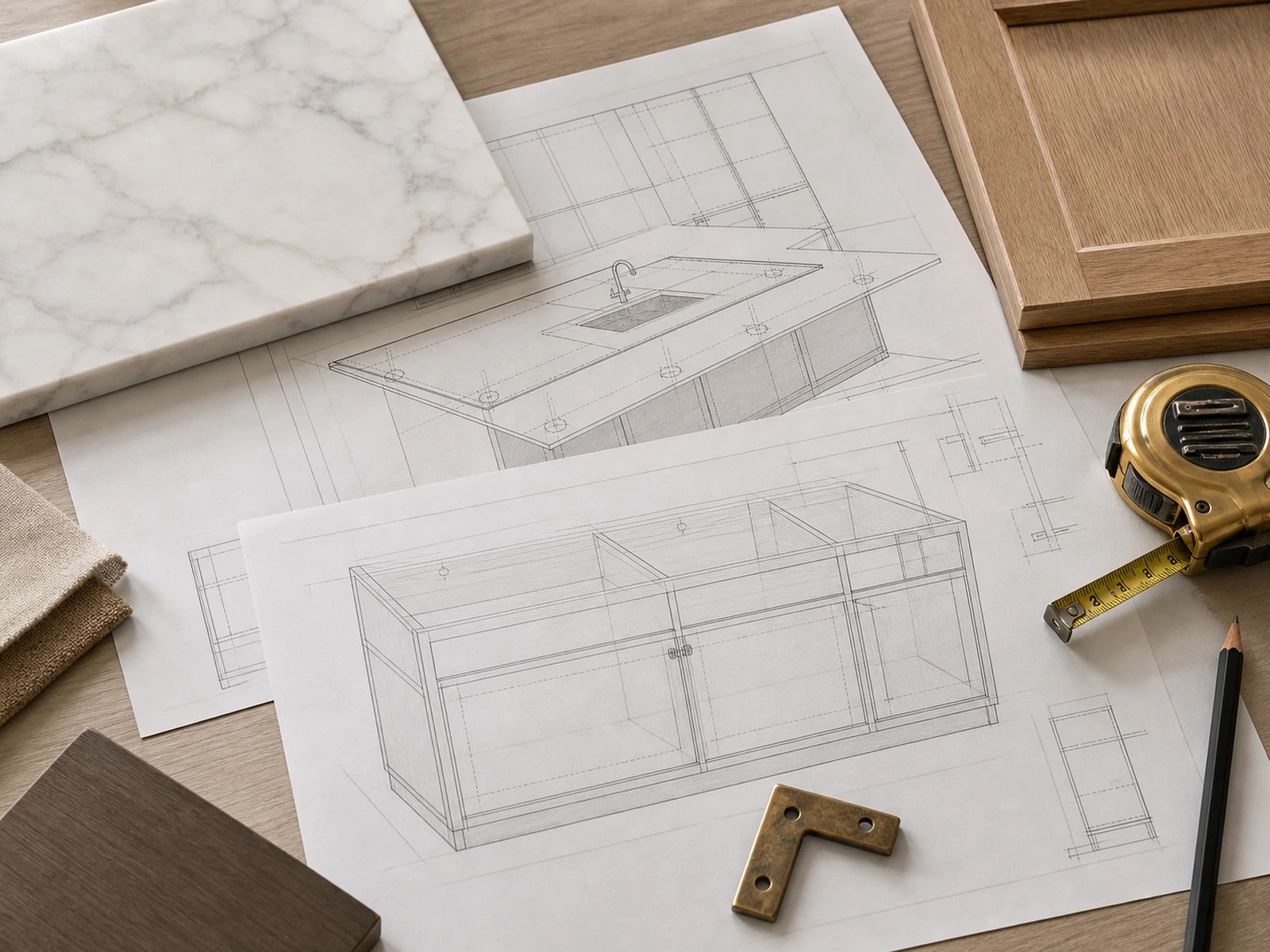
Match countertop shop drawings with cabinet drawings
The countertop shop drawing should be checked against the cabinet drawing. Confirm the overhang depth, slab edge, joint positions, waterfall panel dimensions and support notes. The cabinet drawing should show the base structure, side panels, end panels, support fixing points and any reinforcement needed before the countertop is installed.
If the countertop drawing and cabinet drawing are prepared by different teams, this coordination becomes even more important. A support note on one drawing may be missed if it is not reflected in the other.
Confirm support positions and installation sequence
Installation sequence matters. Some concealed supports must be fixed before the countertop is placed. Some brackets may need access from inside the cabinet. Some waterfall side panels may affect when the slab, base and side pieces can be installed.
Before production, ask for a clear confirmation of support positions, installation order and responsibility. This does not replace local engineering or fabricator approval, but it helps the custom cabinetry plan and countertop plan work together.
Frequently Asked Questions
When does a kitchen island countertop overhang need support?
It may need support when the overhang is deep, used for seating, made from a heavy or brittle material, not fully carried by the cabinet base, or not confirmed in the countertop and cabinet drawings. The final decision should be checked with the countertop fabricator and project drawings.
Can kitchen island supports be hidden?
Yes, in many projects support can be planned with concealed brackets, steel plates, reinforced cabinet framing or side-panel details. The support still needs a proper fixing point and should be coordinated before fabrication.
Does a waterfall kitchen island still need an overhang support check?
Yes. A waterfall side panel may help define or support part of the island, but it does not automatically solve every overhang condition. The slab, side panel, joints, cabinet base and seating edge should still be reviewed.
Does an oak dining extension need separate support?
Often it should be checked separately. A wood dining extension has a different span, connection method and use pattern from the stone countertop. It may need support from the island base, legs, panels or concealed structure.
What drawings should be reviewed before fabrication?
Review the countertop shop drawing, cabinet base drawing, support positions, waterfall panel details, joint locations and installation sequence. The goal is to make sure the countertop fabricator, cabinet maker and installer are working from the same support plan.
Use the Support Check Before You Approve the Island
A practical kitchen island support check does not need to make the design complicated. It simply puts the right questions in the right order: what the overhang will do, what material is used, where the load travels, how the support is fixed, whether seating remains comfortable and whether the drawings match.
Before approving a custom island, prepare the countertop material choice, seating plan, overhang depth, cabinet drawings and any waterfall or dining-extension details. Sunrise Furnishing can review these items as part of a custom cabinetry discussion and help coordinate the island design with the production drawings.