English
  日本語
日本語  العربية
  Deutsch
  Español
  Français
  한국어
한국어  Português
  Татар теле
  Русский
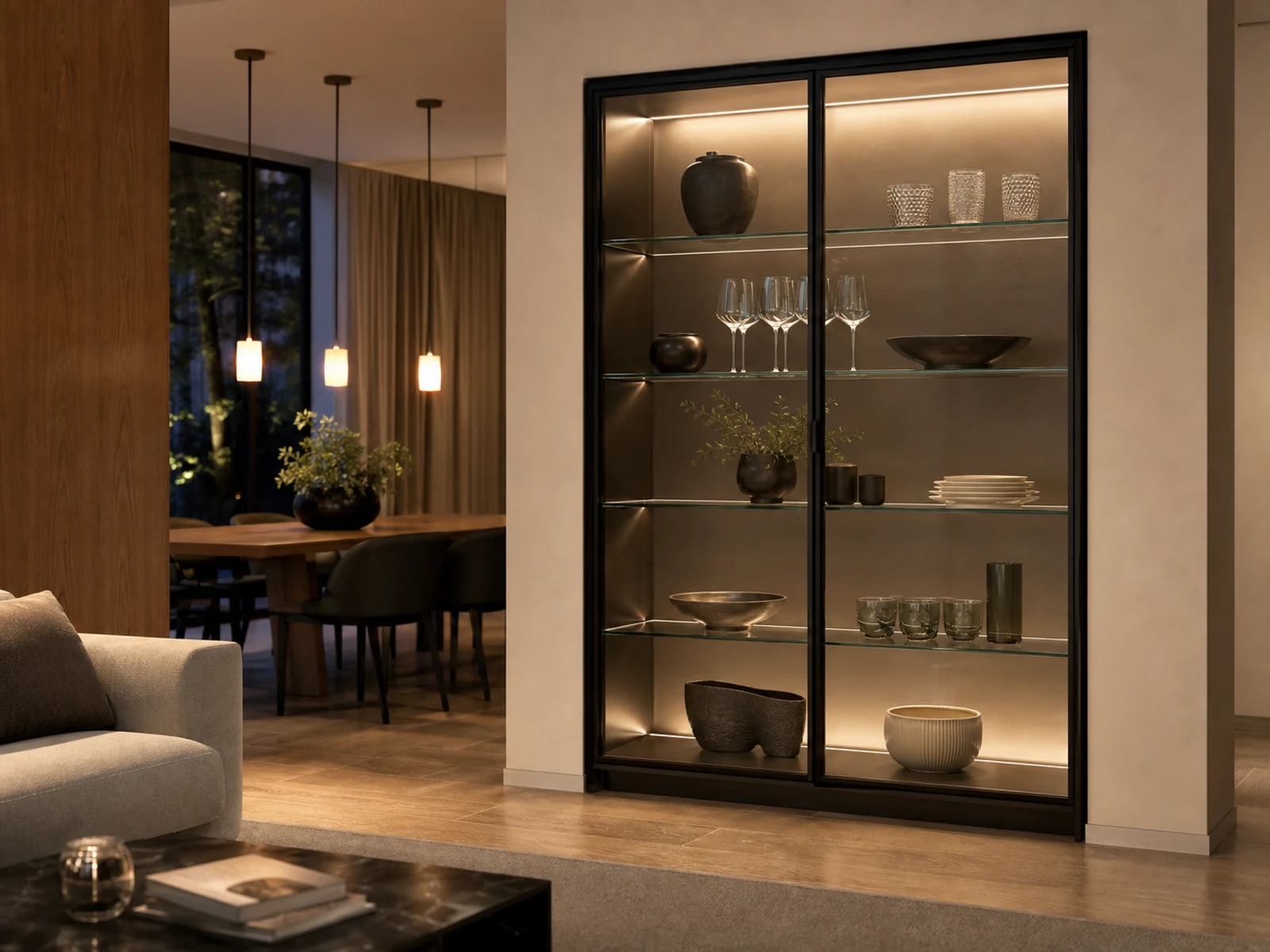
 A dust resistant glass display cabinet should not be understood as an airtight box. In a real home, showroom-style dining area or living room display, the goal is more practical: reduce common dust entry points, keep the doors aligned, make shelves easier to wipe and avoid hidden areas that become difficult to clean later.
That difference matters before you approve a design. A cabinet can have clear glass, elegant frames and beautiful lighting, but if the door gaps, seals, hinges, shelf spacing and lighting channels are not considered, dust will still find its way into the display zone. The right question is not “Can this cabinet block every particle?” It is “Has the cabinet been designed to control dust in a realistic daily-use setting?”
What a Dust Resistant Glass Display Cabinet Can and Cannot Do
A dust resistant glass display cabinet can be planned to slow dust entry and make cleaning easier. It can use more stable doors, better closing accuracy, suitable seals and a shelf layout that does not trap dust behind crowded objects. It can also keep lighting strips, wiring channels and transformer areas accessible enough for maintenance.
What it should not do is promise full airtight performance. A residential display cabinet is still furniture. It needs doors that open smoothly, hardware that can be adjusted, lighting that can be serviced and shelves that can be used comfortably. If every gap is treated as a problem to eliminate completely, the cabinet may become difficult to operate, maintain or produce consistently.
A practical definition is better: dust resistance means the cabinet is designed to reduce everyday dust entry and avoid making cleaning harder than necessary. That definition is more useful for homeowners, designers and custom cabinet buyers because it leads to details that can actually be checked in drawings and samples.
It can reduce common dust entry points
Dust usually enters through small, ordinary places: the door perimeter, the meeting point between two doors, hinge-side movement, uneven closing and open grooves around lighting or wiring. Better planning can reduce those entry points without pretending the cabinet is sealed like laboratory equipment.
It should still allow practical use and maintenance
A cabinet that is hard to open, hard to adjust or hard to clean will not feel successful in daily use. Dust-conscious planning should support the way the display is used: how often doors open, how objects are arranged, how lighting is maintained and how easily a cloth can reach the back corners.
Where Dust Usually Enters a Glass Display Cabinet
Most dust problems do not come from the glass panel itself. They come from the way the cabinet is built around the glass. A clean sheet of glass can still sit inside a door system with uneven gaps, slight movement or hard-to-reach channels.
Door perimeter gaps are the first place to check. A small, consistent gap is normal, but wide or uneven gaps can allow more dust to enter when air moves through the room. Double-door cabinets also need attention at the meeting point between doors. If one door sits slightly forward or the closing line is not stable, the gap may look minor but still affect daily dust control.
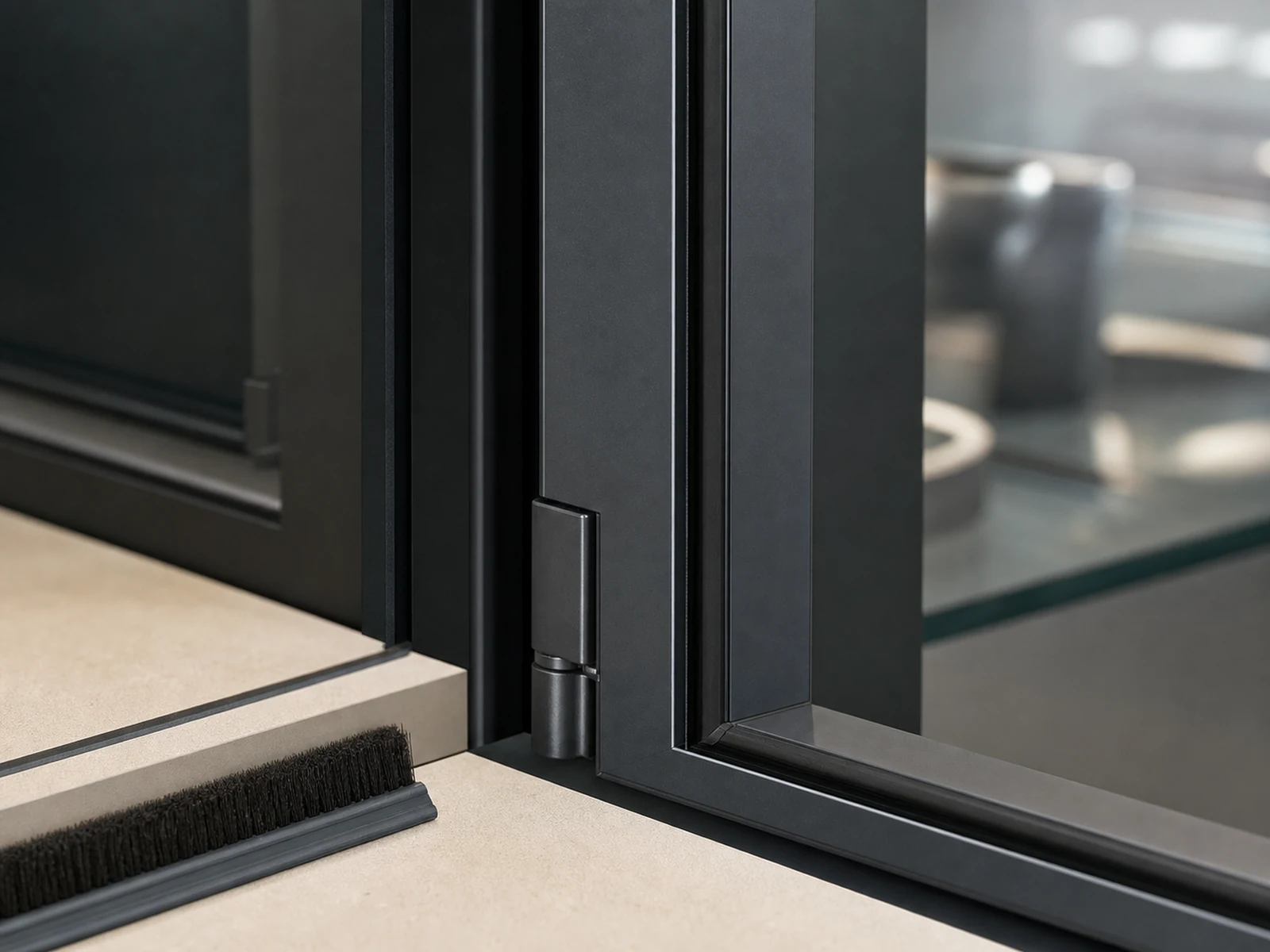
Hinges and hardware matter because they influence closing accuracy. If the door drops, twists or shifts after installation, the original gap plan may no longer hold. This is one reason framed glass doors can be useful in some custom display cabinets: the frame can help stabilize the door panel and support more predictable alignment.
Lighting areas deserve the same attention. LED strips, wiring grooves and transformer access points can create dust pockets if they are hidden but not serviceable. A lighting channel that looks clean on the first day may become difficult to wipe if it is too narrow, too deep or blocked by display items.
The Cabinet Details That Make Dust Resistance More Credible
The phrase dust resistant becomes more credible when it is tied to visible construction decisions. For a custom glass display cabinet, those decisions usually begin with the door system.
Stable framed doors can help reduce door movement. A slim aluminum frame, for example, may give the glass panel a cleaner edge, better visual definition and more support than a very large frameless panel. This does not automatically make the cabinet airtight, but it can help the door close more predictably when the design, hinge choice and installation are handled well.
Soft seals or brush strips can also help, especially at door meeting lines or perimeter areas where a small buffer is useful. The important point is fit. A seal that is too thick may affect closing comfort. A seal that is poorly placed may look messy or wear quickly. The best option depends on the door type, frame profile, hardware and expected use.
Hardware adjustment should be part of the conversation. Hinges, catches, magnetic closures or other closing hardware need to support steady alignment over time. If the buyer only reviews the color of the frame and the glass type, a key part of dust resistance is missing from the decision.
This is also where a product such as a slim black aluminum-frame glass display cabinet can become relevant. The value is not just the black frame as a style detail. The frame can also be part of a more controlled door structure when it is matched with suitable hardware, shelf planning and production drawings.
Dust Resistance Also Depends on Cleaning Access
Even a well-built cabinet still needs cleaning. That is why a dust resistant design should also be an easy-clean design.
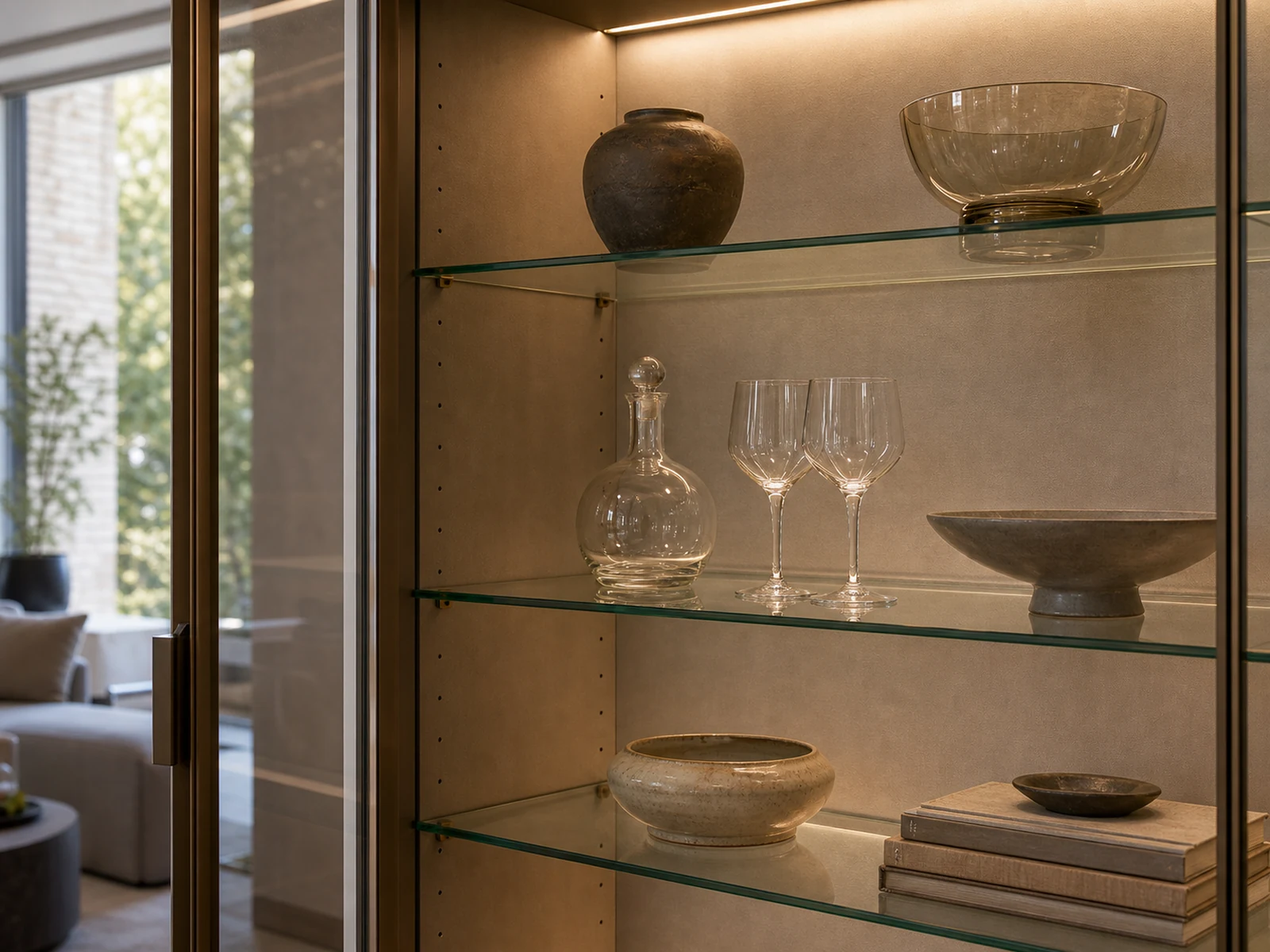
Shelf spacing is one of the most overlooked details. If shelves are too close together, the display may look full, but cleaning becomes awkward. If decorative objects are packed tightly, dust collects around bases, corners and back panels. A slightly more open shelf plan often looks more refined and is easier to maintain.
Adjustable shelves can help when the cabinet is used for different objects over time. A collection of glassware, ceramics, models or books may need different spacing. When the shelves can be adjusted, the owner is less likely to overcrowd the display just to make everything fit.
Lighting access is another maintenance detail. LED strips should enhance the display without creating narrow grooves that cannot be wiped. Wiring and transformer access should be planned so that future inspection does not require disturbing the whole cabinet. A beautiful display cabinet should not hide every service point so completely that maintenance becomes a problem.
What to Confirm Before You Approve the Cabinet
Before production, ask for the dust-control details to be visible in the discussion, not hidden behind a general promise. You do not need every technical term, but you should know what will control the main gaps and how the cabinet can be cleaned later.
| Planning Point | What to Confirm | Why It Matters |
|---|---|---|
| Door gaps | Whether the gaps are planned to be consistent around the door perimeter | Uneven gaps can allow more dust entry and make the cabinet look less precise |
| Door structure | Whether the doors are framed, frameless or partly framed | Door structure affects stability, alignment and the possible use of seals |
| Hardware | Hinge quality, adjustment access and closing method | Hardware helps keep the door position stable after installation |
| Seals or brush strips | Where they are used and how they affect closing comfort | Seals can reduce dust entry, but poor fit can create use problems |
| Shelf layout | Shelf spacing, object height and display density | Crowded shelves are harder to wipe and keep visually clean |
| Lighting access | LED channel position, wiring route and transformer access | Hidden lighting areas can become dust traps if access is not planned |
| Cleaning clearance | Whether hands and cleaning tools can reach corners and back panels | A cabinet that cannot be cleaned easily will not feel dust resistant in real use |
For custom projects, these details should be discussed before the shop drawings are approved. Drawings do not need to show every dust particle, but they should show the door structure, frame relationship, shelf positions and lighting access clearly enough for the buyer and cabinet maker to share the same expectations.

Frequently Asked Questions
Can a glass display cabinet be dust resistant?
Yes, but it should be understood realistically. A glass display cabinet can reduce dust entry through better door gaps, framed-door stability, suitable seals, hardware adjustment and easier cleaning access. It should not be described as fully airtight unless it is specifically engineered and tested for that purpose.
Are framed glass doors better for dust control?
Often they can help because a frame may improve door stability and closing accuracy. However, the result still depends on the frame profile, hinge quality, installation and whether the gaps and seals are planned correctly.
Do seals make a glass display cabinet dustproof?
Seals can help reduce dust entry, but they do not automatically make the cabinet dustproof. The seal must fit the door structure and should not make the door hard to close or maintain.
Does shelf layout affect dust resistance?
Yes. Shelf spacing and display density affect how easily the cabinet can be cleaned. Overcrowded shelves make dust more visible and harder to remove, even when the door structure is well planned.
What should I ask a cabinet maker before ordering?
Ask about door gaps, frame structure, hinge adjustment, seal options, shelf spacing, lighting access and cleaning clearance. If the cabinet includes LED lighting, also ask how the wiring and transformer can be inspected later.
Final Planning Notes
A dust resistant glass display cabinet is not defined by one material or one accessory. It is the result of several decisions working together: stable doors, controlled gaps, suitable seals, practical shelves, serviceable lighting and enough room to clean the display area.
If you are planning a custom glass display cabinet, review those details before production rather than after installation. Sunrise Furnishing can help translate display goals, frame preferences, lighting needs and maintenance expectations into cabinet drawings that are more realistic for daily use.