 English
  日本語
日本語  العربية
  Deutsch
  Español
  Français
  한국어
한국어  Português
  Татар теле
  Русский
 A quotation may describe an outdoor cabinet in three words: powder-coated aluminum. That is a useful material direction, but it is not yet a cabinet specification. When a project team is comparing powder coated aluminum cabinets for outdoor kitchens, the same phrase can sit above very different cabinet constructions, surface processes, hardware schedules, drainage details, and installation responsibilities.
The practical question is therefore not simply, “Is powder-coated aluminum suitable outdoors?” It is, “What exactly is being supplied for this site, this layout, these appliances, and this pattern of use?” A useful specification sheet connects the finish to the cabinet assembly, the environment, the moving components, and the documents that must be approved before production.
For a focused product example, the powder-coated aluminum outdoor kitchen drawer cabinet brings those questions together around the coating, fabricated edges, slides, fasteners, incidental water, countertop interface and site exposure of one working module.
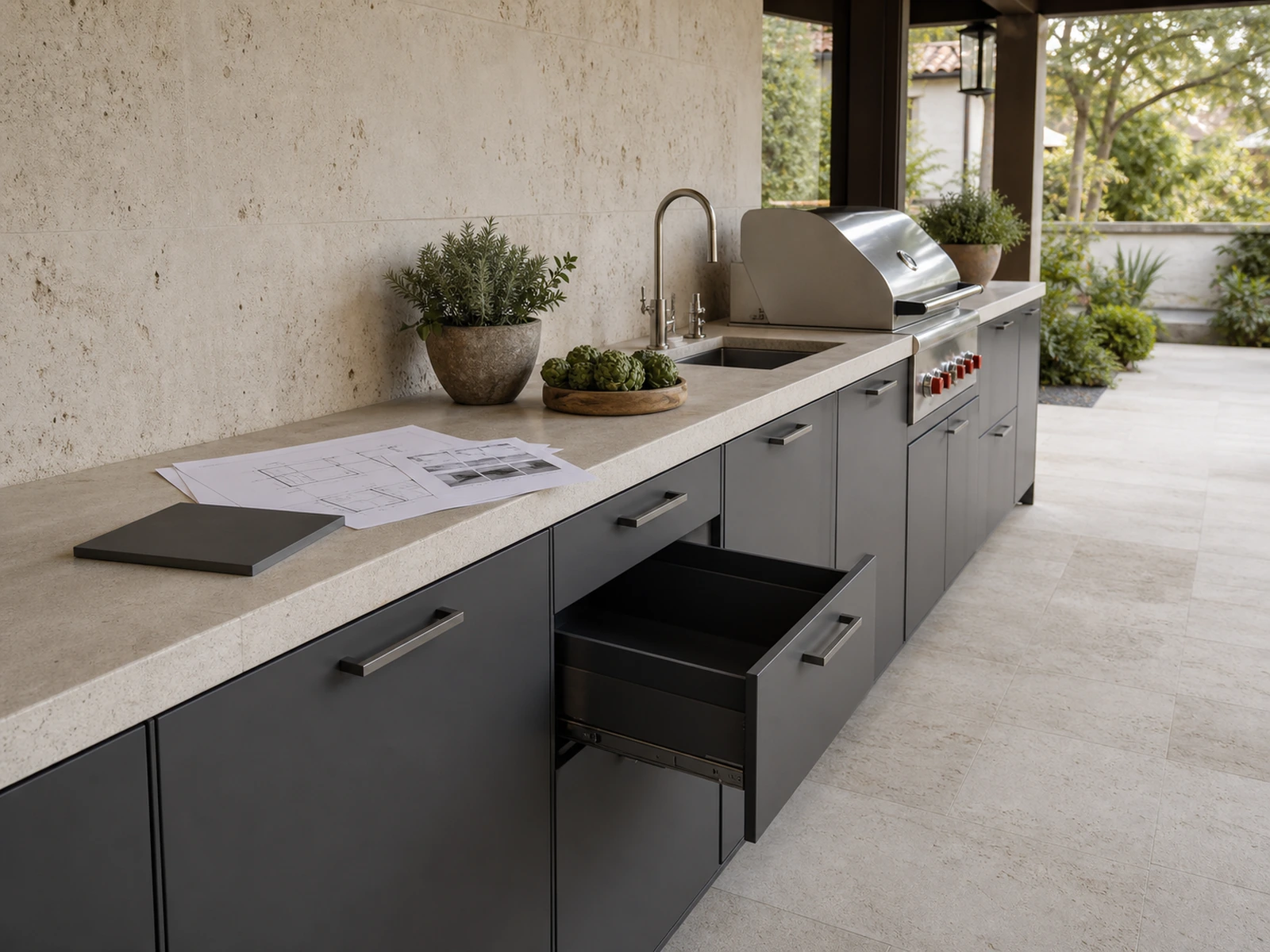
Quick answer: A complete outdoor aluminum cabinet specification should define seven connected areas: project exposure and use, cabinet assembly, surface system, hardware and fasteners, water and ventilation, heat and appliance coordination, and installation/service documentation. A color sample answers only one part of that list.
Why One Material Line Cannot Describe an Outdoor Cabinet
The phrase “powder-coated aluminum” tells the reader that aluminum and a powder-applied finish are intended. It does not, by itself, identify how the cabinet carcass is built, how panels or profiles are joined, what happens at edges and penetrations, which fasteners are used, or how drawers and hinges are specified.
It also does not describe the site. A cabinet under a deep roof on a ventilated terrace does not receive the same exposure as one beside an uncovered pool, near a coastline, or directly adjacent to a grill and sink. Those conditions do not automatically make one proposal acceptable or unacceptable. They change the questions the project team must ask.
A finish sample answers appearance questions
A representative sample is valuable for approving color, gloss, texture, and the way a finish looks under the project lighting. It may also help the team discuss visible edges or joints. However, a flat sample cannot show drawer-slide selection, the route for incidental water, the relationship to the floor, or the service space around an appliance.
This distinction should be recorded clearly: visual approval confirms the agreed appearance of the submitted sample; technical confirmation comes from the written specification, schedules, drawings, and supplier responses.
The specification must connect product, site, and use
The cabinet description becomes useful when it connects three things:
- Product: what the cabinet, finish, hardware, and accessories actually include.
- Site: where the cabinet will be installed and what it will be exposed to.
- Use: how water, heat, food preparation, cleaning, storage, and servicing will affect the layout.
That connection is the foundation for specifying powder coated aluminum cabinets for outdoor kitchens without relying on vague performance language.
Begin with an Exposure and Use Brief
Before discussing a coating or hardware option, prepare a short exposure and use brief. It does not need to predict every weather event. It needs to describe the conditions that materially affect design coordination and supplier questions.
Record the installation position
State whether the kitchen is covered, semi-exposed, or fully open to the weather. Note the direction of prevailing rain if known, proximity to a pool or coast, the amount of direct sun, and whether sprinklers or routine hose cleaning may wet the cabinetry. Record the floor type, drainage context, and any raised base, plinth, or support condition shown in the design.
Country labels are not precise enough. The USA, Australia, and the UAE each contain varied microclimates and building conditions. A useful brief describes the actual installation rather than treating a national market as one uniform exposure category.
Separate different sources of water, salt, sun, and heat
Rain, cleaning water, sink splashes, airborne salt, strong sunlight, and appliance heat are separate inputs. They may overlap, but they do not act on the cabinet in the same way. The specification should therefore avoid a single statement such as “suitable for outdoor use” when the project requires more specific answers.
For example, the team may need to ask how a drawer area is detailed where cleaning water can reach the base, how less-visible edges are finished, or how the cabinet layout respects the appliance manufacturer’s installation and ventilation information. The answer must come from the proposed system and drawings, not from the material name alone.
Include utilities and future service access
Mark sinks, taps, drains, grills, refrigeration, electrical points, gas or other services, and access panels on the layout. Identify which components may need cleaning, adjustment, removal, or replacement later. A visually continuous cabinet run can still require deliberate breaks, removable parts, ventilation openings, or reachable connections.
Define the Aluminum Cabinet Assembly Before the Finish
The surface finish should not be used to hide an incomplete construction description. The specification needs a plain-language account of the cabinet carcass and its main components. Depending on the supplier’s system, that may involve panels, folded components, extrusions, frames, or a combination. The article cannot assume which system is being offered; the quotation and drawings should state it.
Ask the supplier to identify the proposed aluminum specification, component build-up, joining approach, and any areas where cut edges, penetrations, or interfaces require attention. If thicknesses, alloy designations, or fabrication methods matter to the project, they should appear in the submitted documents rather than being inferred from a showroom sample.
Show joints, edges, interfaces, and fasteners
Elevation drawings explain the visible composition, but details and sections explain how the cabinet is assembled. Review corners, door and drawer openings, countertop interfaces, service penetrations, the cabinet base, and connections to adjoining materials.
Fasteners are part of this discussion. Their material, finish, location, and exposure should be listed in a hardware or component schedule when relevant. Where different metals meet, the project team should ask the supplier to describe the intended interface and protection method for the actual system. The correct answer is project- and product-specific; it should not be replaced by a universal claim.
Specify Pretreatment and Powder Coating as One Surface System
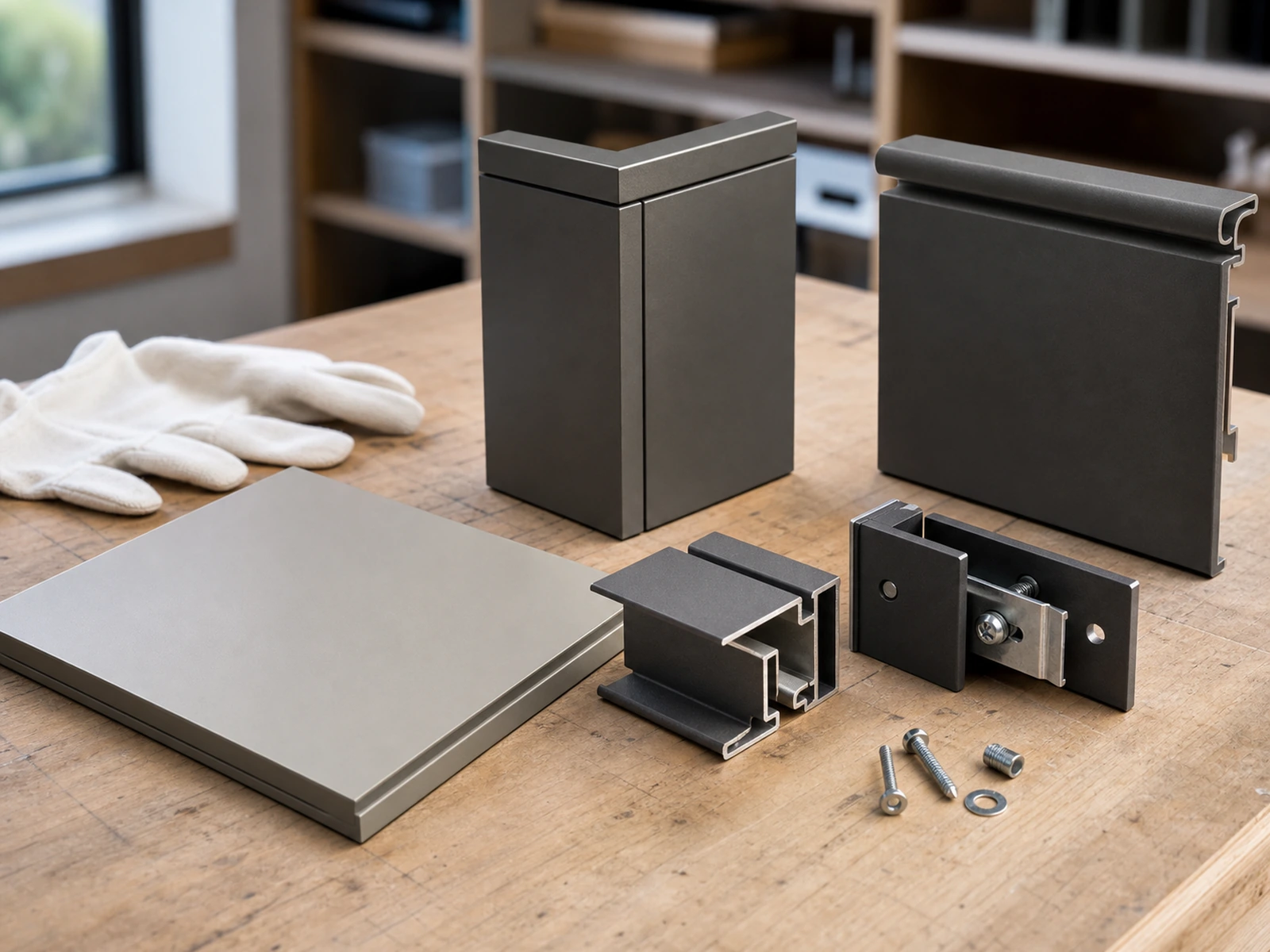
Powder coating should be documented as a surface system, not reduced to a color name. The system begins before the final powder layer: the substrate condition, preparation sequence, coating application, curing, handling, and fabrication sequence can all affect the finished component. The exact process must come from the supplier’s confirmed specification.
For design approval, record the selected color reference, gloss level or appearance, texture, and acceptable sample. If the cabinet includes different component geometries, a representative fabricated sample can reveal more than a flat swatch. Edges, folds, joints, and the relationship between adjacent parts may change how a finish appears.
Technical review should remain separate. Ask what pretreatment and coating information the supplier can provide for the proposed project and exposure. Do not convert the absence of a visible defect on one sample into a claim about all climates or a guaranteed service life. Likewise, do not assume that a coating description resolves the specifications for hinges, slides, fasteners, drainage, or heat separation.
Give Drawers, Hinges, and Fasteners Their Own Schedule
Moving components experience a different use pattern from fixed cabinet panels. Drawers are opened, loaded, exposed during use, and sometimes positioned below preparation surfaces or beside water and heat sources. A finish sample cannot confirm how the slide, drawer box, fasteners, seals, stops, or removable parts work together.
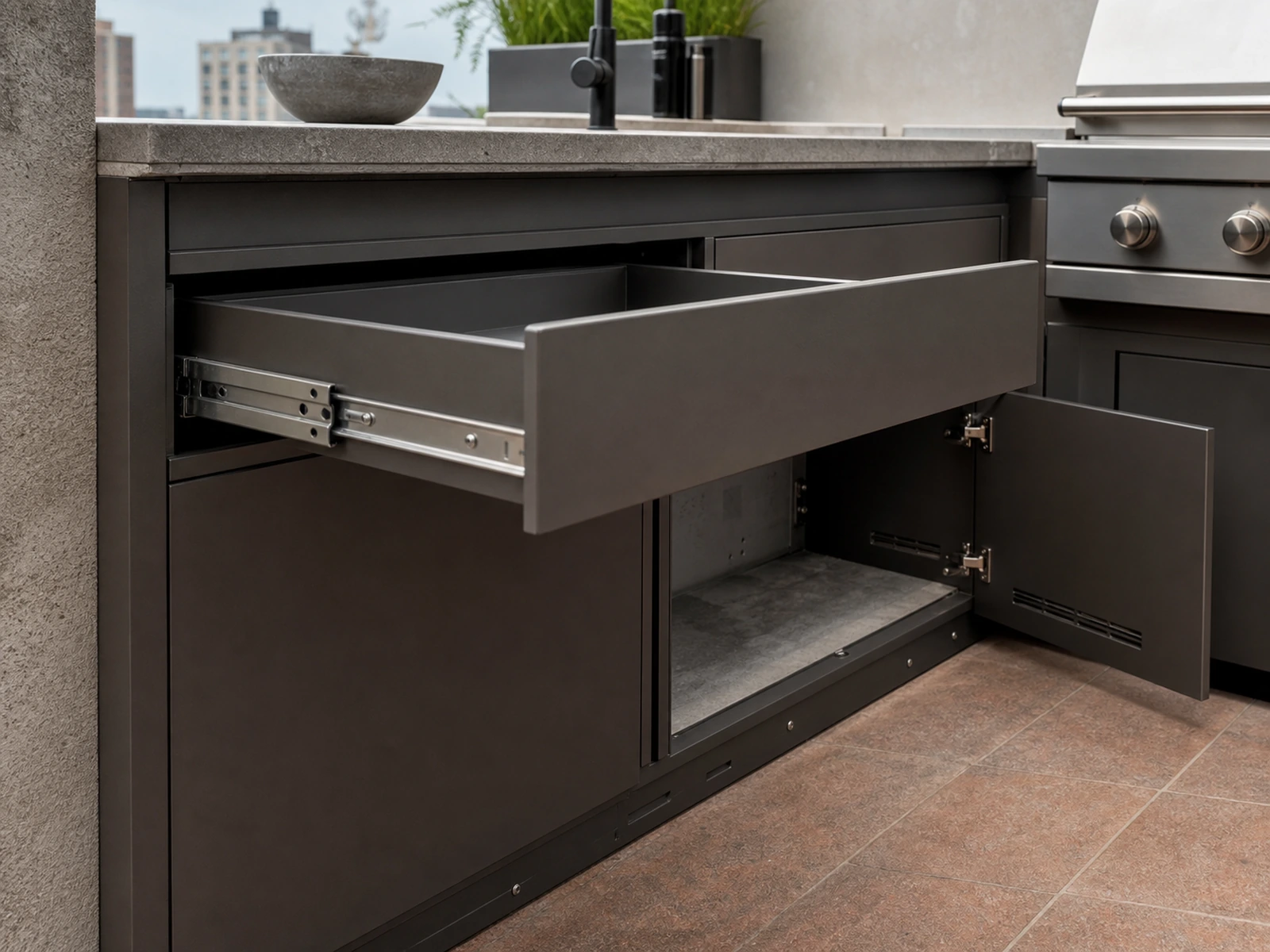
A hardware schedule should identify each relevant component and the supplier’s proposed specification. For an outdoor kitchen drawer cabinet, review at least the slide or runner system, hinges where used, handles or pulls, connecting fasteners, and any accessories fitted inside the cabinet. The schedule should also link those items to their locations on the drawings.
The review should consider more than initial operation. Can a drawer be removed for cleaning or service? Can adjustment points be reached after the countertop and adjacent appliances are installed? Are replacement components identifiable? Are the loads and contents expected by the client consistent with the proposed drawer arrangement? These are coordination questions, not promises that one hardware type is maintenance-free.
Put Drainage, Ventilation, and Heat Separation on the Drawings
Water management becomes credible when the drawings show where water may arrive, where it could collect, and how the design allows it to leave or dry. The relevant path may involve the countertop interface, sink area, drawer opening, cabinet base, floor, service penetration, or an exposed side. Not every cabinet requires the same drainage feature, but every exposed design needs a considered answer.
Ventilation also needs a defined purpose. It may relate to moisture release, an appliance requirement, or heat management. Openings should not be added as a decorative afterthought; their location and function should be coordinated with the cabinet interior and the equipment.
Heat separation must start with the actual appliance information. Grill bodies, burners, refrigeration, and other equipment can have different installation, ventilation, service, and clearance requirements. The cabinet layout and shop drawings should show how the proposed construction responds to the selected appliance documents. If an appliance has not been selected, the unresolved assumption should be visible rather than silently fixed during production.
The Seven-Part Specification Sheet
The following framework turns the phrase powder coated aluminum cabinets for outdoor kitchens into a project instruction. It is not a substitute for engineering, local requirements, or supplier documentation. It is a coordination tool for making the proposal more explicit.
| Specification Part | What to Record | Evidence or Approval Item |
|---|---|---|
| 1. Project exposure and use | Covered or open position, water sources, salt exposure, sun, cleaning method, intended storage and use | Site photos, plan, exposure brief, client requirements |
| 2. Cabinet assembly | Carcass and component construction, joints, edges, bases, service penetrations and interfaces | Written construction description, sections, detail drawings |
| 3. Surface system | Substrate preparation information, proposed powder-coating system, color, gloss, texture and representative details | Supplier specification, approved sample, fabricated detail sample where useful |
| 4. Hardware and fasteners | Slides, hinges, pulls, fasteners, accessories, locations and service access | Hardware schedule, product information, coordinated drawings |
| 5. Water and ventilation | Expected water paths, drainage response, drying or ventilation purpose, floor and sink interfaces | Plan, sections, drainage/ventilation details, installation notes |
| 6. Heat and appliances | Selected equipment, openings, ventilation, service zones and manufacturer requirements | Appliance sheets, cabinet layout, coordinated shop drawings |
| 7. Installation, service and handover | Site interfaces, responsibilities, removable components, adjustment access, cleaning and maintenance information | Installation drawings, responsibility schedule, handover and maintenance notes |
The value of the table is not the number of rows. Its value is the link between each requirement and a piece of evidence. If a line cannot be supported by a drawing, schedule, sample, product sheet, or written response, it remains an assumption that the team should resolve.

Compare Quotations by Scope and Evidence
Two quotations are easier to compare after they use the same questions. Start by aligning scope: cabinet modules, panels, fillers, bases, countertops if applicable, hardware, accessories, appliance coordination, drainage or ventilation components, packaging, installation, and handover information. The relevant list depends on the project, so exclusions are as important as inclusions.
Then compare evidence. Does each proposal identify the cabinet construction? Has the surface system been described beyond a color? Is the hardware schedule complete enough to review? Do the drawings show the sink, appliances, service penetrations, floor interface, and exposed sides? Are there assumptions that one supplier has included and another has excluded?
Before production, maintain a clear approval record. It should identify the current drawing revision, approved samples, confirmed appliance information, agreed hardware, unresolved site measurements, and the party responsible for each remaining input. A shop drawing marked “approved” is useful only when the team knows what was included in that approval.
Frequently Asked Questions
Is powder-coated aluminum suitable for coastal outdoor kitchens?
It can be considered, but the material name alone is not enough to confirm suitability for a specific coastal site. Review the actual salt exposure, shelter, cleaning and maintenance conditions, cabinet construction, surface-system documentation, hardware, fasteners, joints, and installation details. The supplier’s confirmed proposal should respond to those project conditions without relying on a universal coastal claim.
Do outdoor aluminum drawer cabinets need drainage?
They need a considered water-management strategy. The appropriate detail depends on where water can enter, the cabinet construction, the floor and countertop interfaces, and whether the area is covered or open. The drawings should show how incidental water is kept out where practical, how collection points are avoided or managed, and how the cabinet can dry and be cleaned.
What should a finish-sample approval record include?
Record the sample identifier, color, gloss or appearance, texture, substrate or representative component, date, and the scope of approval. State whether the sample approves appearance only. Keep technical confirmation of pretreatment, coating, fabrication, and project suitability in the relevant written specifications and supplier documents.
Should hardware and fasteners be specified separately?
Yes, when they are relevant to the cabinet’s operation and exposure. A separate schedule makes the proposed slides, hinges, pulls, fasteners, accessories, locations, and service access visible to the project team. It also makes quotation comparisons and later replacement discussions clearer.
Turn the Material Name into a Project Instruction
The most useful specification does not begin by promising that one finish will solve every outdoor condition. It begins by describing the project clearly enough for a supplier to respond: installation position, exposure, cabinet layout, intended use, selected appliances, water and heat interfaces, finish expectations, hardware needs, and required approval documents.
For teams evaluating powder coated aluminum cabinets for outdoor kitchens, this seven-part structure creates a better conversation than a color name alone. It allows designers, buyers, and manufacturers to identify missing information before it becomes a production assumption.
If you are preparing a custom outdoor cabinet brief, assemble the site information, layout, appliance sheets, finish reference, storage requirements, and questions that remain open. A cabinetry manufacturer can then respond with a coordinated material description, hardware schedule, shop drawings, and project-specific details for review—without replacing evidence with broad claims.