 English
  日本語
日本語  العربية
  Deutsch
  Español
  Français
  한국어
한국어  Português
  Татар теле
  Русский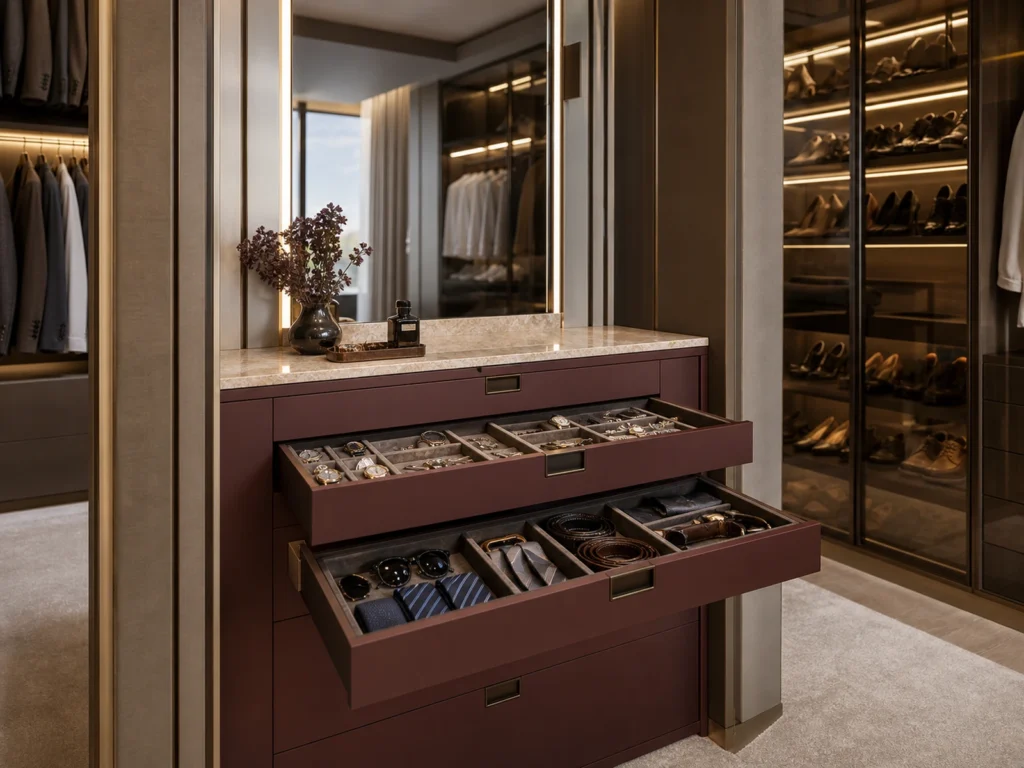
Walk In Closet Accessory Drawer Cabinet
A fitted drawer cabinet for organizing jewelry, watches, belts, ties, sunglasses and dressing accessories inside custom walk-in closet systems.
A Drawer Cabinet for the Small Things That Disappear
A walk in closet accessory drawer cabinet is designed for the small items that are easy to misplace during daily dressing. Instead of treating jewelry, watches, belts, ties and sunglasses as afterthoughts, this cabinet gives them a fitted position inside the closet layout.
Within the Closet & Wardrobe range, the accessory drawer cabinet series focuses on shallow drawers, organized trays, soft liners and integrated placement near the dressing zone. It should feel like part of the wardrobe system, not a separate dresser or a jewelry shop display.
Custom Dividers for Watches, Jewelry, Belts and Ties
The drawer interior can be planned with different divider patterns according to the accessory list. Watch slots, ring sections, necklace channels, bracelet compartments, belt rolls, tie channels and sunglasses zones can be combined in one cabinet while keeping each drawer easy to scan.
Before production, it helps to confirm the approximate quantity and size range of the items that need storage. A buyer who owns larger watches, wide belts or many sunglasses may need a different tray depth and divider spacing than a buyer who mainly stores jewelry and small dressing items.
Shallow Drawer Height, Soft Liners and Handle Choices
Accessory drawers usually work better when the first layers are shallow enough for small items to stay visible. Deeper drawers can be reserved for rolled belts, sunglasses cases, folded scarves or boxed accessories, while the top drawers stay organized for items used every day.
Soft liners can reduce direct contact between delicate items and hard tray surfaces, but they should not be described as a security or vault feature. Liner color, tray edge detail, drawer front finish, handle type and slide quality should be reviewed together so the cabinet feels smooth and measured in daily use.
Placing the Drawer Cabinet Near the Mirror or Dressing Zone
The most useful position is often close to the mirror, dressing shelf or closet island, where accessories are selected after clothing and shoes are chosen. This avoids placing small items in a remote cabinet that looks tidy on drawings but feels inconvenient during real dressing.
For larger suites, the cabinet can be planned as part of an island, a side run under a mirror, or a low drawer bank beside hanging zones. Broader walk-in closet design ideas for luxury homes can help compare where the accessory zone should sit in relation to lighting, mirrors, circulation and daily outfit selection.
Pairing With Glass Shoe Walls and Hanging Zones
An accessory drawer cabinet often works well between a shoe wall and a hanging area because the user can select shoes, clothing and accessories in one movement. The drawer bank can also soften the transition between taller wardrobe modules and a lower dressing surface.
If the closet includes a glass door shoe wall, door movement, shelf depth, lighting and access should be checked with the drawer cabinet position. The article on walk-in closet shoe wall planning is a useful companion topic for coordinating glass doors, shoe shelves, lighting and nearby accessory storage.
Built for Closet Islands, Side Runs or Wall Niches
The cabinet can be customized as a low wall-side drawer bank, an island-side accessory section, a drawer module below a mirror, or a niche cabinet inside a larger wardrobe run. Width, depth, drawer quantity and front elevation should be coordinated with the surrounding closet modules.
For a walk-in closet island, accessory drawers can face the main dressing route while deeper storage or display shelves sit on other sides. For a wall-side cabinet, the top surface can become a temporary landing area for watches, glasses or folded clothing during outfit preparation.
Drawings, Samples and Closet Integration for Overseas Projects
Sunrise Furnishing can support accessory drawer cabinet customization by closet size, drawer layout, finish sample, liner selection, divider plan, handle option and project drawing requirements. Useful starting information includes the closet floor plan, mirror position, island size, accessory list, preferred finishes and any finished closet reference images.
For overseas residential, villa, apartment or project orders, the drawer cabinet should be checked with the full wardrobe elevation, packing plan and installer notes before production. This keeps the accessory zone aligned with hanging cabinets, shoe shelves, lighting, island clearance and final site measurements.
Frequently Asked Questions
Yes. The divider layout can be adjusted for watches, jewelry, belts, ties, sunglasses and other dressing accessories. Before production, it is useful to confirm item quantity, typical item size, drawer depth and whether any trays should be removable.
Small accessories often work well in shallow drawers because the contents stay visible and easy to reach. Taller drawers can be added for belts, sunglasses cases, boxed items or folded accessories that need more height.
Yes. Soft liners can be specified for drawer trays to create a gentler contact surface for watches, jewelry and eyewear. The liner material, color, cleaning method and tray edge detail should be confirmed with samples before production.
Common positions include below a mirror, beside a dressing shelf, inside a closet island, or between hanging zones and shoe storage. The suitable position depends on the daily dressing route and how the user selects clothing, shoes and accessories.
Yes. It can be built into a walk-in closet island, placed near a glass shoe wall, or integrated with hanging zones. Drawer direction, walking clearance, lighting, mirror position and cabinet depth should be checked together.