English
  日本語
日本語  العربية
  Deutsch
  Español
  Français
  한국어
한국어  Português
  Татар теле
  Русский
 A bathroom vanity is often judged by what can be seen first: the door finish, countertop color, basin shape, and overall style. But a moisture resistant bathroom vanity depends on quieter details. The cabinet board, sealed edges, back panel, drawer system, hardware, countertop joints, installation method, and bathroom ventilation all work together behind the surface.
In a humid bathroom, beauty alone is not enough. A vanity may look refined on the first day, but if moisture finds its way into exposed edges, weak joints, or poorly protected sink areas, the cabinet can swell, smell musty, or lose its smooth function over time. For homes, villas, apartments, hotels, and project bathrooms, moisture resistance is not one material label. It is a complete cabinet system.
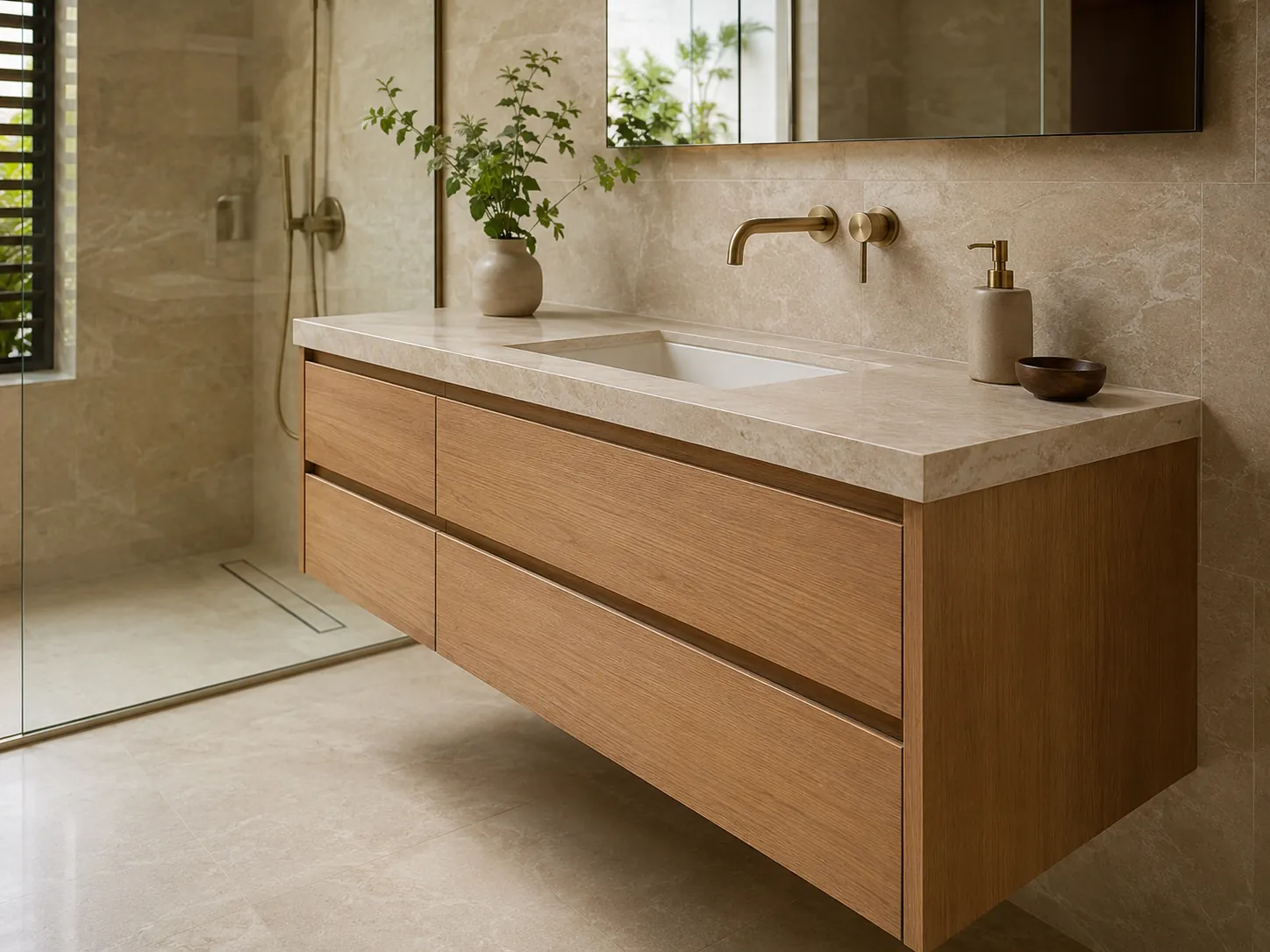
Moisture Resistance Starts Where the Eye Cannot See
A good bathroom vanity should look calm and well-finished, but its real performance begins in places most buyers do not notice during the first viewing. The inside edge of a drawer, the back of the cabinet, the area under the countertop, the joint around the basin, and the bottom structure all carry moisture risks.
This is why a vanity for a humid bathroom should not be evaluated like a dry-room cabinet. Bathrooms create steam, water splashes, cleaning chemicals, and temperature changes. Even when the cabinet is not directly under running water, moisture can still collect around joints, wall corners, floor areas, and enclosed storage spaces.
The door finish is important, but it is only one layer. A beautiful surface cannot protect a cabinet if the core board, sealing, hardware, and installation details are poorly planned. In custom bathroom vanity production, the quiet work behind the visible design often decides how stable the vanity feels after months and years of daily use.
Why the Door Finish Is Only One Part of the Story
Door finishes help resist daily contact and give the vanity its visual identity. Matte lacquer, wood veneer, melamine, laminate, or painted finishes can all work in bathroom furniture when used correctly. However, the finish is not the whole protection system.
Moisture usually becomes a problem where surfaces meet: door edges, cabinet seams, countertop joints, sink cutouts, and drawer interiors. If these details are not protected, even a good-looking vanity can become vulnerable in humid conditions.
The Hidden Areas That Usually Face Moisture First
The highest-risk areas are often not the largest surfaces. They are the small interruptions: a cut edge, a screw hole, a sink opening, an unfinished back panel, or a cabinet base close to a wet floor. A manufacturer or designer should look at these details before claiming that a vanity is suitable for moisture-prone spaces.
Cabinet Boards: The Core Behind a Moisture Resistant Bathroom Vanity
The cabinet board is the body of the vanity. It carries the drawers, supports the countertop, holds hardware, and forms the storage structure. For a moisture resistant bathroom vanity, the board should be selected according to the bathroom environment, not only according to price or appearance.
Different projects may require different board solutions. A powder room with good ventilation does not create the same pressure as a compact apartment bathroom with limited airflow. A hotel bathroom used by many guests each week may need a stronger durability focus than a private guest bathroom. This is where custom planning matters.
The key question is not simply “Which board is best?” A better question is: “Is this board suitable for the humidity level, installation method, countertop choice, and daily use pattern of this bathroom?”
Why the Cabinet Core Matters in Humid Bathrooms
In humid bathrooms, the cabinet core needs stable support and proper protection. If moisture reaches the core through open edges or weak joints, the cabinet may swell, soften, or lose alignment. Drawers may stop closing smoothly, doors may shift, and the vanity may no longer feel solid.
The board itself matters, but so does how it is cut, sealed, connected, and installed. A well-protected board in a well-planned vanity usually performs better than a good board used carelessly.
What to Ask About Board Type and Surface Protection
Before ordering a custom bathroom vanity, buyers should ask what board material is used, how exposed edges are protected, what surface finish is applied, and whether the board is suitable for a humid bathroom. For project buyers, it is also helpful to confirm whether the same material specification can be applied consistently across multiple rooms.
Edge Sealing: The Small Detail That Protects the Cabinet
Edge sealing is one of the quietest but most important parts of bathroom vanity construction. It does not usually appear in the hero image. It does not make the vanity look dramatic. Yet it can strongly affect how well the cabinet handles moisture over time.
Every cabinet board has edges. Some are visible, some are hidden, and some are cut during production for sizing, basin fitting, pipe access, or drawer construction. If these edges are not sealed properly, they can become moisture entry points.
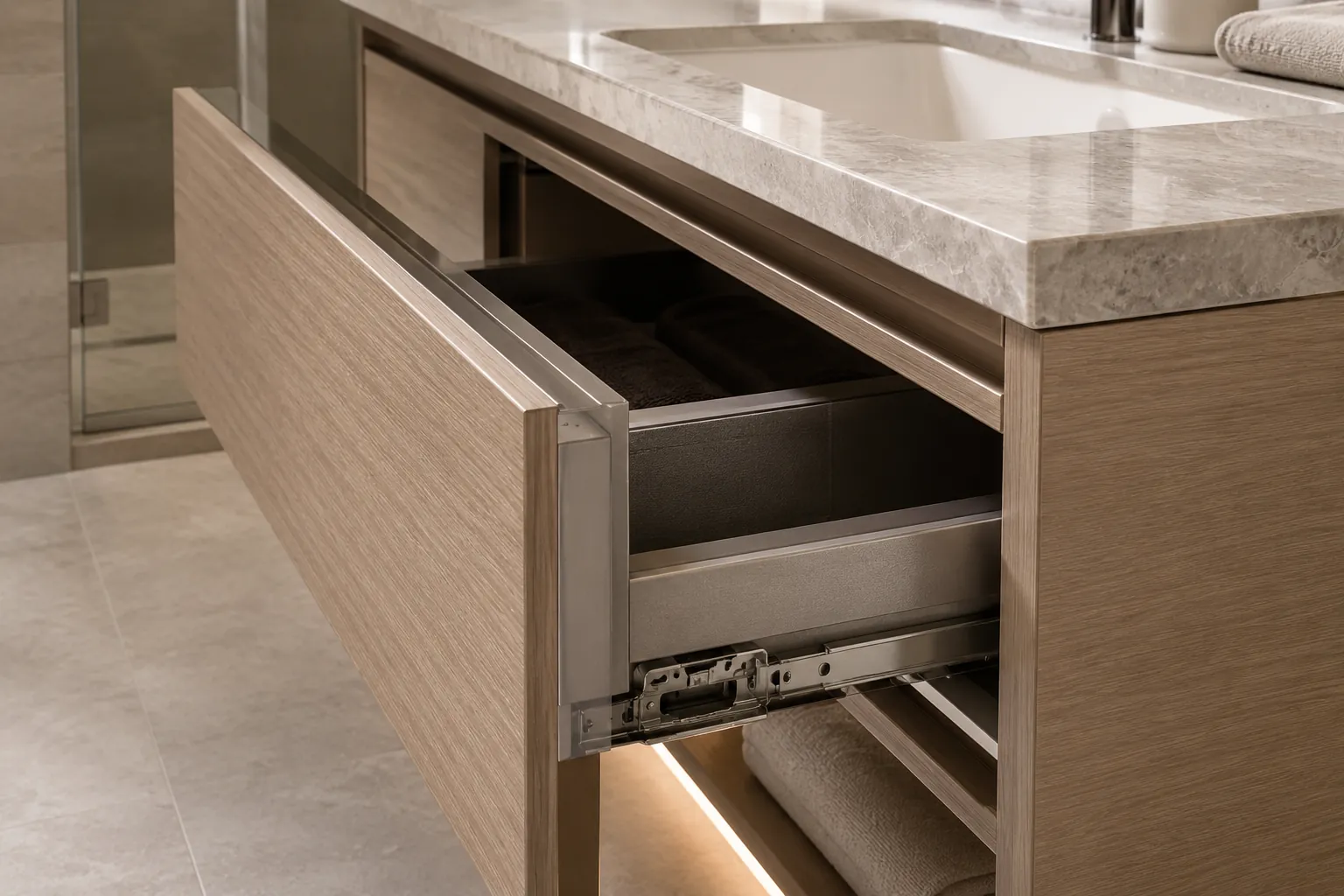
For a bathroom vanity, edge protection should be considered around door panels, drawer fronts, cabinet sides, shelves, back panels, and especially areas close to the basin or wall. A small unfinished line can become a larger problem when exposed to steam, splashes, or repeated cleaning.
Why Moisture Often Enters Through Edges and Joints
Moisture does not always attack the center of a cabinet panel. It often enters through small breaks in the system: edges, corners, screw areas, sink cutouts, and joints between different materials. These are the places where construction quality becomes more important than advertising words.
How Sealed Edges Support Long-Term Use
Good edge sealing helps reduce direct moisture exposure to the cabinet core. It also gives drawer fronts, shelves, and side panels a cleaner, more finished structure. In daily use, this can help the vanity remain more stable, especially in bathrooms where steam and splashes are part of the routine.
Hardware, Drawers, and Back Panels Should Not Be Afterthoughts
Hardware is often discussed as a comfort feature, but in bathroom furniture it is also part of durability planning. Hinges, drawer slides, handles, and fixing points all live in a humid environment. If the hardware is not suitable for bathroom use, the vanity may feel tired long before the cabinet design goes out of style.
Drawers also deserve attention. Bathroom drawers often store cosmetics, towels, grooming tools, cleaning items, and daily-use accessories. They are opened frequently, sometimes with wet hands. Smooth drawer movement, stable drawer boxes, and reliable slides can make the cabinet feel better in real life.
Back panels are another overlooked area. Because they face the wall, they can be affected by wall moisture, pipe access, and limited air movement. A weak or poorly protected back panel can reduce the overall quality of the vanity even when the front view looks polished.
Moisture-Resistant Hardware for Daily Bathroom Use
Hardware should be selected for the way the bathroom is used. A family bathroom, hotel bathroom, and guest powder room do not have the same opening frequency. Where use is frequent, reliable drawer slides and hinges become more important.
This does not mean every project needs the most expensive hardware. It means the hardware should match the moisture level, cabinet weight, drawer size, and expected use.
Drawer Boxes and Back Panels in Humid Spaces
Drawer boxes should feel stable and clean inside, not only attractive on the front. Back panels should be planned around wall conditions, pipe access, and ventilation. When these parts are treated as part of the moisture-resistant system, the vanity becomes more than a decorative cabinet.
Countertops and Sink Areas Can Make or Break the Vanity
The countertop and sink area are where water meets the vanity most often. Even when the cabinet body is well built, poor planning around the basin can create long-term moisture problems.
The type of countertop, the basin installation method, the position of seams, the splash zone, and the joint between countertop and wall all matter. A refined stone or solid surface top can still cause problems if water repeatedly sits around the basin edge or enters gaps near the cabinet.
A bathroom vanity should be planned as one connected unit: cabinet, countertop, basin, wall, and plumbing access. When these elements are designed separately, small conflicts can appear on site. When they are designed together, the result is usually cleaner, easier to maintain, and better suited for humid use.
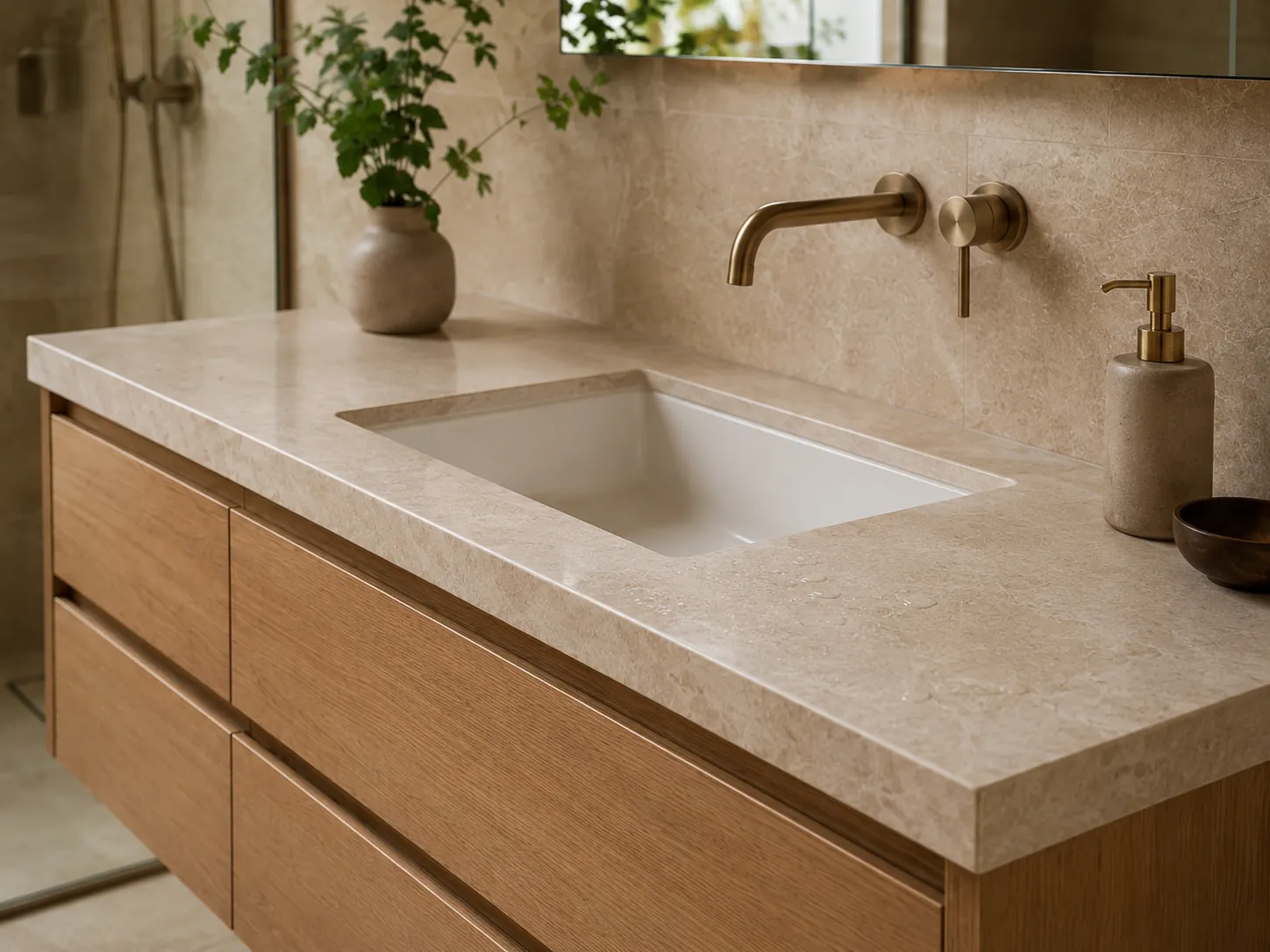
Why Countertop Seams Need Careful Planning
Countertop seams should be placed and finished carefully. In a bathroom, a seam is not only a visual line. It can also become a place where water collects. Around the basin, wall corner, and backsplash area, clean detailing helps reduce maintenance issues.
Sink Splash Zones and Cabinet Protection
The sink splash zone should be discussed before production, especially for custom vanities. If the basin is wide, shallow, or used in a busy bathroom, more attention may be needed around the countertop edge, cabinet front, and drawer area below the sink.
Installation and Ventilation Complete the Moisture-Resistant System
A cabinet cannot solve every moisture problem by itself. Installation and ventilation complete the system. A vanity placed in a poorly ventilated bathroom, directly beside a shower area, or against a damp wall faces more pressure than one installed in a dry, well-ventilated powder room.
This is why manufacturers and designers should understand the bathroom before finalizing the vanity. Is there a window? Is there an exhaust fan? Is the shower separated? Is the vanity wall-mounted or floor-standing? Is plumbing coming from the wall or floor? These answers can influence cabinet structure and installation details.
A floating bathroom vanity can help keep the cabinet away from wet flooring and make cleaning easier. A floor-standing vanity can offer more storage and a grounded look, but it needs careful base protection in humid bathrooms. Neither option is automatically better. The right answer depends on the room.
Floating vs Floor-Standing Vanities in Humid Bathrooms
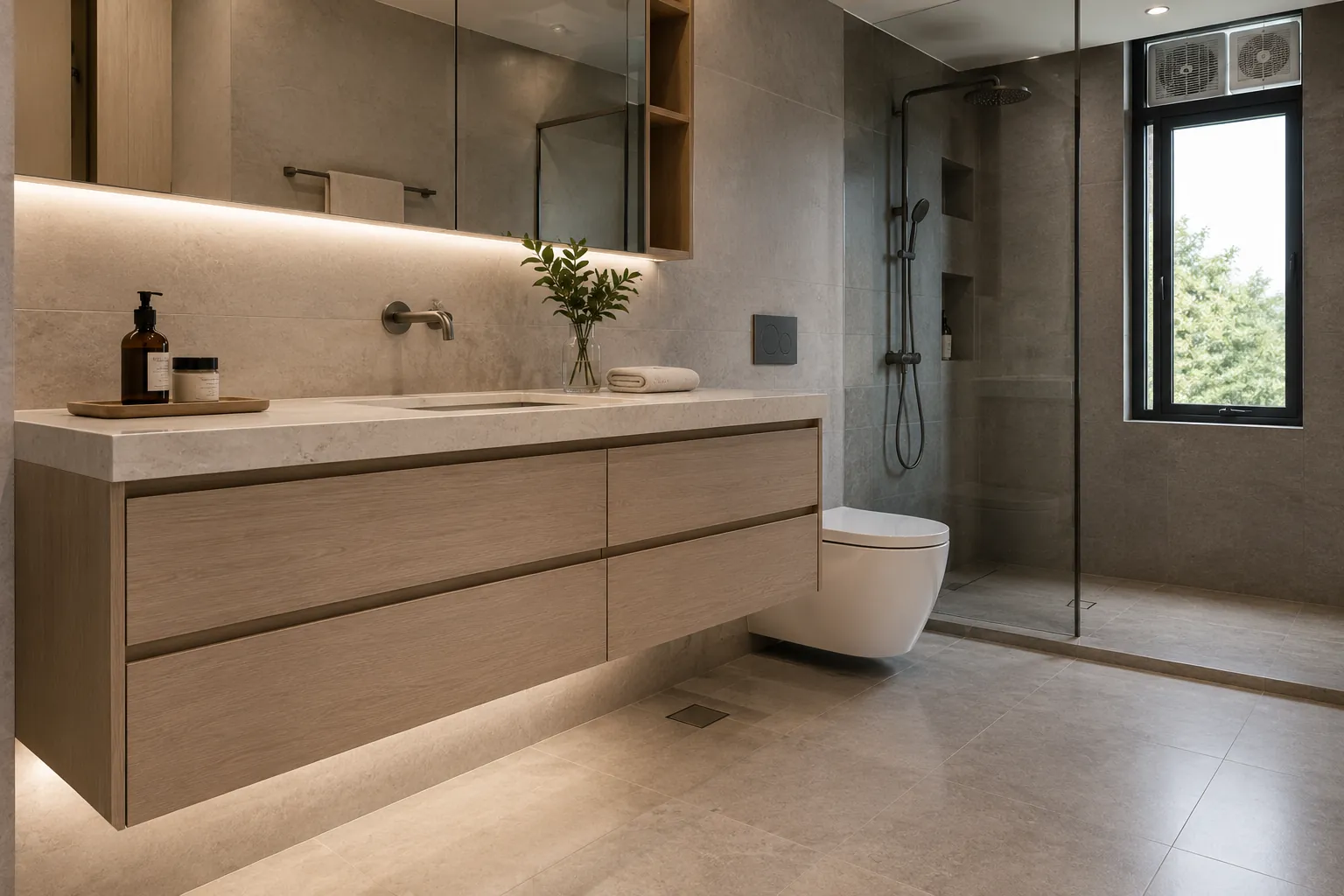
Floating vanities create clearance above the floor, which can help cleaning and reduce direct contact with wet surfaces. They also create a lighter visual effect, especially in smaller bathrooms. However, they require suitable wall support and proper installation.
Floor-standing vanities may provide more storage and easier structural support, but their base area should be planned carefully if the bathroom floor often stays wet. In both cases, material protection and installation quality matter.
Why Ventilation Should Be Discussed Before Production
Ventilation affects how quickly steam and moisture leave the room. If a bathroom has poor airflow, the cabinet may stay exposed to humidity for longer periods. Before production, it is useful to discuss ventilation, wet zone distance, and cleaning habits so the vanity can be planned more realistically.
A Practical Checklist Before Ordering a Moisture Resistant Bathroom Vanity
Before ordering a moisture resistant bathroom vanity, buyers should prepare more than a preferred color and size. The most useful questions are often about structure, environment, and daily use.
A good supplier should be able to explain how the vanity is built, not only how it looks. For homeowners, this helps avoid hidden problems. For designers and project buyers, it helps keep specifications clear before production begins.
Questions to Ask About Materials and Structure
Ask these questions before confirming the vanity:
- What cabinet board material will be used?
- How are the exposed edges sealed?
- What type of hardware is used for drawers and hinges?
- How is the back panel treated?
- How is the sink area protected?
- What countertop material and joint detail are recommended?
- Is the cabinet suitable for a humid bathroom or only a dry powder room?
Questions to Ask About Bathroom Conditions
Also prepare room information:
- Is the bathroom well ventilated?
- Is the vanity close to the shower area?
- Is the vanity wall-mounted or floor-standing?
- Is plumbing from the wall or floor?
- Will this vanity be used in a home, apartment, hotel, or project space?
- How often will the bathroom be used?
Building a Vanity That Looks Refined and Performs Quietly
A refined bathroom vanity should not need loud promises. Its quality should be felt in the way drawers move, edges stay clean, the countertop meets the cabinet, and the storage remains practical in daily use.
For humid bathrooms, this quiet performance is especially important. The vanity needs to look suitable for the interior, but it also needs to handle steam, splashes, cleaning, and repeated use. That is why custom planning should connect design, material, structure, and installation from the beginning.
When a vanity is designed as a system, moisture resistance becomes more than a phrase in a product description. It becomes a set of decisions, each small on its own, but powerful together.
When Custom Planning Makes the Difference
Custom planning becomes valuable when the bathroom has special conditions: limited space, poor ventilation, a nearby shower area, project-level usage, unusual plumbing, or a need to match other whole-house cabinetry. In these cases, a standard vanity may not answer every requirement.
A custom bathroom vanity can be adjusted in size, layout, material, finish, drawer arrangement, countertop design, and installation method. This does not mean making the design complicated. It means making the important decisions visible before production.
Final Takeaway for Humid Bathrooms and Projects
A moisture-resistant vanity should be judged by more than its front view. Look at how the cabinet is built, how edges are sealed, how hardware is selected, how the sink area is protected, and how the bathroom environment supports the design. The most reliable result usually comes from quiet details working together.
Frequently Asked Questions
Is a moisture resistant bathroom vanity waterproof?
No. Moisture resistant does not mean fully waterproof. A moisture resistant bathroom vanity is designed to better handle humidity, steam, splashes, and daily bathroom conditions, but it still needs proper installation, ventilation, cleaning, and maintenance. It should not be treated as a cabinet that can stay soaked in water.
What material is better for a humid bathroom vanity?
There is no single best material for every humid bathroom. The right choice depends on the bathroom’s ventilation, wet zone distance, usage frequency, countertop design, and installation method. Cabinet boards, sealed edges, surface protection, and hardware should be considered together.
Why do bathroom vanity cabinets swell?
Bathroom vanity cabinets usually swell when moisture reaches the cabinet core through exposed edges, weak joints, sink cutouts, damaged surfaces, or poorly protected base areas. Poor ventilation and repeated water exposure can make the problem worse.
Is a floating vanity better for moisture resistance?
A floating vanity can help reduce direct contact with wet flooring and make cleaning easier, which is useful in some humid bathrooms. However, it still needs suitable wall support, proper installation, good materials, and sealed construction. It is not automatically better in every project.
What should I confirm before ordering a custom bathroom vanity?
Before ordering, confirm the cabinet material, edge sealing, hardware, countertop, sink area detail, back panel, installation method, plumbing position, ventilation, and wet zone distance. These details help the manufacturer design a vanity that fits the actual bathroom environment.
Final Thoughts
A bathroom vanity for a humid space should not be chosen by appearance alone. Color, finish, and countertop style create the first impression, but the long-term experience depends on quieter decisions: cabinet boards, sealed edges, hardware, back panels, sink protection, installation, and ventilation.
For homes, villas, apartments, hotels, and project bathrooms, Sunrise Furnishing can support custom bathroom vanity planning based on space conditions, material requirements, storage needs, and installation details. The goal is not to make the loudest claim, but to build a vanity that looks refined and performs steadily in the room where it will actually be used.