English
  日本語
日本語  العربية
  Deutsch
  Español
  Français
  한국어
한국어  Português
  Татар теле
  Русский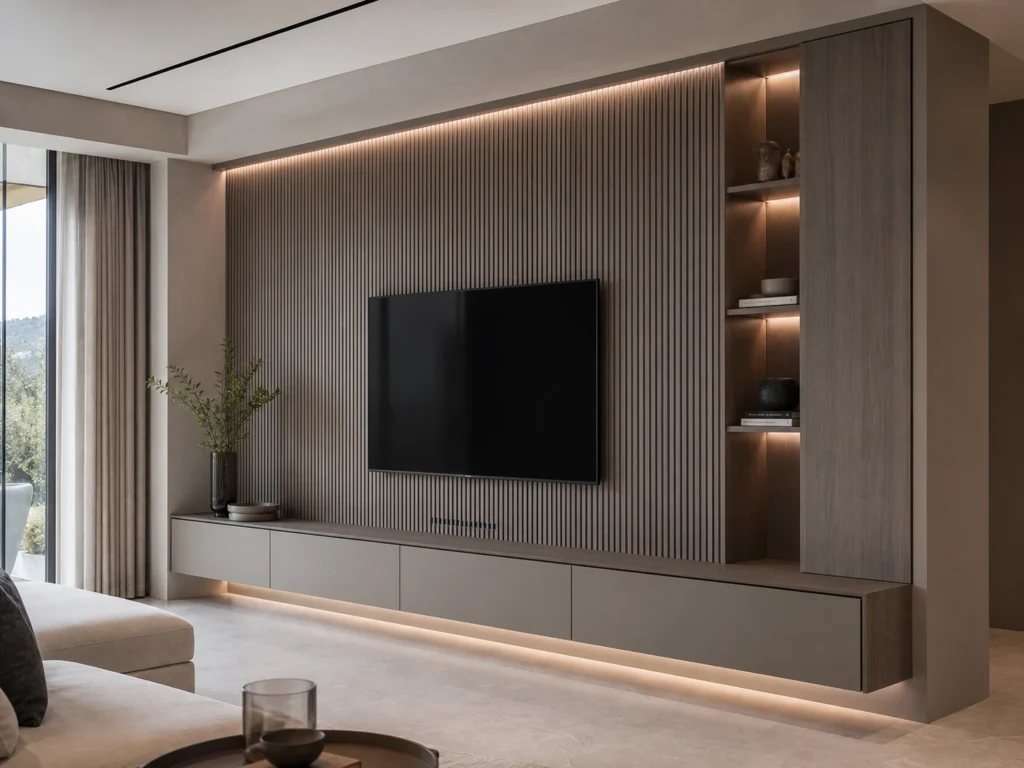
Walnut Slatted TV Wall Cabinet with Floating Storage
A custom built-in TV wall system with walnut slatted panels, floating storage, hidden cable planning, media ventilation and overseas project support.
A Built-In TV Wall System for Living Rooms
This walnut slatted TV wall cabinet is planned as a built-in wall system for villas, apartments and living rooms where the TV area needs to feel integrated with the room. The design combines vertical walnut slatted wall panels, a wall-mounted TV zone, floating storage and coordinated space for media devices.
As part of a custom TV Stand project, the wall panel size, floating cabinet depth, socket points, cable access and fixing method can be reviewed with project drawings. For early decisions around screen size, wiring, ventilation and storage, the related built-in TV wall cabinet planning guide helps buyers check the main technical points before ordering.
Vertical Slats Planned Around the TV Wall
The walnut slatted wall panel creates a warm architectural background for the TV area. Slat width, spacing, panel height and module division can be adjusted according to the wall size, screen width, viewing distance and the visual rhythm required for the living room.
Before production, the panel layout should be checked against socket positions, TV bracket location, speaker or soundbar placement and any side wall transitions. This keeps the walnut finish decorative, but also practical for installation and future maintenance.
A Suspended Cabinet for Devices and Daily Storage
The floating storage cabinet can be planned with drawers, flap doors or mixed closed storage depending on the media devices and accessories that need to be kept near the TV. Cabinet depth, internal partitions and opening direction should be confirmed around routers, game consoles, players, remotes and cable adapters.
A floating cabinet also needs proper wall fixing and weight planning. The bottom shadow line, installation height and cabinet length should be reviewed with the wall condition so the cabinet appears light while still being practical for daily use.
Cable Channels, Sockets and Access Openings
Hidden wiring should be planned before the wall panel and cabinet are produced. Power sockets, HDMI, network cables, speaker cables and future device connections need clear routes behind the TV or inside the floating cabinet.
Access openings can be designed behind removable panels or inside cabinet zones so cables can still be reached after installation. This is especially important when the TV model, bracket, socket height and media device location may change during the project.
Airflow for Routers, Consoles and Players
Media devices should not be sealed inside a closed cabinet without airflow. Routers, game consoles, players and amplifiers can generate heat, so the cabinet may need rear openings, ventilation slots, side gaps or a planned cable and airflow path.
The ventilation detail should be coordinated with the visible cabinet design. Openings can be placed where they support airflow while staying discreet from the main viewing angle, and the final position should be confirmed with the device list before production.
Walnut Tone, Shadow Lines and Wall Integration
Walnut slats can be coordinated with flat wall panels, plaster finishes, stone-look panels or simple painted side walls. The final combination should keep the TV wall balanced instead of making the background visually heavy.
LED lighting, side reveals and shadow gaps can help the wall cabinet feel built in, but they should be planned with cable routes and access points. Lighting color temperature, driver access and panel joint lines should be confirmed before production drawings are approved.
Custom Drawings, Packing and Overseas Coordination
For overseas projects, Sunrise Furnishing can support custom dimensions, walnut finish selection, slatted wall panel layout, floating cabinet structure, socket and cable coordination, ventilation review, packing and export communication.
The most useful information before production includes TV model, screen size, wall dimensions, socket points, device list, wall fixing condition, panel layout and preferred lighting effect. With these details, the TV wall cabinet can be planned as a coordinated system instead of a separate cabinet added after decoration.
Frequently Asked Questions
Yes. Slat width, spacing, wall height and panel layout can be adjusted according to the room size, TV width, viewing distance and project drawings. The final panel module should also coordinate with sockets, TV bracket position and wall fixing details. If the slats continue across side panels or cabinet zones, those transitions should be marked in the elevation drawings.
Yes. Cable channels, socket positions and access openings can be planned inside or behind the floating cabinet. Power, HDMI, network and speaker cables should be confirmed before production so future maintenance remains possible. This is useful when media devices are replaced later or when extra cables need to be added after installation.
Yes. Routers, game consoles, media players and amplifiers should not be sealed without airflow. Rear openings, side gaps, ventilation slots or planned cabinet gaps can help reduce heat buildup inside the storage zone. The exact opening size and position should follow the equipment list, cabinet construction and the final visual requirement.
Yes, if wall fixing, screen size, cabinet depth and cable access are planned properly. Apartment projects often need slimmer cabinet depth and careful wall measurement so the TV wall does not reduce circulation in the living room. If the wall is a light partition, reinforcement and fixing points should be reviewed before production.
TV size, TV model, socket points, wall dimensions, panel layout, lighting route, device list and cabinet fixing details should be confirmed. Elevation drawings and section drawings are useful for checking proportion, access and installation before production. For overseas projects, packing, site measurement notes and installation sequence should also be reviewed.