English
  日本語
日本語  العربية
  Deutsch
  Español
  Français
  한국어
한국어  Português
  Татар теле
  Русский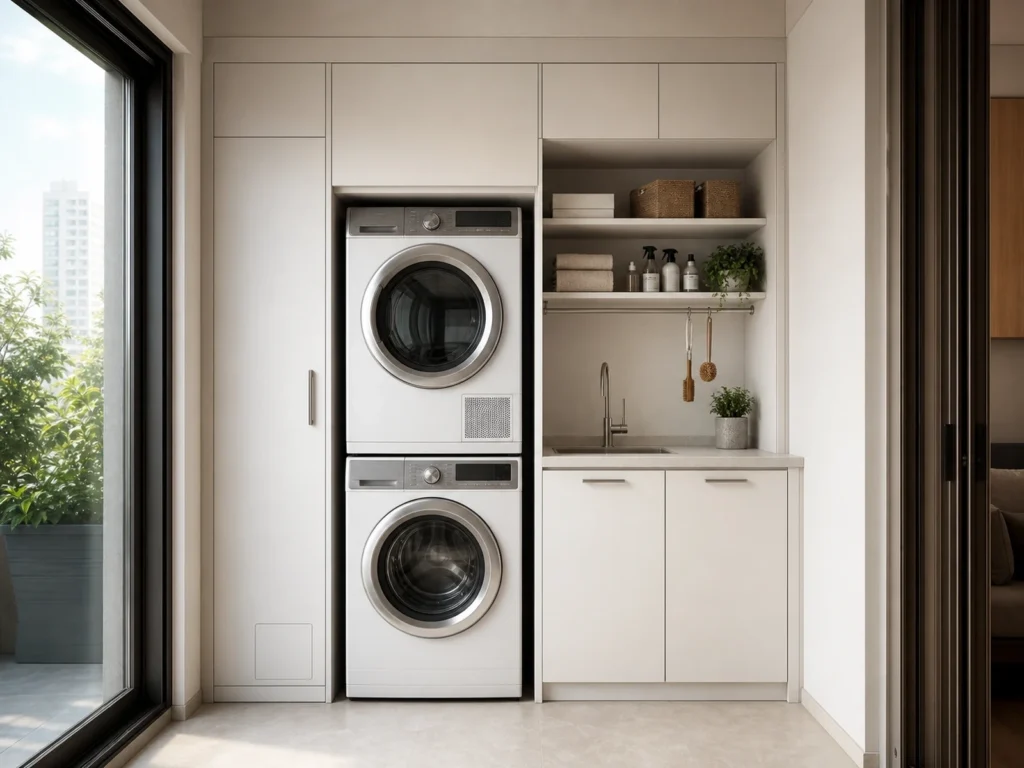
Matte White Laundry Cabinet with Stacked Washer Tower
A clean matte white laundry cabinet system planned around stacked appliance access, utility panels, sink storage and project-specific ventilation.
The Washer-Dryer Tower as the Fixed Starting Point
This matte white stacked washer dryer cabinet is planned around the real washer, dryer and approved stacking kit rather than a generic cabinet opening. The appliance width, installed height, handle projection, control position, front door swing and rear utility zone all need to be checked before the cabinet drawings are approved.
For compact apartments, balcony laundries and utility niches, the tower should be treated as an installed system. Our related article on dimensions and service access for a stacked washer-dryer cabinet explains why machine fit, hoses, ventilation and removal routes should be reviewed together.
Utility Access Behind a Clean Cabinet Line
A clean matte white cabinet front should not hide water and electrical access permanently. Hoses, drains, plugs, outlets and shutoff valves need a practical access strategy after the appliances are installed. Depending on the site, this may mean a removable rear section, a side access panel, or an adjacent utility compartment.
The final arrangement should be checked with the appliance manuals, site measurements and local plumbing or electrical professionals. Sunrise Furnishing can coordinate the cabinet panels and access points around the approved layout, but the service requirements should come from the selected appliance models and project drawings.
Cabinet Doors That Preserve Appliance Access
Cabinet doors can make the laundry wall feel quiet and architectural, but they must not block daily operation. The washer door, dryer door, detergent drawer, lint filter and control panel should be tested against the cabinet door opening before the front elevation is finalized.
Full-height doors, folding doors, pocket doors or a partly open tower can each work in different rooms. The best choice depends on the appliance model, nearby sink position, hallway clearance, balcony door swing and how the user will load and remove laundry.
Sink Cabinet and Cleaning Storage Beside the Tower
The adjacent sink cabinet can hold a compact laundry sink, cleaning products, spare detergents, baskets or daily utility storage. This side module should support the laundry workflow without blocking heat release, vibration space, hose access or the route for moving the stacked appliances forward.
Countertop height, sink bowl size, faucet position, splash protection, waste storage and cleaning supply zones should be planned with the tower. In balcony laundry projects, material selection and edge treatment also need to be reviewed against the actual moisture and sun exposure conditions of the site.
Ventilation and Moisture Details by Appliance and Site
Ventilation should not be copied from a universal laundry cabinet rule. A vented dryer, condenser dryer and heat pump dryer can require different airflow, heat release and maintenance conditions. Cabinet doors, open gaps, louvred sections or a less enclosed layout should be chosen after the appliance instructions are reviewed.
The matte white finish, cabinet carcass, edge banding, countertop, toe kick and wall junctions should also be specified for the project environment. Sunrise Furnishing can support material and drawing coordination, while final wet-area, ventilation and installation decisions should be confirmed through the approved appliance and site information.
Machine Removal and Installation Coordination
A stacked laundry cabinet is more practical when the machines can be inspected, disconnected and removed in the future. The cabinet opening, floor route, adjacent sink cabinet, removable panels and nearby doorways should all be checked before production.
To begin a project review, prepare the room measurements, appliance model numbers, stacking kit details, utility positions, site photos and any designer drawings. These details help Sunrise Furnishing align the matte white cabinet design with the real installation path instead of relying on a standard dimension table.
Frequently Asked Questions
The cabinet should be planned around the selected washer, dryer and approved stacking kit. Model dimensions, handles, control panels, door swing, ventilation and service requirements can vary, so final compatibility should be checked against the appliance manuals and project drawings.
Access can be planned through a removable rear section, side panel or adjacent utility compartment, depending on the room. Shutoff valves, drains, plugs and hose routes should remain reachable after installation and should be confirmed with local professionals.
They may, but the answer depends on the dryer type and manufacturer instructions. Some projects may need ventilated doors, open areas, service gaps or a less enclosed cabinet front. A fixed universal ventilation gap should not be assumed.
Yes, a sink cabinet can often sit beside the stacked tower, but its countertop, bowl, faucet, plumbing, storage and cabinet depth must not block appliance operation, ventilation, utility access or the future machine removal route.
The removal route should be checked before production. The machines may need to move forward through the cabinet opening, past the sink cabinet and through the room entrance. Removable panels and clear floor space can make future service more practical.