 English
  日本語
日本語  العربية
  Deutsch
  Español
  Français
  한국어
한국어  Português
  Татар теле
  Русский
 Is Your Master Bedroom Ready for a Walk-In Wardrobe Island?
Many homeowners fall in love with the idea of a walk-in wardrobe island the moment they see one in a master suite photo.
A central island, glass cabinet doors, warm lighting, handbag displays, jewelry drawers, and neatly arranged clothing can make the whole wardrobe feel like a private boutique.
But in a real custom project, the first question is not whether the island looks beautiful. The real question is whether your master bedroom wardrobe has enough space for a walk-in wardrobe island to work comfortably every day.
A well-planned walk-in wardrobe island can store jewelry, watches, belts, sunglasses, scarves, folded clothing, small leather goods, and daily accessories.
It can also become a surface for folding clothes, packing a suitcase, preparing an outfit, or placing a handbag before going out.
However, if the room is too narrow, the same island can quickly turn from a luxury feature into an obstacle.
This guide explains how to judge whether your master bedroom is ready for a walk-in wardrobe island, including room size, walking clearance, wardrobe layout, island functions, materials, lighting, hardware, and common mistakes to avoid before production.
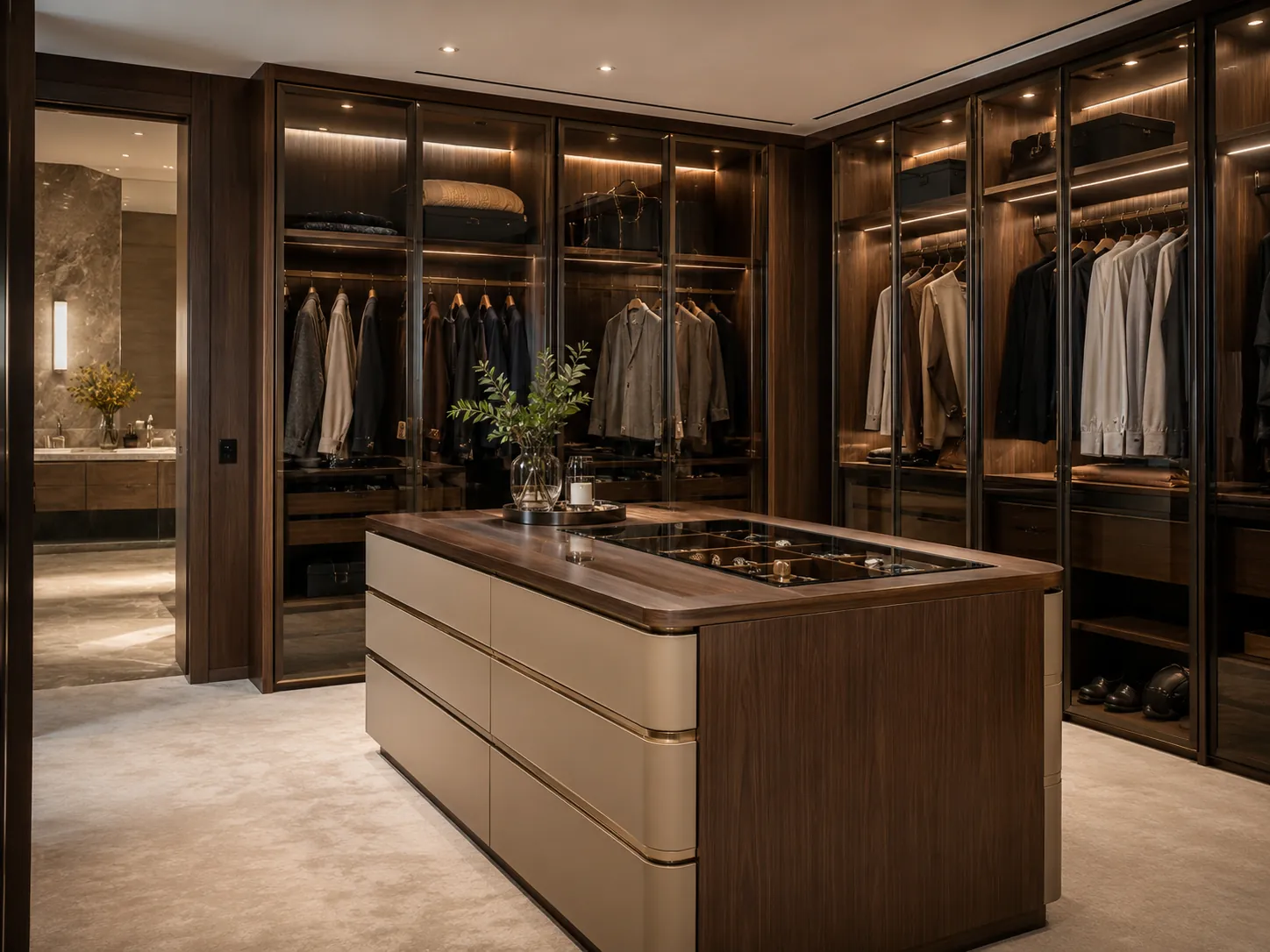
Quick Answer: When Does a Walk-In Wardrobe Island Make Sense?
A walk-in wardrobe island usually makes sense in a medium to large master closet where there is enough space around every side of the island.
The island should not block cabinet doors, wardrobe drawers, dressing movement, or the entrance path.
You should be able to walk naturally between the hanging area, drawer area, mirror, handbag storage, and island without feeling squeezed.
If the wardrobe is narrow, forcing a central island into the space may make daily use uncomfortable.
In that case, a smaller drawer cabinet, a one-sided wardrobe layout, an L-shaped closet, or wall-mounted storage may be more practical than a full walk-in wardrobe island.
In general, a walk-in wardrobe island is most useful when the homeowner needs organized storage for jewelry, watches, belts, sunglasses, scarves, folded clothing, handbags, or travel items.
It also works well when the user wants a dedicated surface for styling outfits, folding clothes, or preparing items before dressing.
Planning note: An island should not be added only to make the wardrobe look more luxurious.
A good walk-in wardrobe island should solve real storage problems, support daily movement, and make the master closet easier to use.
Check the Room Size Before Choosing a Walk-In Wardrobe Island
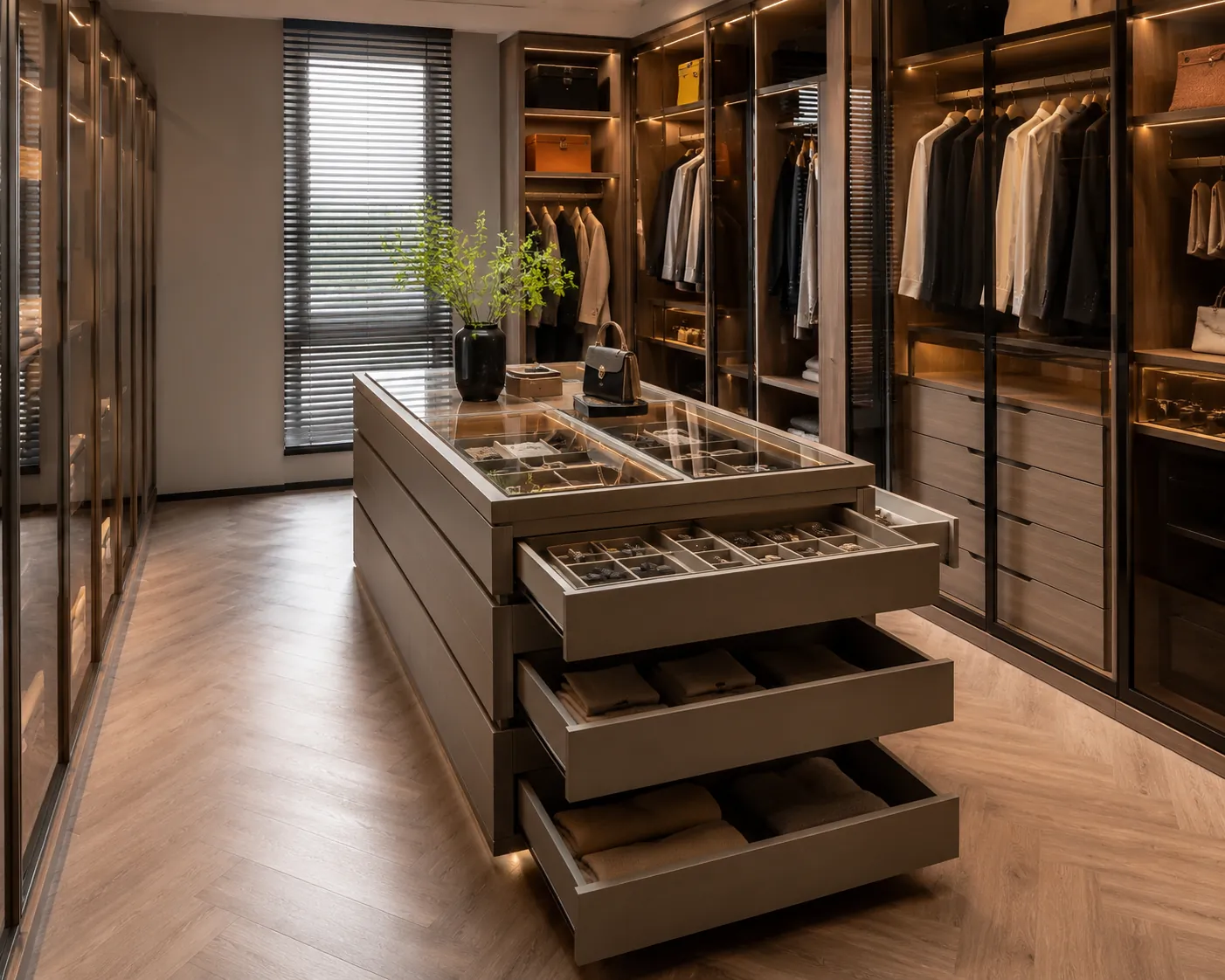
A walk-in wardrobe island should be planned after the main wardrobe layout, not before it.
Many uncomfortable wardrobe designs happen because the island is chosen too early.
The layout may look elegant in a rendering, but after installation, the user may find that the drawers can open, yet there is not enough space to stand, turn, or move comfortably.
Before confirming the island, measure the full room width, room length, ceiling height, door position, window position, socket location, and any beams or lowered ceiling areas.
These details decide whether the walk-in wardrobe island can function as a useful storage feature or whether it will crowd the room.
Walking Clearance Comes First
The most important part of a walk-in wardrobe is not the island itself, but how people move around it.
You need enough space to open wardrobe doors, pull out island drawers, bend down to take clothing, turn toward a mirror, and allow two people to use the space at the same time.
If these daily actions interrupt each other, the island is too large or the room is not suitable for a central island.
A master bedroom wardrobe is not only a display space. It is used every morning and evening, so comfort should be treated as seriously as appearance.
Wardrobe Depth, Island Width, and Drawer Opening Space
Wardrobe depth should not be considered as a cabinet number only. Hanging sections, drawer units, glass doors, pull-out racks, trouser racks, and internal accessories all change the real space needed in front of the cabinet.
The same is true for the island. A walk-in wardrobe island may look compact when all drawers are closed, but the space changes when drawers are pulled out.
If island drawers and wardrobe drawers open toward each other, the center aisle must be planned carefully.
This is one of the most common details homeowners overlook.
Door Position Can Decide Whether the Island Works
The entrance door, bedroom connection, bathroom door, window, socket, lighting point, and wall opening should all be reviewed before the island is confirmed.
If a hinged door opens into the wardrobe area, the island must not block the entry path.
In some projects, a sliding door, pocket door, hidden door, or adjusted island position can help improve circulation.
Whether a master closet is ready for a walk-in wardrobe island depends not only on room size, but also on how people enter, walk, open drawers, and use the space.
Room Size Checklist
- Measure the total room width and length.
- Confirm ceiling height, beams, and lowered ceiling areas.
- Mark door, window, socket, and lighting positions.
- Confirm wardrobe depth before deciding the island size.
- Check whether drawers can open without blocking circulation.
- Consider how two people may use the wardrobe at the same time.
Choose the Right Layout for a Walk-In Wardrobe Island
A master bedroom wardrobe can use different layouts depending on the room shape.
The walk-in wardrobe island has to support the layout, not compete with it.
A beautiful island in the wrong room can make the whole wardrobe feel tight, while a smaller island in the right position can make the space feel calm and organized.
Parallel Wardrobes with a Walk-In Wardrobe Island
A parallel layout places wardrobe cabinets on both sides of the room, with the island in the center.
This arrangement often works well in long rectangular rooms.
One side can be used for hanging storage, while the other side can include drawers, open shelves, handbags, or glass display cabinets.
In this layout, the walk-in wardrobe island becomes a central organizing point.
It can hold jewelry trays, watch drawers, folded clothing, or accessories, while both wardrobe walls remain easy to reach.
U-Shaped Wardrobes with a Compact Island
A U-shaped wardrobe uses three walls for storage, so it can provide strong capacity.
However, it also needs more careful island planning.
If the room is not large enough, a wide statement island may make the center area feel crowded.
For a smaller U-shaped closet, a compact walk-in wardrobe island or a narrow drawer unit may work better than a large display island.
In this type of space, the island should support storage instead of becoming the visual burden of the room.
Boutique-Style Master Closet Layout
In larger villas, apartments, or high-end master suites, the wardrobe can be designed with a boutique-style feeling.
Glass doors, open display shelves, hidden lighting, handbag zones, jewelry drawers, watch trays, and a stone-look countertop can make the space feel refined.
But a boutique-style wardrobe also needs discipline.
The more items are displayed, the more maintenance the space requires.
If bags, jewelry, and clothing are not organized, the wardrobe may quickly lose its clean and luxurious feeling.
For this reason, a good design should balance display and hidden storage.
Plan the Walk-In Wardrobe Island Around Real Storage Habits
A walk-in wardrobe island should not be designed as a decorative block in the center of the room.
It should be planned around what the homeowner actually stores, reaches for, and uses every day.
Before finalizing a walk-in wardrobe island, ask a few practical questions.
Do you own many watches or pieces of jewelry? Are belts and sunglasses often hard to find?
Do folded clothes need their own storage area? Do you need space for scarves, underwear, sleepwear, handbags, or travel accessories?
Do you often prepare outfits inside the wardrobe before going out?
These answers should decide the internal structure of the island.
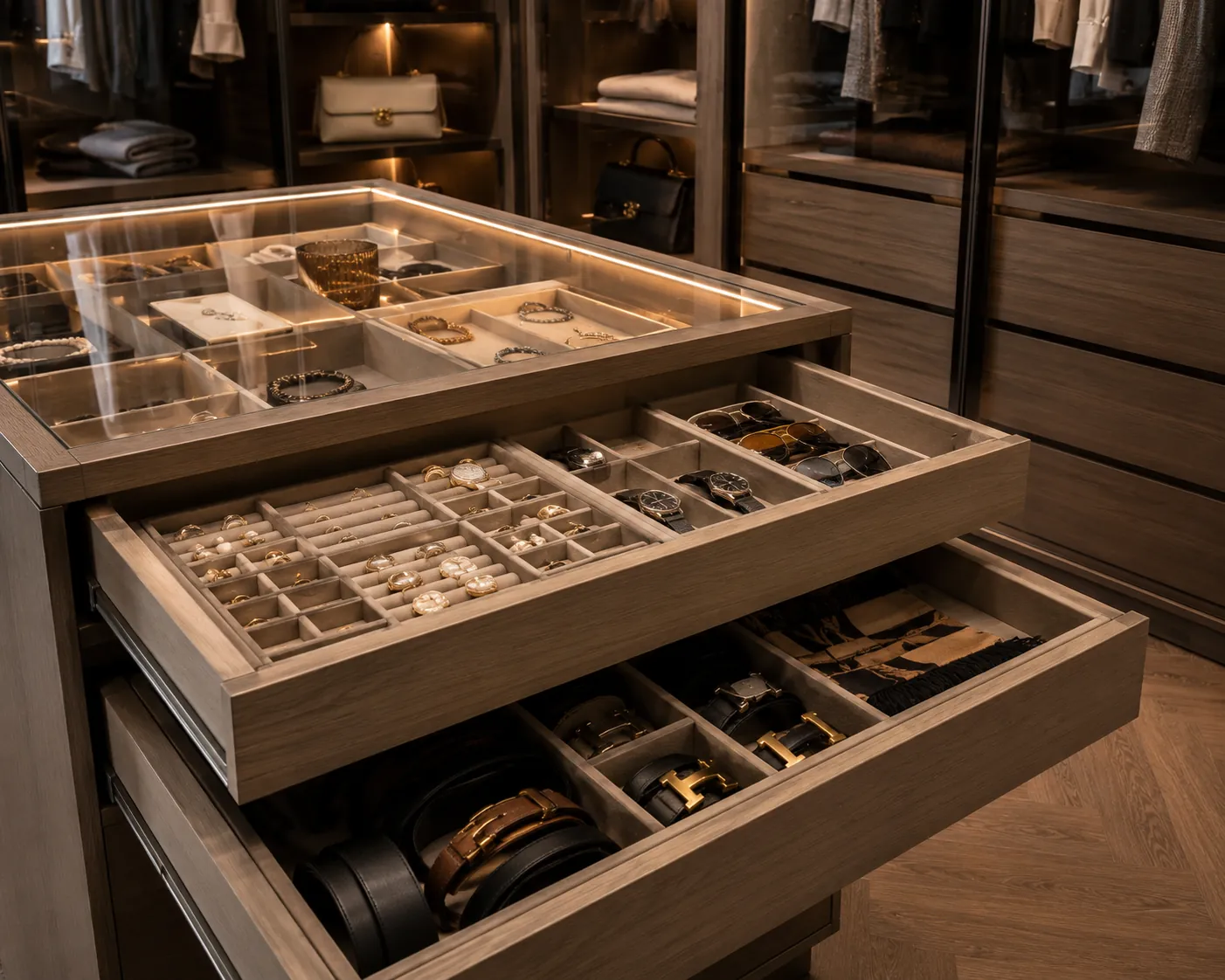
Jewelry Drawers and Velvet-Lined Trays
Jewelry drawers are one of the most common functions in a wardrobe island.
Shallow drawers with divided trays can separate rings, necklaces, earrings, bracelets, and small accessories.
A soft lining can reduce movement and make the storage feel more refined.
If the homeowner owns many accessories, different drawers can be planned for daily jewelry, formal jewelry, travel accessories, or seasonal pieces.
Watch, Belt, and Sunglasses Storage
Watches, belts, ties, sunglasses, and small leather goods usually work better in shallow divided storage than in deep open drawers.
Each item should have a clear position so it can be seen, selected, and returned easily.
These small details can make a high-end master wardrobe feel much more comfortable in daily use.
Folded Clothing and Seasonal Items
Medium-depth and deeper drawers can be used for knitwear, scarves, sleepwear, underwear, travel items, or seasonal accessories.
However, not every drawer should be deep.
Deep drawers look spacious, but small items can become stacked and difficult to find.
A more practical walk-in wardrobe island often combines shallow drawers, medium-depth drawers, and a small number of deeper drawers.
Glass-Top Display or Closed Drawers?
A glass-top island can look elegant and is useful for displaying watches, jewelry, perfume, or carefully selected accessories.
But it also has a real maintenance requirement.
Everything under the glass needs to stay neat because it is always visible.
If the homeowner prefers a calmer and lower-maintenance look, closed drawers may be a better choice.
Closed storage is less dramatic, but it is often easier to live with.
| Island Function | Best For | Planning Note |
|---|---|---|
| Jewelry trays | Rings, necklaces, earrings, bracelets | Use shallow drawers with clear internal divisions. |
| Watch drawers | Watches, sunglasses, small leather goods | Plan soft lining and separate compartments. |
| Medium-depth drawers | Scarves, underwear, sleepwear, accessories | Useful for daily items that need quick access. |
| Deep drawers | Folded clothing and seasonal pieces | Avoid making every drawer too deep. |
| Glass-top display | Jewelry, watches, perfume, curated accessories | Best for users who can keep items organized. |
Materials, Lighting, and Hardware Decide Long-Term Comfort
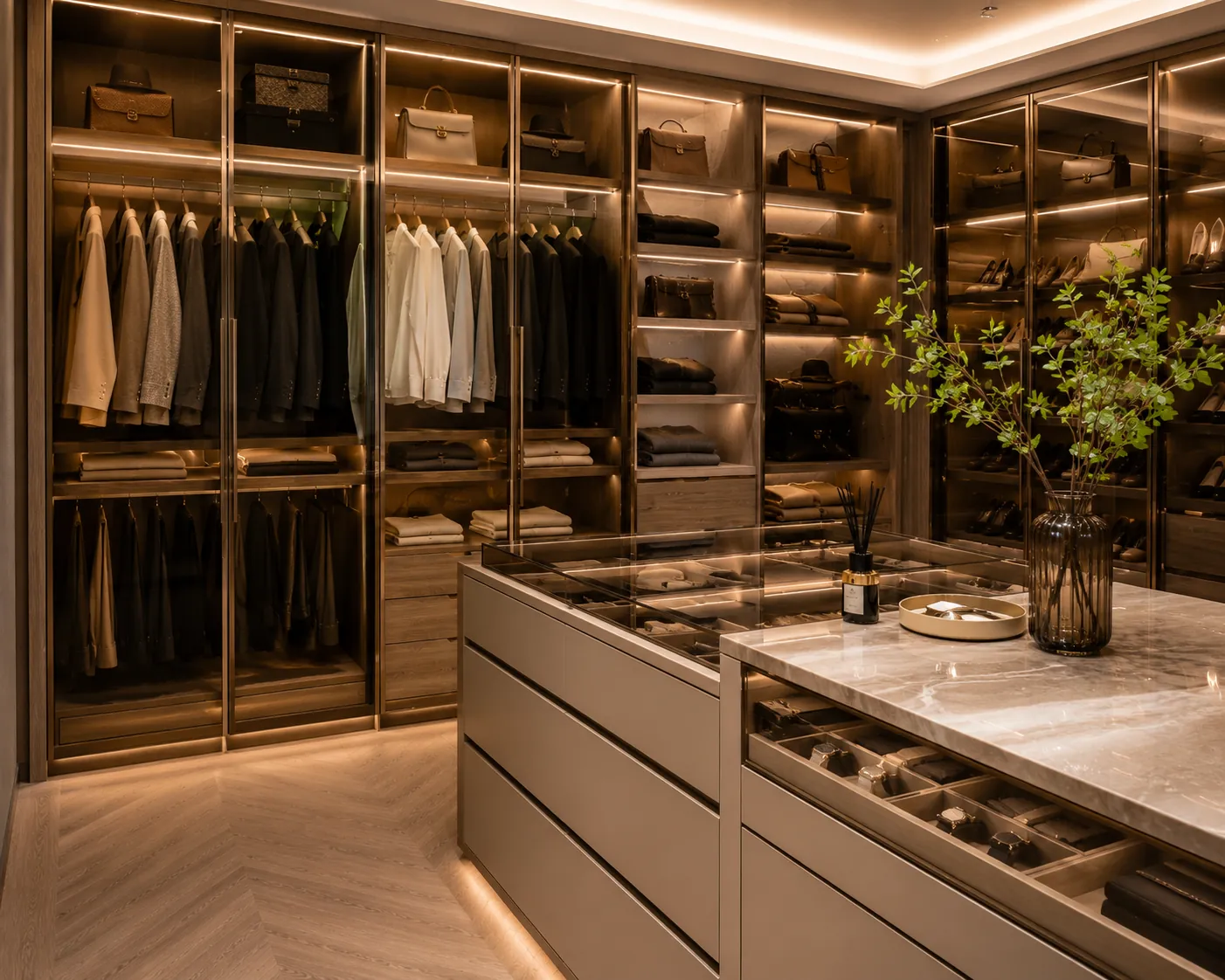
The comfort of a walk-in wardrobe island is not decided by color alone.
Materials, lighting, hardware, drawer structure, and internal accessories all affect how the wardrobe performs after installation.
Cabinet Finishes and Edge Details
Popular finishes for master bedroom wardrobes include warm wood grain, matte lacquer, textured neutral panels, glass doors, metal accents, and stone-look countertops.
The finish should match the bedroom style, but it should also be easy to clean and suitable for long-term use.
Edge details also matter.
Consistent panel gaps, clean edges, smooth corners, and refined finishing can make the whole wardrobe feel more expensive without making the design look complicated.
Glass Doors, Open Shelves, and Dust Control
Open shelves are convenient and visually light, but they collect dust more easily.
Glass doors can keep the display feeling while offering better protection than fully open storage.
Many master wardrobes work best with a combination of open shelves, glass doors, and closed cabinets.
This creates visual layers while keeping the room easier to maintain.
Lighting Should Be Planned Before Production
Wardrobe lighting should not be treated as a final decoration.
Shelf lighting, hanging rail lighting, drawer lighting, vertical light strips, and sensor lights all require early planning.
Power access, wiring routes, switch methods, and lighting positions should be confirmed before production.
Good lighting helps the user see clothing colors clearly, find accessories easily, and create a warmer atmosphere in the master suite.
Drawer Runners, Soft-Close Hardware, and Dividers
The island is usually a high-frequency area.
Jewelry, watches, folded clothing, belts, and accessories may be used every day, so hardware quality becomes very noticeable.
Smooth drawer runners, stable drawer boxes, soft-close systems, and internal dividers can make the island feel like a precise storage tool rather than a decorative cabinet.
Common Walk-In Wardrobe Island Mistakes to Avoid
Many walk-in wardrobe island problems do not come from the appearance of the island.
They come from the design order.
When a project starts with a beautiful rendering and only later considers daily movement, the final space can become attractive but uncomfortable.
Making the Island Too Large
A large island can look impressive, but it can also reduce walking space.
A master wardrobe is not a showroom.
It has to support dressing, storing, selecting accessories, packing, and daily movement.
In many projects, a slightly smaller walk-in wardrobe island feels more refined because it gives the whole room more breathing space.
Ignoring Drawer Opening Space
Drawers are not flat surfaces.
They need space in front of them.
If island drawers and wardrobe drawers face each other, both sides must be checked in the open position.
Otherwise, the user may need to step back or turn sideways every time a drawer is opened.
This small inconvenience can become annoying after daily use.
Choosing Beauty Over Maintenance
Glass tops, open shelves, and display lighting can be beautiful, but they require organization.
If the homeowner does not want to spend much time keeping items arranged, closed drawers and simple cabinet fronts may be more suitable.
A high-end wardrobe does not need to display everything.
The better solution is to show selected items and hide the rest cleanly.
Planning Lighting Too Late
Lighting should be confirmed before cabinet production.
If wiring, power supply, switches, and light positions are not planned early, adding lighting later can affect both the cabinet appearance and installation efficiency.
Custom Checklist Before Production
Before a custom walk-in wardrobe enters production, the main details should be confirmed clearly.
This is especially important for overseas residential projects, villas, apartments, and larger custom furniture projects where measurement, design, production, shipping, and installation may involve different teams.
- Final room width, length, and ceiling height.
- Door, window, beam, socket, and lighting positions.
- Wardrobe layout, island size, and walking clearance.
- Cabinet finish, glass type, countertop material, and metal accents.
- Drawer quantity, drawer depth, jewelry trays, and internal dividers.
- Lighting type, switch method, wiring route, and power access.
- Hardware selection, including hinges, runners, handles, and soft-close systems.
- Shop drawings, packing requirements, delivery details, and installation coordination.
For Sunrise Furnishing custom projects, these details are usually reviewed before production so the final wardrobe can match the actual room condition, storage habits, and installation requirements.
FAQ
How big should a wardrobe be for a walk-in wardrobe island?
The wardrobe should have enough space for cabinet depth, island size, drawer opening, and comfortable walking clearance.
The exact size depends on the room shape, door position, wardrobe layout, and how the homeowner uses the space.
What can be stored in a walk-in wardrobe island?
A walk-in wardrobe island can store jewelry, watches, belts, sunglasses, scarves, folded clothing, seasonal accessories, handbags, small leather goods, and travel items.
The best internal layout should be based on the user’s real storage habits.
Is a glass-top wardrobe island practical?
A glass-top island can be practical for displaying jewelry, watches, perfume, and selected accessories.
However, the storage below the glass needs to stay tidy.
For a lower-maintenance design, closed drawers may be easier to manage.
Should a walk-in wardrobe use open shelves or glass doors?
Open shelves are convenient and visually light, while glass doors provide more dust protection and a cleaner display effect.
Many master bedroom wardrobes use a combination of open shelves, glass doors, and closed cabinets.
Can lighting be customized inside the wardrobe?
Yes. Wardrobe lighting can usually be customized with shelf lighting, hanging rail lighting, drawer lighting, vertical light strips, or sensor lights.
Lighting positions, wiring, switches, and power access should be confirmed before production.
Key Takeaways
A walk-in wardrobe island can make a master bedroom feel more organized, refined, and complete.
It can add useful storage for jewelry, watches, accessories, folded clothing, and daily dressing items.
But not every room is ready for a walk-in wardrobe island.
The best design starts with room measurements, wardrobe depth, walking clearance, drawer opening space, door position, lighting access, and real storage habits.
If the room has enough space, the island can become the heart of the master wardrobe.
If the room is limited, a smaller island, narrow drawer cabinet, or no island at all may create a more comfortable result.
The final goal is not simply to create an island that looks expensive in photos.
The goal is to create a master bedroom wardrobe that feels easy to use, simple to organize, and beautiful enough to live with every day.