 English
  日本語
日本語  العربية
  Deutsch
  Español
  Français
  한국어
한국어  Português
  Татар теле
  Русский
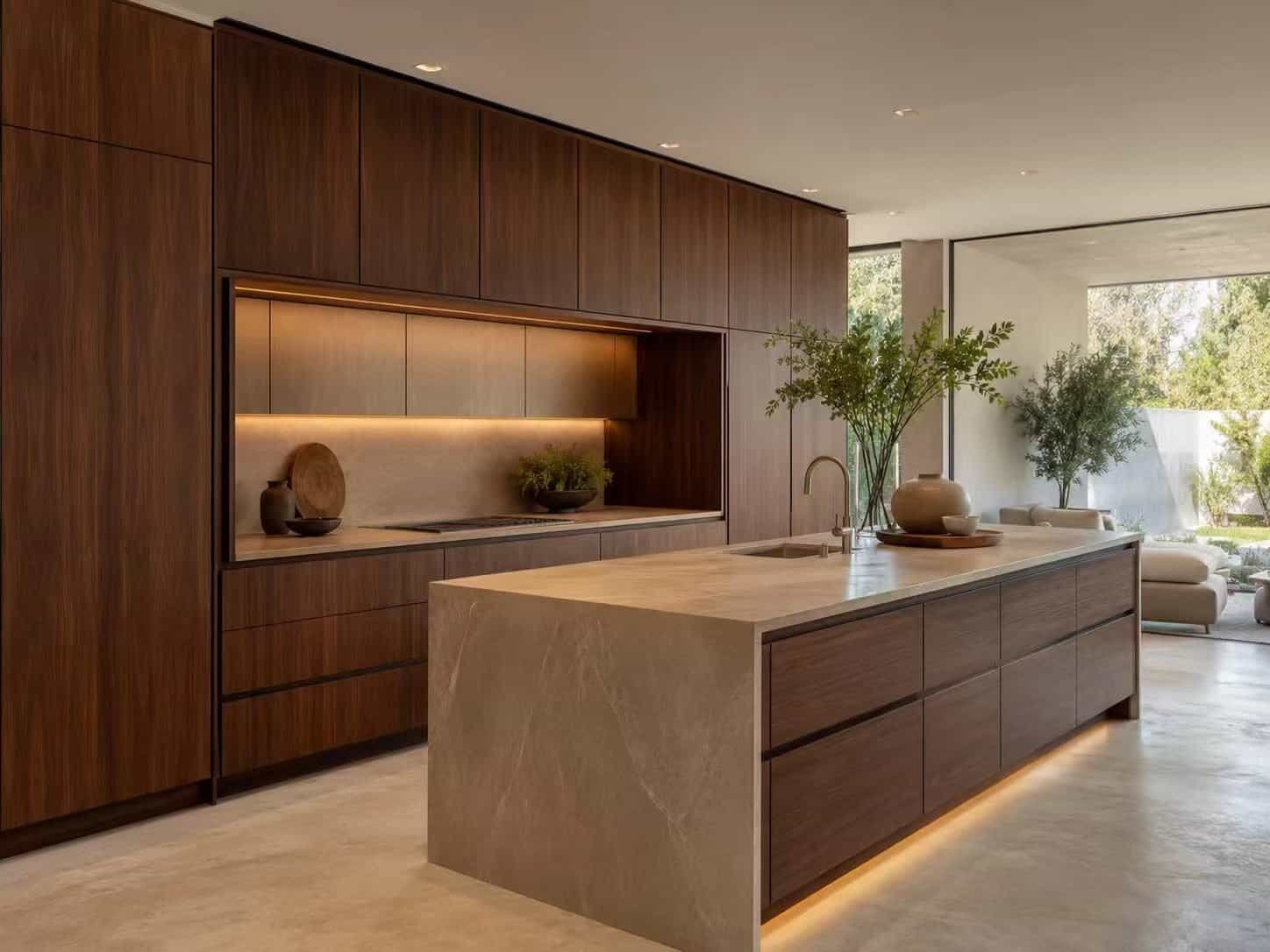
 Floor to ceiling kitchen cabinets with island storage are a practical solution for modern homes that need more storage, cleaner surfaces, and a more organized kitchen layout. Tall cabinets make better use of vertical wall space, while a kitchen island can keep cookware, tableware, preparation tools, and daily-use items close to the working area.
This combination is especially useful in open-plan kitchens, where the kitchen is often visible from the dining room or living area. Instead of leaving appliances, pantry goods, and small tools scattered around the countertop, the design creates two clear storage zones: full-height cabinets for larger or less-used items, and island storage for everyday workflow.
What Are Floor-to-Ceiling Kitchen Cabinets?
Floor-to-ceiling kitchen cabinets are cabinets that extend from the floor close to the ceiling, forming a full-height storage wall. Compared with standard base cabinets and upper wall cabinets, this design uses more vertical space and reduces the unused gap above regular wall cabinets.
In many kitchens, the space above wall cabinets becomes a dust-collecting area. Full-height cabinetry helps avoid this problem and gives the kitchen a more built-in, architectural appearance. It can also hide pantry storage, built-in ovens, refrigerators, cleaning supplies, or small appliances behind a cleaner cabinet surface.
For homeowners who prefer a neat and simple kitchen, tall cabinets can make the room feel more organized. However, the design needs balance. If every wall is filled with solid cabinet doors, the kitchen may feel heavy or closed in. Good planning should consider storage needs, cabinet proportions, lighting, material color, and how people actually use the kitchen every day.
How Tall Cabinets Use Vertical Space
Tall kitchen cabinets are useful because they store items vertically instead of spreading storage across several lower cabinets. This is especially helpful for items that do not need to stay on the countertop.
Common items stored in tall cabinets include:
- dry food and pantry goods;
- serving plates used occasionally;
- built-in ovens or microwaves;
- cleaning tools;
- small appliances;
- extra tableware;
- seasonal kitchen items.
The upper parts of tall cabinets are usually better for less-used items, while the lower sections should be reserved for things that are used more often. A tall cabinet can also include pull-out shelves, internal drawers, or appliance compartments to make storage easier to access.
When Full-Height Cabinets Are Worth Considering
Floor-to-ceiling cabinets are worth considering when the kitchen has limited wall space, a need for larger pantry storage, or a goal of creating a cleaner built-in appearance. They are also helpful in open-plan homes, where visible clutter can affect the look of the living or dining space.
However, full-height cabinets are not automatically suitable for every kitchen. In a narrow kitchen, too many tall cabinets can make the room feel compressed. In a small apartment kitchen, it may be better to use one tall cabinet zone instead of a full wall of heavy storage.
A practical approach is to decide what the tall cabinets need to store first, then design the height, width, internal structure, and material finish around those needs.
Why Island Storage Matters in Modern Kitchens
A kitchen island is often seen as a worktop, breakfast area, or social space. But its storage function is just as important. When floor-to-ceiling cabinets handle pantry goods, appliances, and larger storage needs, the island can focus on daily-use items.
This makes the kitchen workflow more efficient. Instead of walking back and forth between tall cabinets and the cooking area, homeowners can keep frequently used tools inside island drawers. This is useful for cooking, baking, serving food, preparing drinks, or organizing family meals.
Daily-Use Drawers for Cookware and Tableware
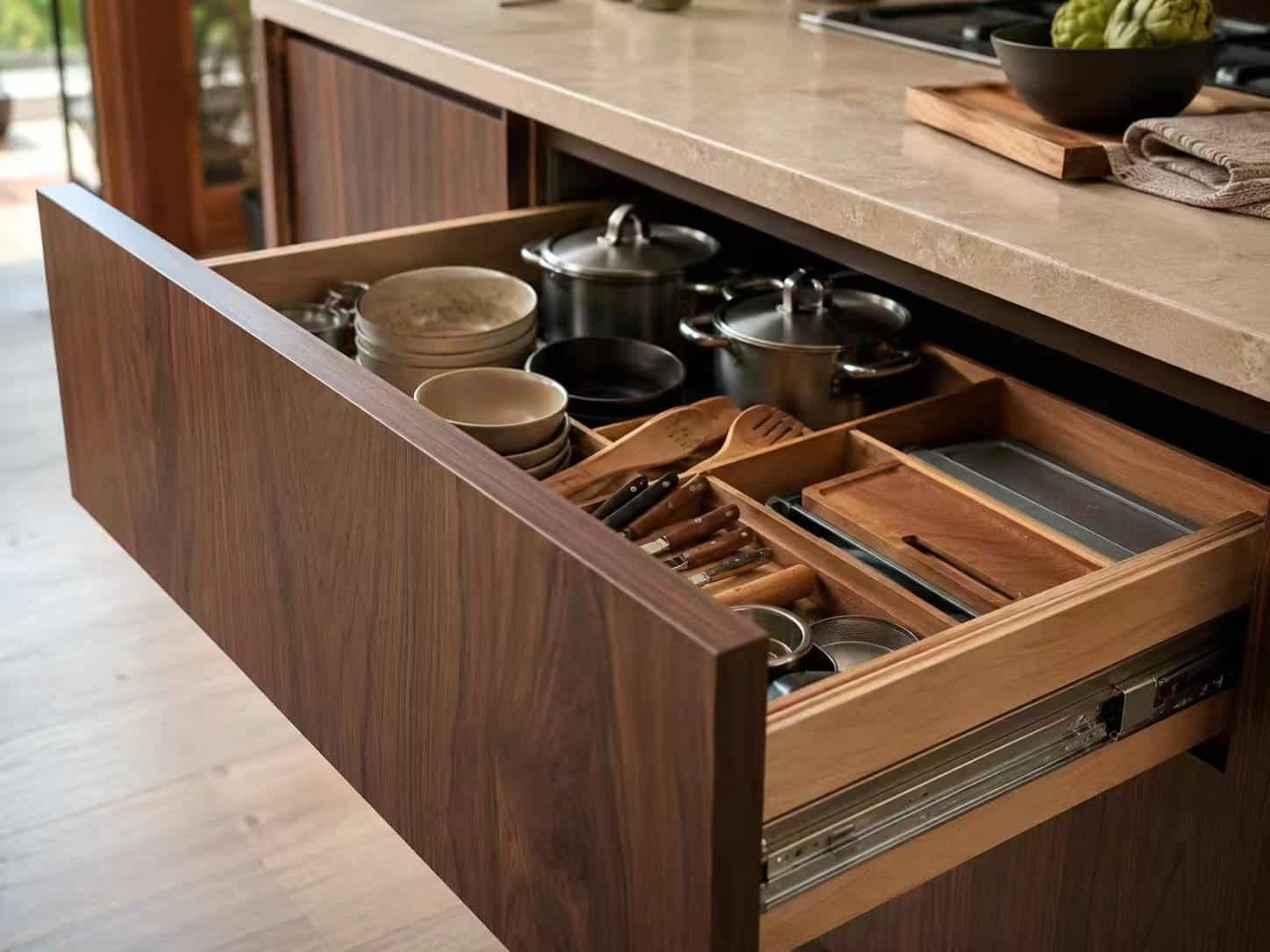
Island drawers are ideal for cookware, plates, bowls, utensils, trays, baking tools, and food preparation accessories. Compared with deep lower cabinets with fixed shelves, drawers are easier to use because they pull out fully and show everything inside.
A practical island storage plan may include:
- wide drawers for pots and pans;
- shallow drawers for cutlery and small tools;
- divided drawers for plates and bowls;
- pull-out bins for waste and recycling;
- hidden compartments for trays or serving items;
- open shelves for cookbooks or display pieces if suitable.
The goal is to place the most-used items close to the area where they are needed. For example, cookware should stay near the cooking zone, while tableware may be better near the dining side of the island.
Hidden Storage for Appliances and Clutter Control
One common problem in open kitchens is countertop clutter. Small appliances, charging cables, cutting boards, trays, and kitchen accessories can quickly make the space look messy.
Island storage can help hide these items while keeping them easy to access. A mixer, blender, toaster, coffee accessories, or food preparation tools can be stored inside the island instead of sitting permanently on the countertop.
Some kitchen islands may also include hidden outlets or charging zones. These details should be planned early, especially if the island needs power for appliances, lighting, or device charging.
Common Layouts for Tall Cabinets and Kitchen Islands
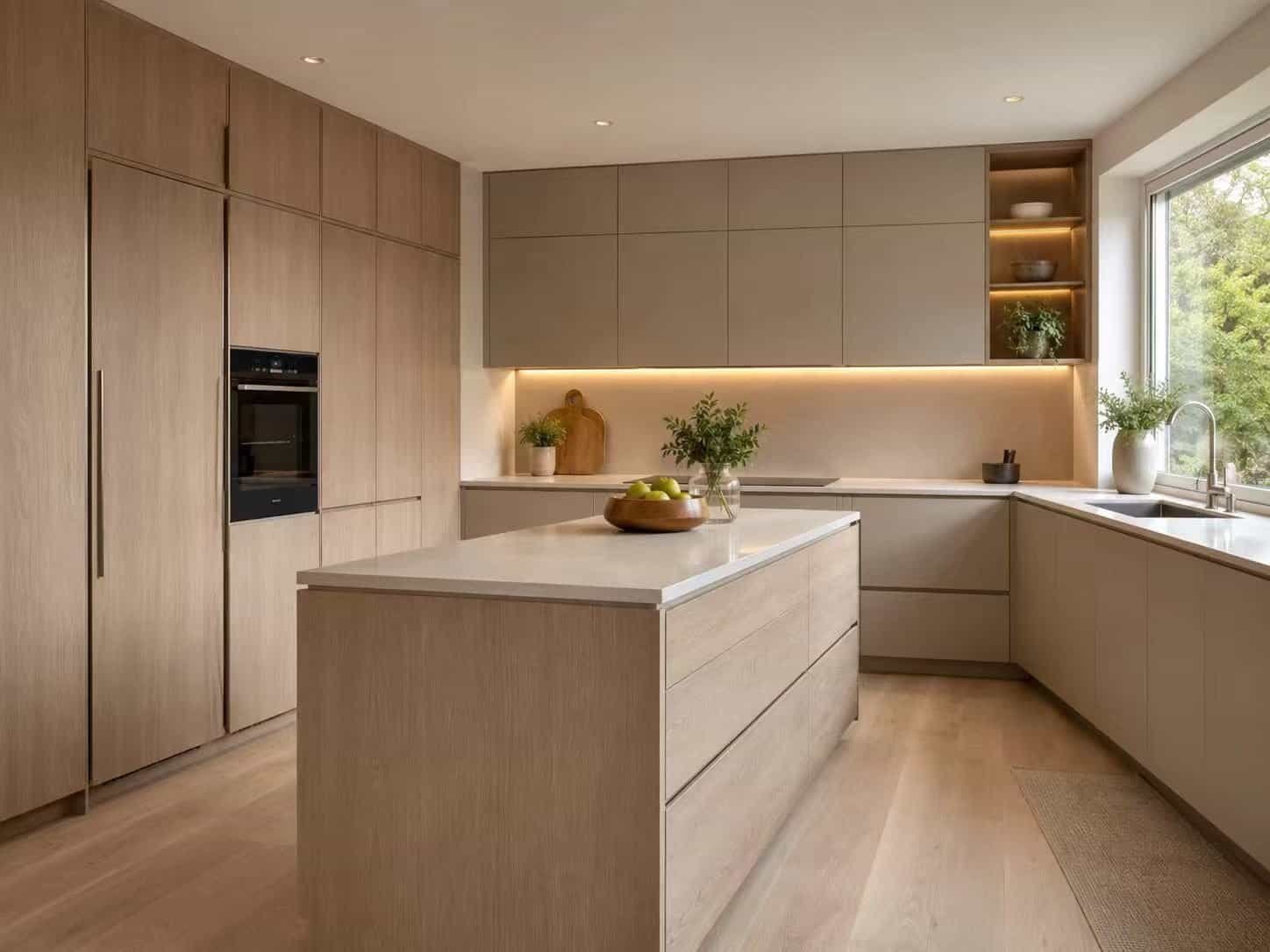
The best layout depends on the room size, wall length, appliance position, and circulation space. Floor-to-ceiling cabinets and island storage can work in many kitchen types, but they need enough clearance and a clear workflow.
A good kitchen layout should allow smooth movement between the refrigerator, sink, cooktop, preparation area, and storage zones. The island should support this movement rather than block it.
One-Wall Kitchen with Island Storage
A one-wall kitchen with island storage is common in open-plan apartments and modern homes. The tall cabinets sit along one wall, while the island adds worktop space, seating, and daily-use storage.
This layout works well when the back wall includes pantry cabinets, built-in appliances, and the refrigerator. The island can then store cookware, utensils, tableware, or preparation tools.
The main advantage is visual simplicity. The kitchen appears as one clean cabinet wall and one functional island. This makes it suitable for homes where the kitchen is directly connected to the dining or living area.
L-Shaped Kitchen with Full-Height Pantry Cabinets
An L-shaped kitchen offers more flexibility because it uses two connected walls. One side can be used for cooking and washing, while the other side can include full-height pantry cabinets or appliance towers.
The island can be placed in the open area of the L-shape if there is enough space. This creates a strong balance between storage and movement. The tall cabinets handle pantry and appliance storage, while the island supports preparation, serving, and everyday access.
For family kitchens, this layout can create clear zones: storage, cooking, washing, preparation, and dining.
U-Shaped Kitchen with a Central Island
A U-shaped kitchen with a central island is more suitable for larger rooms. It provides generous counter space and storage, but it requires careful planning to avoid making the kitchen feel crowded.
In this layout, floor-to-ceiling cabinets may be placed along one side of the U-shape, while the island becomes the central work surface. This can be practical for larger family kitchens or luxury homes, but the island must not interrupt the main workflow.
If the room is not wide enough, a peninsula may work better than a full island.
Materials, Finishes, and Lighting to Consider
Because floor-to-ceiling cabinets cover a large visual area, material selection is very important. A finish that looks good on a small cabinet door may feel too strong when used across a full wall.
The kitchen island also needs to coordinate with the tall cabinets. It does not have to use exactly the same finish, but the colors and textures should feel connected. A balanced material palette usually includes one main cabinet finish, one countertop material, one accent texture, and a carefully planned lighting layer.
Matte Wood Veneer and Warm Neutral Finishes
Matte wood veneer is a good option when the kitchen needs warmth and natural texture. It can soften the large surface of tall cabinets and make the space feel more comfortable.
Warm walnut, oak, beige wood tones, soft grey, greige, and warm white finishes are often easier to use in large cabinet areas than very glossy or high-contrast materials.
For smaller kitchens, lighter finishes can make full-height cabinets feel less heavy. For larger kitchens, darker wood tones can create a stronger visual effect, but they should be balanced with lighter countertops, glass details, or good lighting.
Glass-Front Cabinets and Integrated LED Lighting
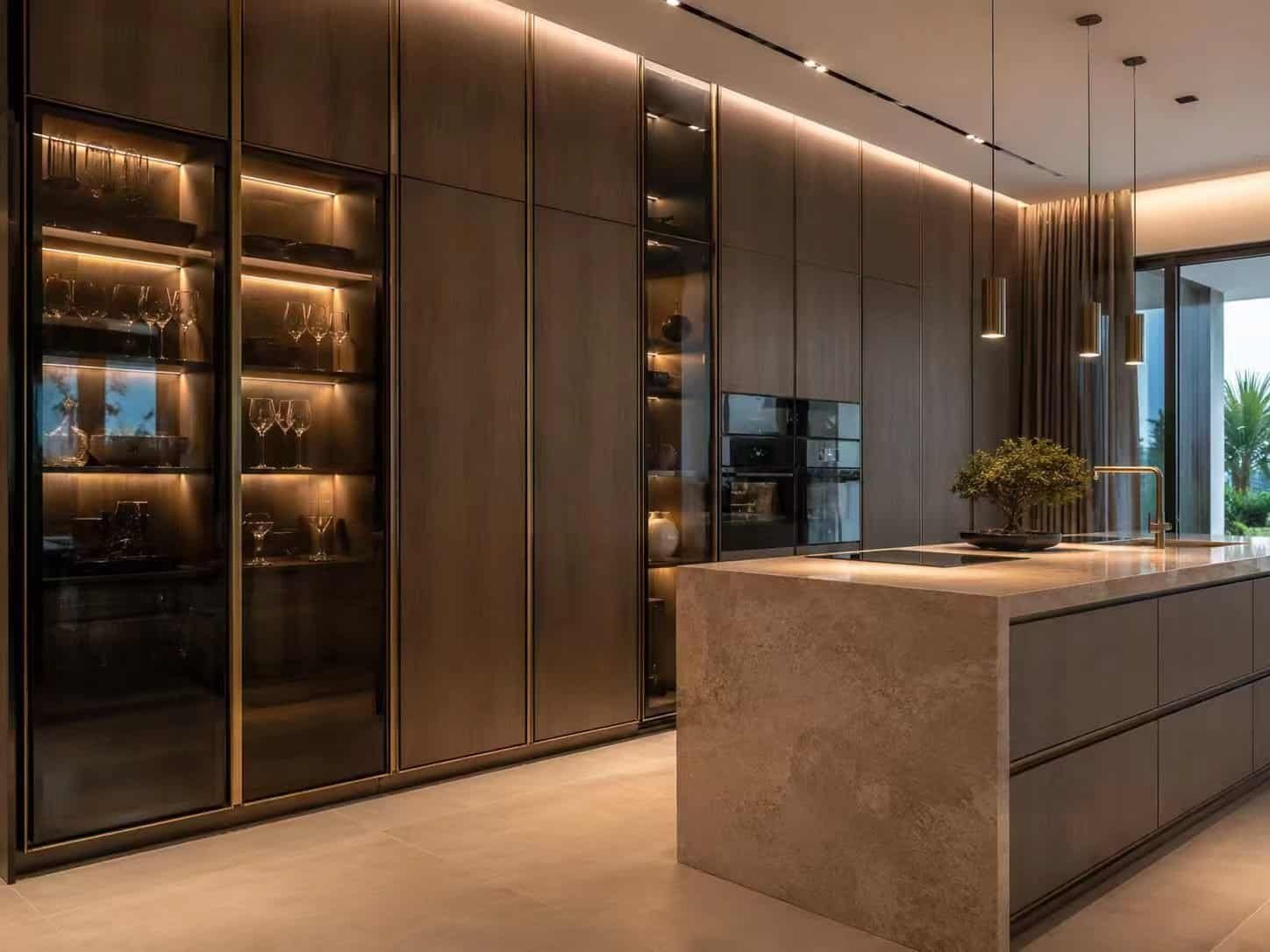
Glass-front cabinets can help break up a tall cabinet wall. Instead of using solid doors across the entire wall, a few glass sections can create depth and visual rhythm.
Integrated LED lighting can also make the design feel lighter. Soft interior lighting inside glass cabinets, under-shelf lighting, or hidden lighting near the worktop can reduce shadows and improve usability.
The goal is not to make the kitchen look overly decorative. Good lighting should support both function and atmosphere.
Quartz and Sintered Stone Countertops
The island countertop is one of the most visible surfaces in the kitchen. Quartz and sintered stone are common choices because they offer a clean, refined, and durable appearance.
Soft beige, warm white, light grey, and stone-look surfaces usually pair well with floor-to-ceiling cabinets. If the tall cabinets are wood-toned, a light stone countertop can brighten the kitchen. If the cabinets are white or beige, a subtly textured countertop can prevent the design from looking flat.
The countertop should also match the way the island is used. A family kitchen may need a practical, easy-to-clean surface, while a larger open-plan kitchen may place more emphasis on visual impact.
How to Avoid a Heavy or Crowded Look
The biggest risk of floor-to-ceiling kitchen cabinets is visual heaviness. A full wall of tall cabinet doors can make the kitchen feel closed in, especially if the room is narrow or the cabinet finish is dark.
A good design should create storage without making the kitchen feel like a storage room. The key is to balance cabinet volume with open space, material contrast, lighting, and comfortable proportions.
Use Lighter Finishes on Large Cabinet Surfaces
Large cabinet surfaces usually feel more comfortable when the color is calm and balanced. Warm white, beige, light oak, soft grey, muted walnut, and greige finishes can help tall cabinets blend into the room.
Dark finishes can still work in larger kitchens, but they need enough light and visual contrast. A dark cabinet wall may need a light island countertop, glass cabinet sections, open shelves, or nearby natural light to prevent the space from feeling too heavy.
Break Up Tall Cabinets with Open Shelves or Glass Doors
Not every tall cabinet needs to be a solid door. A few open shelves, glass-front sections, or display niches can help create breathing space.
This does not mean the kitchen should become cluttered. The purpose is to introduce rhythm and depth. Even one vertical glass cabinet or one small open section can reduce the feeling of a heavy cabinet wall.
Keep the Island Proportion Comfortable
The island should fit the room, not dominate it. A large island may look impressive, but if it blocks movement or makes drawers hard to open, it becomes inconvenient in daily life.
Before deciding the island size, consider:
- walking space around the island;
- drawer opening space;
- appliance door swing;
- seating space if stools are included;
- distance between the sink, cooktop, and refrigerator;
- whether two people can use the kitchen at the same time.
A slightly smaller island with better clearance is often more practical than an oversized island.
Practical Checklist Before Choosing This Layout
Before choosing floor-to-ceiling kitchen cabinets with island storage, it is useful to review the design from both a storage and daily-use perspective.
Layout and Space
Ask these questions first:
- Is there enough wall length for tall cabinets?
- Will the tall cabinet wall block natural light?
- Is there enough clearance around the island?
- Can drawers and appliance doors open comfortably?
- Does the kitchen connect smoothly with the dining or living area?
- Will the island support the cooking workflow or interrupt it?
Storage Planning
Good storage planning should separate high-frequency and low-frequency items.
Tall cabinets are better for:
- pantry items;
- built-in appliances;
- cleaning tools;
- less-used serving pieces;
- extra tableware;
- seasonal items.
Island storage is better for:
- cookware;
- daily tableware;
- cutlery;
- preparation tools;
- trays;
- small kitchen accessories;
- hidden waste bins.
Material and Visual Balance
Before finalizing finishes, consider:
- Will the tall cabinet finish feel too heavy across a full wall?
- Does the island countertop balance the cabinet color?
- Should any section include glass doors, open shelves, or lighting?
- Are the finishes consistent with the rest of the home?
- Does the kitchen feel warm, clean, and easy to live with?
Lighting and Practical Details
Lighting should be planned together with storage and materials. A kitchen with tall cabinets may need more layered lighting to avoid dark corners or heavy surfaces.
Consider:
- task lighting above the island;
- interior lighting for glass cabinets;
- under-cabinet lighting near work areas;
- hidden outlets or charging zones;
- lighting color temperature;
- easy access to frequently used items.
Soft-close drawers, strong hardware, adjustable shelves, and pull-out systems can also improve daily use, especially inside deep drawers and tall storage zones.
Key Takeaways
Floor-to-ceiling kitchen cabinets with island storage can make a kitchen more organized, more spacious, and easier to use. Tall cabinets are best for vertical storage, pantry goods, appliances, and less-used items. The island is better for daily-use cookware, tableware, preparation tools, and hidden small-item storage.
The most successful designs are not simply the ones with the most cabinets. They are the ones that balance storage, workflow, materials, lighting, and visual comfort.
A good plan should answer five basic questions:
- What should be stored in the tall cabinets?
- What should be stored in the island?
- Is there enough clearance for comfortable movement?
- Do the materials make the kitchen feel balanced and warm?
- Will the design still feel clean and practical in everyday use?
When these questions are answered clearly, floor-to-ceiling cabinets and island storage can work together as a practical kitchen system rather than just a large amount of cabinetry.