 English
  日本語
日本語  العربية
  Deutsch
  Español
  Français
  한국어
한국어  Português
  Татар теле
  Русский
 Outdoor BBQ cabinet ideas become useful only when they turn into a clear module list. A patio photo may show a beautiful grill island, but before you order custom cabinetry, you still need to decide where the grill sits, whether a sink is needed, how tools and fuel will be stored, what countertop will handle outdoor use, and how service access will remain available after installation.
For a covered patio, villa garden or outdoor cooking area, the best cabinet plan usually starts with function rather than appearance. The finish, door style and countertop edge matter, but they should come after the working modules are clear. This is especially important for modular stainless steel BBQ cabinets, where grill openings, sink positions, storage compartments and service panels need to be coordinated before production.
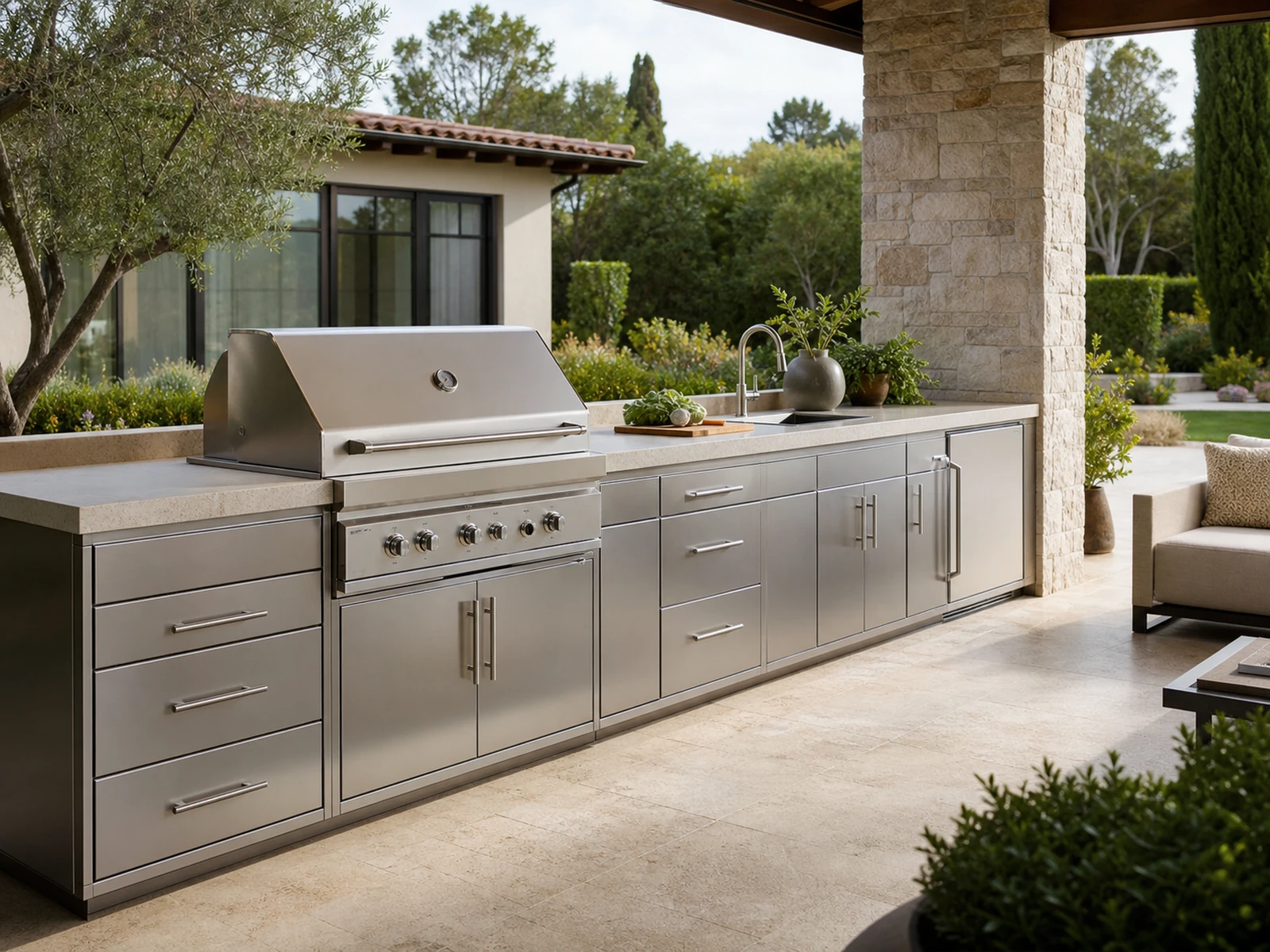
Turn Outdoor BBQ Cabinet Ideas Into a Module List
The first question is not “Which cabinet style looks best?” It is “Which modules does this outdoor cooking area actually need?” Once you answer that, the design becomes easier to discuss with a cabinet maker, designer or contractor.
A useful module list usually includes:
- the main grill or cooking appliance position;
- prep counter space beside the grill;
- a sink or wet zone, if water supply and drainage are planned;
- drawer and door storage for tools, trays and tableware;
- fuel, waste or cleaning storage where appropriate;
- countertop material and edge details;
- ventilation, heat clearance and appliance access;
- service panels for utilities and future maintenance.
This approach keeps outdoor BBQ cabinet ideas practical. It also reduces the risk of ordering a cabinet run that looks complete but cannot support the way people cook, clean and serve outside.
For modular stainless steel outdoor BBQ island planning, this module-first thinking is also helpful because each cabinet function has to relate to the grill size, sink position, countertop openings, stainless steel cabinet body and installation conditions.
Start With the Grill Module and Heat Zone
The grill module is normally the anchor of an outdoor BBQ cabinet. Its size, heat output, lid movement and side clearance influence the rest of the cabinet run. Before you order, confirm whether the project needs a built-in grill, freestanding grill recess, side burner, warming drawer or specialty cooking area.
The grill is not only an appliance. It creates a heat zone. That means the cabinet plan should consider nearby materials, ventilation, landing space and service access. If the grill lid opens toward a wall, column or screen, the cabinet may look right in plan view but feel awkward in use. If there is no counter space beside the grill, trays, tongs and cooked food may end up in the wrong place.
For a covered patio, heat and smoke movement also deserve attention. A roof makes the space more comfortable, but it does not remove the need for clearance, airflow and cleaning access. The cabinet body, countertop and surrounding finishes should be coordinated with the grill supplier’s installation requirements and the site’s actual ventilation conditions.
Decide Whether the Sink and Prep Zone Belong in the Same Run
A sink can make an outdoor BBQ cabinet more convenient, but it should not be added only because it looks complete. The decision depends on water supply, drainage, local installation conditions, cleaning habits and the distance to the indoor kitchen.
If the outdoor cooking area is used often, a sink module can support hand washing, rinsing vegetables, cleaning tools and managing small spills. It works best when paired with a prep counter, because washing and cutting need landing space. A sink squeezed into a narrow cabinet with no counter beside it may not solve the real workflow problem.
If water and drainage are difficult to coordinate, the better choice may be a dry prep zone with storage below. For some villa gardens or covered patios, a clean prep counter, tool drawer and nearby indoor kitchen access may be more practical than forcing a wet module into the layout.
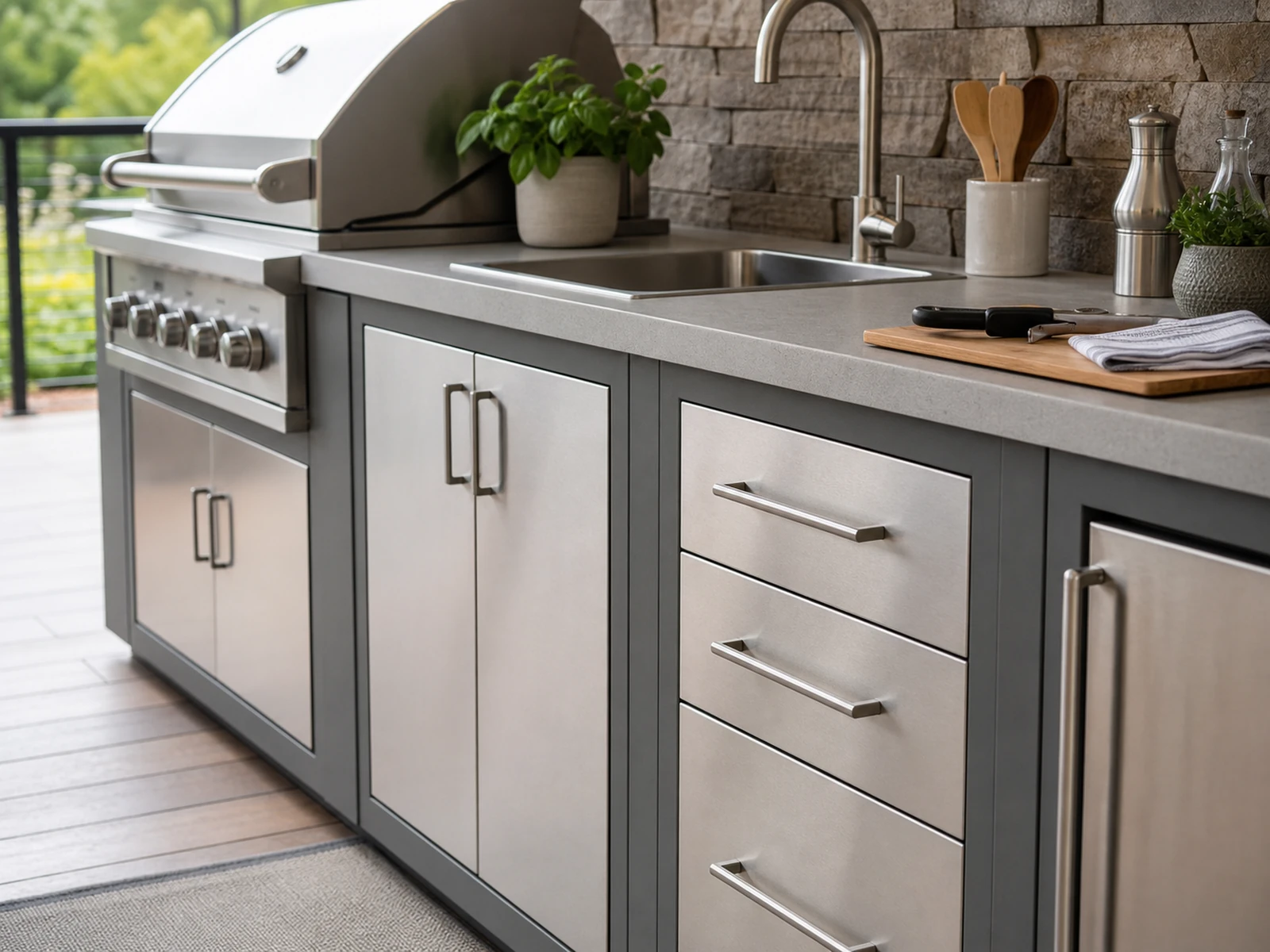
Plan Storage for Tools, Fuel, Tableware and Cleaning
Storage is where many outdoor BBQ cabinet ideas become either useful or frustrating. A grill island may look simple from the front, but the inside needs a clear storage plan.
Start with tools: tongs, grill brushes, skewers, thermometers, trays and protective gloves. These items are often easier to use in drawers than behind deep doors. Then consider tableware and serving pieces. If the BBQ zone is close to dining seating, shallow drawers or door cabinets can reduce trips back to the indoor kitchen.
Fuel storage needs more caution. Gas cylinders, charcoal, pellets or other fuels should be planned according to appliance instructions, local code requirements and ventilation needs. Do not treat fuel storage as an ordinary closed cabinet unless the appliance and site conditions allow it.
Cleaning storage also matters. Outdoor cooking creates grease, ash, packaging and food waste. A pull-out bin, cleaning drawer or dedicated small compartment can make the cabinet easier to maintain. In humid or coastal environments, it is better to keep cleaning supplies organized and avoid trapping moisture inside poorly ventilated spaces.
Match Cabinet Body and Countertop to Outdoor Exposure
The material decision should match the exposure level. A covered patio is more protected than a fully open garden, but it is still outdoors. Rain splash, humidity, heat, dust, UV exposure and cleaning chemicals may all affect the cabinet over time.
A stainless steel cabinet body is often selected for outdoor BBQ cabinets because it can support a clean, modular and moisture-aware construction. It can be especially useful for grill islands, sink bases and storage modules where the cabinet may face changing outdoor conditions. However, stainless steel is not a magic promise that removes all maintenance. The grade, finish, hardware, fasteners, ventilation and cleaning routine still matter.
The countertop should also be specified as an outdoor-rated surface. It needs to coordinate with appliance cutouts, sink openings, overhangs, seams and edge details. Stone, sintered stone, stainless steel and other outdoor-suitable surfaces can all be considered depending on the project, but the final choice should match climate, use level, design intent and supplier recommendations.
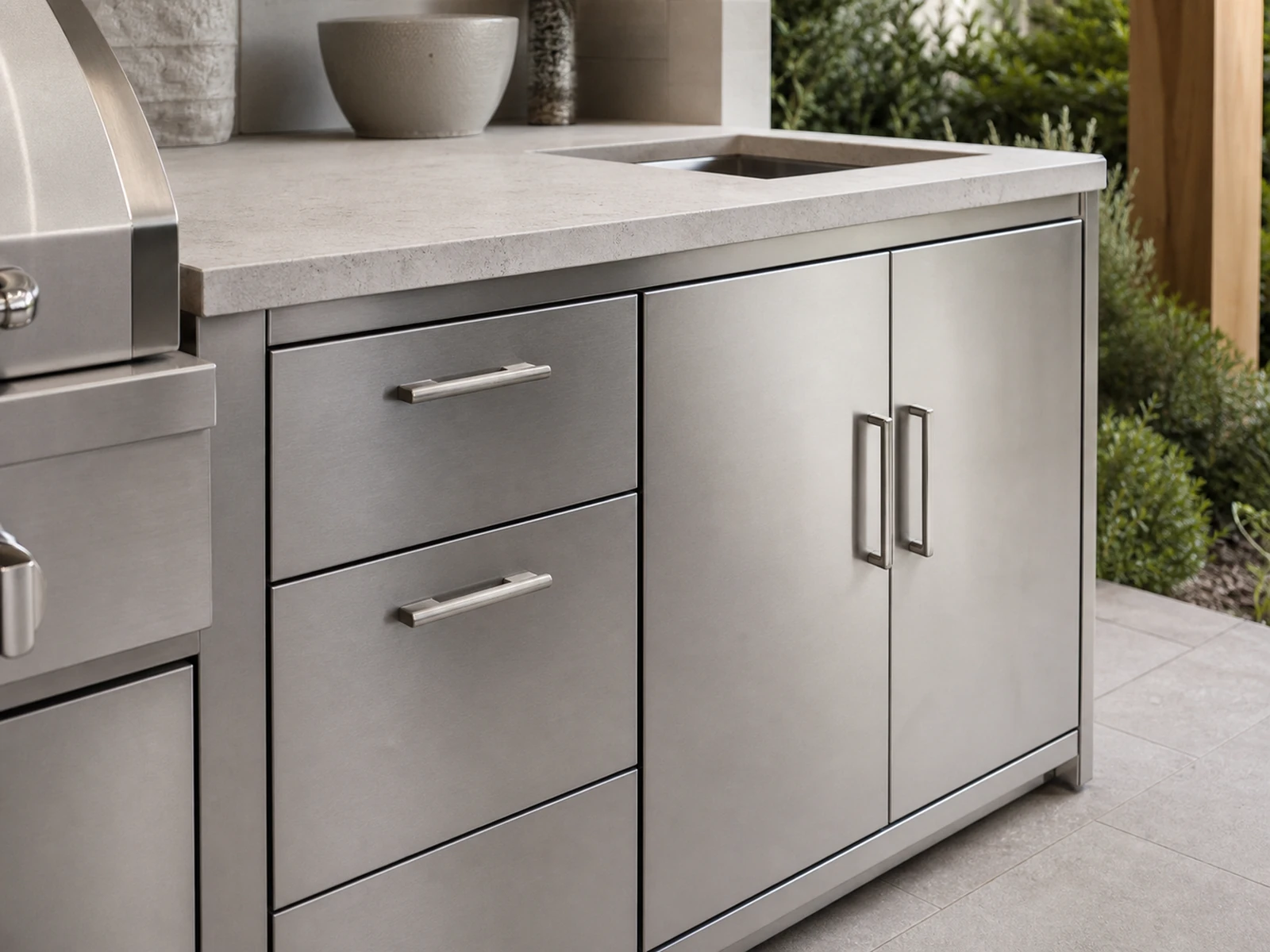
Leave Access for Utilities, Appliances and Maintenance
Before ordering an outdoor BBQ cabinet, ask how the cabinet will be serviced after installation. This question is easy to miss because service access is usually not the most attractive part of the design, but it is one of the most important parts of a real project.
Gas lines, electrical outlets, water supply, drainage and appliance connections should be coordinated before production drawings are finalized. If access panels are hidden, blocked by drawers or covered by fixed stone, future maintenance can become difficult. If the grill or sink needs removal, the cabinet should allow a realistic path for inspection and replacement.
For custom cabinetry, drawings should confirm appliance dimensions, cutout sizes, door swing, drawer clearance, countertop openings, utility routes and wall or floor conditions. A modular BBQ island may simplify planning, but it still needs site-specific coordination. This is where a professional cabinet supplier can help translate outdoor BBQ cabinet ideas into a buildable order.
Outdoor BBQ Cabinet Module Decision Table
The table below can help you decide which modules belong in the cabinet before ordering.
| Module | When It Makes Sense | Confirm Before Ordering |
|---|---|---|
| Grill module | The BBQ area is the main cooking zone | Appliance size, heat clearance, ventilation and lid movement |
| Sink module | Water and drainage are available and outdoor cleaning matters | Plumbing route, drain location, cabinet base and countertop opening |
| Prep counter | Food will be prepared outside, not only grilled | Landing space beside grill and sink, countertop depth and work height |
| Drawer storage | Tools and small items need quick access | Drawer depth, weather exposure, handle choice and internal organization |
| Door storage | Larger trays, cookware or tableware need storage | Shelf layout, door swing and moisture control |
| Fuel or waste module | Fuel, waste or cleaning items need a dedicated zone | Appliance rules, ventilation, safety and local requirements |
| Service access | Utilities or appliances may need inspection | Removable panels, access direction and site clearance |
This table should be used as a starting point, not as a fixed formula. A compact covered patio may need fewer modules with better placement. A villa garden BBQ run may need more serving and storage functions because the grill area is farther from the indoor kitchen.
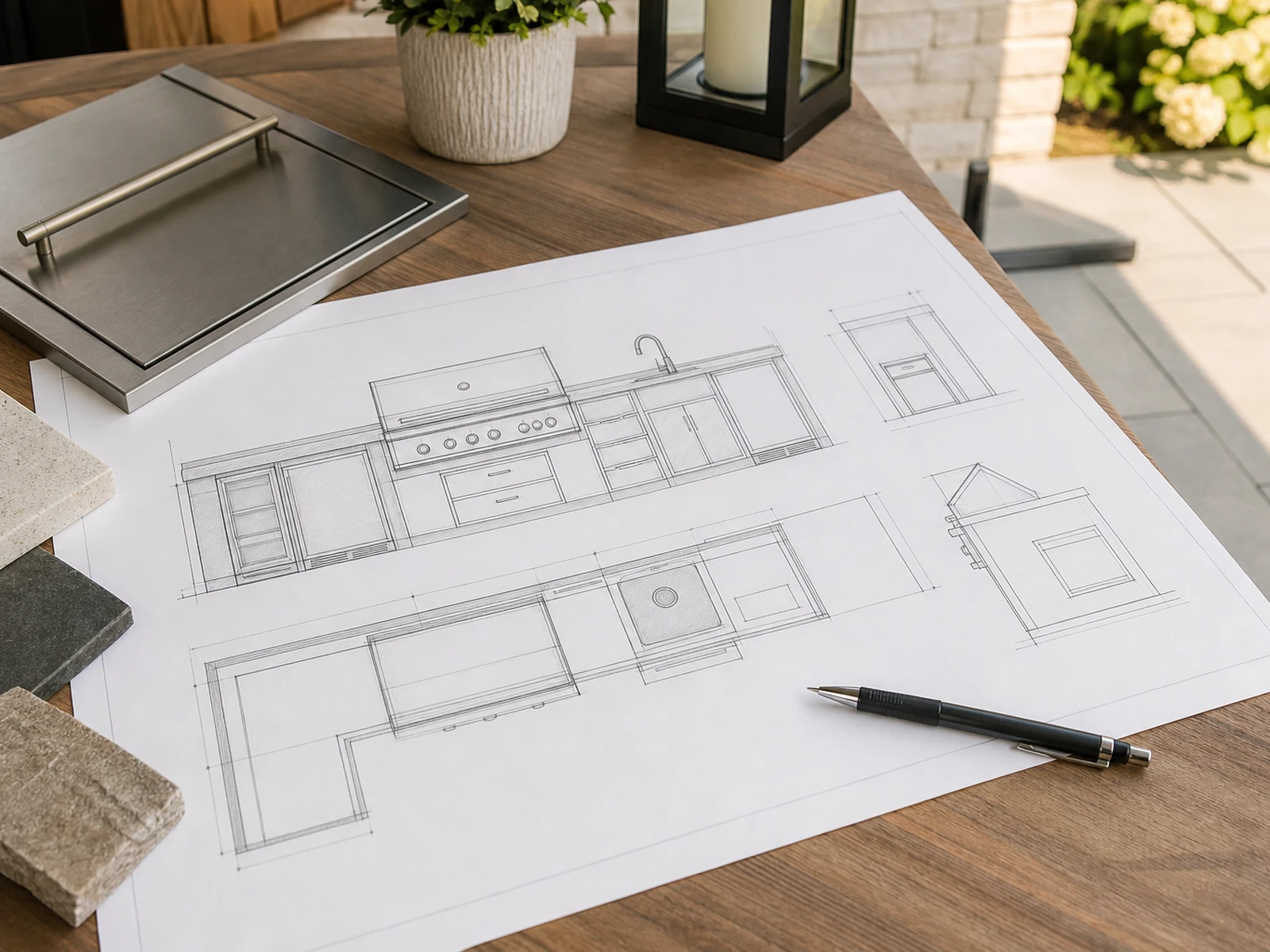
Final Confirmation Checklist Before You Order
Before the cabinet order is confirmed, prepare a simple project brief. It does not need to be complicated, but it should answer the questions that affect production and installation.
- The grill or cooking appliance model, size and installation requirements.
- Whether the layout needs a sink, dry prep zone or both.
- Storage types for tools, tableware, fuel, waste and cleaning items.
- Cabinet body material, finish direction and hardware expectations.
- Countertop material, openings, seams, overhangs and edge details.
- Utility locations for gas, electricity, water and drainage.
- Service access for appliances and future maintenance.
- Site conditions, including roof cover, wall position, flooring and exposure.
- Delivery, installation and coordination responsibilities.
- Product details that need supplier confirmation before final drawings.
If these points are clear, the outdoor BBQ cabinet can be designed with fewer assumptions. The cabinet maker can understand the intended use, the contractor can prepare the site more accurately, and the homeowner can compare proposals with better confidence.
Frequently Asked Questions
Do all outdoor BBQ cabinets need a sink?
No. A sink is useful when water supply and drainage are practical and when the outdoor cooking area is used often. If plumbing is difficult, a dry prep zone with good storage may be more sensible.
Is stainless steel suitable for outdoor BBQ cabinets?
Stainless steel is commonly used for outdoor BBQ cabinet bodies because it supports a clean, modular and moisture-aware structure. Still, the grade, finish, hardware, ventilation and maintenance routine should be confirmed for the project environment.
What should be confirmed before ordering a modular outdoor BBQ island?
Confirm the grill size, sink decision, storage modules, countertop openings, utility routes, service panels, site exposure and installation responsibilities before production drawings are finalized.
Can the same BBQ cabinet work for the USA, Australia and UAE?
The same module concept can be adapted, but climate and site exposure may change the details. Sun, humidity, coastal air, dust, heat and cleaning habits should be considered before confirming materials and hardware.
A Practical Next Step for Custom Outdoor BBQ Cabinets
The best outdoor BBQ cabinet ideas are not only attractive. They are ready to become drawings, module lists and production details. Before you order, decide what the cabinet must do: cook, wash, prepare, store, serve, hide utilities and remain accessible for maintenance.
If you are planning a covered patio, garden or villa BBQ area, collect the grill specification, site photos, rough dimensions, desired sink position, storage needs and exposure conditions first. With that information, a custom cabinetry team can help review the module list and develop a more practical stainless steel outdoor BBQ cabinet plan.