English
  日本語
日本語  العربية
  Deutsch
  Español
  Français
  한국어
한국어  Português
  Татар теле
  Русский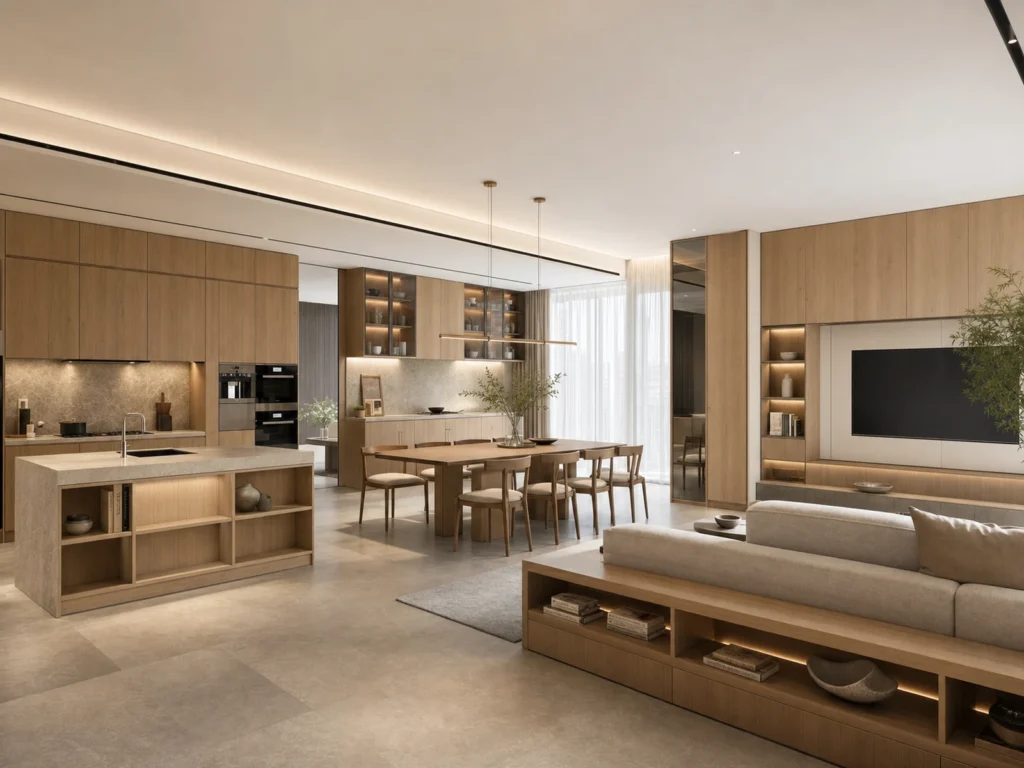
Modern Natural Oak Whole House Furniture
A coordinated natural-oak finish system for kitchens, dining storage, living room cabinetry, and bedroom wardrobes, prepared through room schedules, finish review, hardware selection, and approved drawings.
One Oak Language Across Several Rooms
Modern natural oak whole house furniture works best when the oak finish is planned as a coordinated language, not as a repeated surface in every room. The kitchen, dining area, living room, bedroom, and entrance zone can share the same warm natural-oak direction while changing proportions, panel combinations, glass details, and hardware by function.
Before the product drawings are developed, Sunrise Furnishing reviews the floor plan, room functions, finish direction, appliance information, and site notes. If you are still preparing the early brief, our article on whole house cabinetry planning before drawings begin explains which decisions should be coordinated before quotation and production.
Kitchen Cabinetry as the Material Anchor
The kitchen often carries the strongest material statement because it contains the most technical cabinet work. Natural oak fronts can be paired with restrained solid-color panels, pale stone surfaces, integrated appliances, and muted metal hardware. This gives the whole home a clear starting point while keeping the kitchen practical for cooking, cleaning, storage, and maintenance.
Appliance models, cabinet openings, ventilation, socket access, water points, countertop edge details, and drawer hardware should be reviewed early. The final kitchen appearance depends on approved material samples and production drawings rather than a single mood image.
Dining and Living Storage with Lighter Proportions
Dining and living storage can use the same natural oak language in a lighter way. A sideboard, TV wall, display shelf, or low storage cabinet may use oak as a frame, back panel, open niche, or selected door group instead of covering every vertical surface. This helps the open-plan area feel connected to the kitchen without becoming visually heavy.
Glass doors, concealed lighting, open shelves, cable routes, and display zones should be chosen according to real use. A living room cabinet may need media equipment ventilation and wire access, while a dining sideboard may need drawers, tray storage, wine-glass storage, or serving surfaces.
A Quieter Finish Balance for Bedroom Storage
Bedroom wardrobes usually need a calmer finish balance than the kitchen or living area. Natural oak can appear on wardrobe doors, open shelves, drawer fronts, interior accents, or a dressing niche, while quieter solid-color panels reduce visual weight. The exact proportion depends on room size, lighting, ceiling height, and the buyer’s storage habits.
Wardrobe planning should confirm hanging zones, drawer quantities, luggage space, shoe storage, mirror position, lighting, door opening method, and internal accessories. A consistent oak direction can connect the bedroom to the rest of the home while still supporting a quieter storage wall.
Grain Direction, Edges, and Hardware
Oak-tone cabinetry needs careful review of grain direction, panel matching, edge treatment, handle position, glass details, lighting strips, and metal accents. Long horizontal grain can make a low cabinet feel calmer, while vertical grain may suit tall wardrobe doors or full-height kitchen panels. The choice should be coordinated in drawings so room-by-room details do not conflict.
Hardware can also vary by room. Kitchen drawers may need stronger runners and easy-grip handles, while living cabinets may use slimmer pulls, concealed hardware, or push-to-open fronts. Bedroom wardrobes may need softer handle profiles and lighting that supports daily dressing rather than display only.
From Room Schedule to Approved Drawings
A whole-house furniture package should move from room schedule to approved drawings before production. The schedule records each room, cabinet purpose, dimensions, appliance information, storage needs, finish direction, and special details. The drawing set then confirms plans, elevations, sections, fillers, skirting, ceiling junctions, door openings, hardware, and service access.
For overseas projects, site photos, marked floor plans, appliance specifications, delivery access notes, and installation conditions help reduce assumptions. Final dimensions, materials, and scope should be based on approved drawings and verified site information.
Prepare Your Whole-House Cabinetry Brief
To discuss modern natural oak whole house furniture, prepare the floor plan, room measurements, site photos, appliance model information, preferred finish direction, hardware expectations, and any available drawings. Sunrise Furnishing can review the information and help organize a cabinet direction for kitchen, dining, living, bedroom, and other storage areas.
Frequently Asked Questions
Oak tone, grain, and finish appearance can vary depending on the selected material, veneer, panel, lighting, and sample approval. Sunrise Furnishing recommends reviewing physical samples and approved drawings before production so the whole-home finish direction is clear.
No. A coordinated whole-house project can use more oak in the kitchen, lighter oak proportions in dining or living storage, and quieter oak accents in bedrooms. The goal is a connected material language, not identical cabinet surfaces everywhere.
Grain direction can be planned in the drawing and material review stage. Horizontal or vertical grain choices should be confirmed by cabinet area, panel size, door division, edge treatment, and approved sample direction before production.
Yes. Hardware can vary according to room function. Kitchen drawers may need stronger runners and practical grips, while living storage may use slimmer details and bedroom wardrobes may use quieter profiles. The hardware finish should still coordinate with the overall oak language.
The drawing package should usually confirm plan views, elevations, key sections, cabinet dimensions, appliance openings, materials, hardware, fillers, skirting, ceiling junctions, door directions, and installation notes. Final scope depends on approved drawings and verified site dimensions.