English
  日本語
日本語  العربية
  Deutsch
  Español
  Français
  한국어
한국어  Português
  Татар теле
  Русский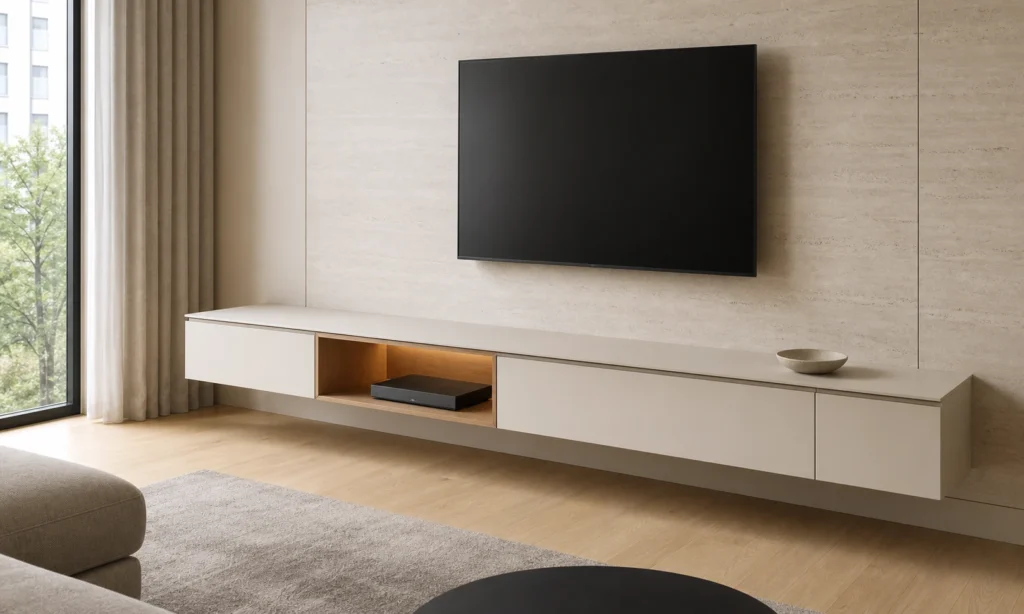
Floating TV Stand with Warm Oak Storage
A wall-mounted media cabinet for calm apartment living rooms, planned with warm oak, concealed cable routes, and a slim stone-look backdrop.
The Floating TV Stand brings floating drawer storage and concealed cable routing together with deep media drawers, one open device niche, and cable-managed equipment space, so this warm oak floating media cabinet can support real project use while keeping the visual identity clear in an urban apartment living room with pale timber flooring and restrained furnishings.
Floating TV Stand Design Direction for Urban Apartment Living Room with Pale Timber Flooring and Restrained Furnishings
This custom floating tv stand is planned as a long floating low cabinet below the television, an offset warm-oak open niche, and a slim travertine-look wall panel. The design is not treated as loose furniture; it is a project-specific cabinet system that needs to work with the surrounding space, the buyer's routine, and the visual language of the wider project.
Buyers considering this type of warm oak floating media cabinet usually care about media storage, wall composition, viewing comfort, cable control, and a custom finish that belongs with the living room architecture. The Floating TV Stand description therefore explains how the focus on floating drawer storage and concealed cable routing is integrated with a long floating low cabinet below the television, an offset warm-oak open niche, and a slim travertine-look wall panel, so the page stays tied to real project decisions rather than broad style language.
What Buyers Compare Before Choosing a Floating TV Stand
Before asking for a quotation for a Floating TV Stand, many buyers compare freestanding media furniture, built-in wall panels, floating cabinets, open display shelves, and the amount of concealed storage needed around the television. This warm oak floating media cabinet gives the comparison a clearer direction by using floating drawer storage and concealed cable routing as its main functional point.
The visual identity is defined by warm natural oak, soft ivory, pale travertine, and small matte-black accents. That palette helps the cabinet feel intentional in an urban apartment living room with pale timber flooring and restrained furnishings, while still leaving room for project-specific finish adjustments when the surrounding architecture has a different tone.
Layout Planning Around Floating Drawer Storage and Concealed Cable Routing
For this Floating TV Stand, the core layout should be reviewed around wall structure, TV size, viewing distance, socket position, router or console depth, speaker placement, skirting lines, and whether the cabinet needs floor clearance. These checks affect more than appearance; they decide whether doors open properly, storage is reachable, and the final cabinet feels comfortable in daily use.
For this warm oak floating media cabinet, the product is organized around deep media drawers, one open device niche, and cable-managed equipment space. The internal zoning of the Floating TV Stand can be adjusted, but the relationship between the main working area, storage modules, visible display, and service access should stay clear in the approved drawings.
Materials and Finishes for Quiet Contemporary Apartment Living Room
The material direction combines natural oak veneer, ivory lacquer, travertine-look porcelain, and black anodized aluminum. These finishes should be selected together, because one changed surface can affect the whole impression of the cabinet, especially when metal, glass, timber, stone, or lacquer meet in a small area.
The door and handle direction uses flat handleless drawer fronts with precise shadow gaps. This detail matters for both visual quietness and daily handling, so samples, edge thickness, pull comfort, and cleaning expectations should be discussed before production starts.
Functional Zones Inside the Floating TV Stand
The Floating TV Stand should make its practical value clear, not only present an attractive front view. Here, the focus on floating drawer storage and concealed cable routing is the reason the product earns its place in the project, while the planned zones, including deep media drawers, one open device niche, and cable-managed equipment space, help the buyer imagine daily use.
The surface styling is intentionally restrained: a slim ivory lacquer top with one small ceramic bowl and no repeated decorative stack. In the real product, the same restraint should guide accessories, bottle density, countertop objects, or open-shelf display so the cabinetry remains the focus.
Site Checks Before Producing a Floating TV Stand
Before production for this Floating TV Stand, the project team should confirm cable routing, device ventilation, drawer access, service gaps, wall fixing, panel alignment, and the relationship between the cabinet and the television recess. These details reduce the risk of an attractive design becoming difficult to install, service, or use after it reaches the site.
The proposed setting is an urban apartment living room with pale timber flooring and restrained furnishings. If the actual project has different wall conditions, utility positions, climate exposure, ceiling height, or circulation routes, the cabinet should be adjusted at drawing stage rather than corrected on site.
Custom Options for Floating TV Stand Projects
For this Floating TV Stand, customization can cover overall width, floating or floor-standing construction, open niches, drawer mix, display glass, lighting temperature, panel material, and hardware color. The goal is not to add every possible option, but to choose the details that support the buyer's space, usage habits, maintenance expectations, and preferred visual tone.
Because Sunrise Furnishing works with overseas residential and project clients, the final warm oak floating media cabinet specification can be refined through drawings, finish references, and practical discussions. The product can stay close to this identity while still responding to local installation conditions.
Overseas Drawing Inputs for the Floating TV Stand
For this Floating TV Stand, useful early information includes living-room measurements, TV and device sizes, wall photos, socket positions, preferred finishes, and any building or installer constraints. Clear input allows the design team to prepare a proposal that feels specific to the project instead of repeating a standard catalogue description.
After the warm oak floating media cabinet direction is approved, details such as module splits, finish confirmation, hardware selection, packing coordination, and installer notes can be organized around the final drawings. The process stays consultative, with the final scope based on confirmed project requirements.
FAQ for Floating TV Stand Buyers
Start with the TV size, wall width, socket positions, viewing distance, and the depth of devices that will sit inside the cabinet. For this warm oak floating media cabinet, the wall-mounted or built-in proportions also need to be checked against skirting, nearby doors, speaker positions, and the intended height of the screen.
The warm oak floating media cabinet should include cable openings, ventilated device space, and service access behind or inside the media zone. Because the concept includes deep media drawers, one open device niche, and cable-managed equipment space, the final drawings can separate routers, game consoles, speakers, and daily living-room items instead of forcing everything into one open shelf.
Yes. This warm oak floating media cabinet currently uses natural oak veneer, ivory lacquer, travertine-look porcelain, and black anodized aluminum, but finish samples can be coordinated with wall panels, flooring, sideboards, and doors. The important point is to review the full palette together, so the cabinet does not look like a separate furniture piece added after the room was designed.
This warm oak floating media cabinet can be adapted for both, but the layout should respond to the wall condition and room scale. Apartment projects may need lighter floating storage and compact cable planning, while villas can support larger display towers, wider panels, or more integrated lighting if the wall and circulation allow.
For a warm oak floating media cabinet proposal, useful inputs include room dimensions, TV and device sizes, wall photos, preferred materials, storage needs, and any architectural drawings. These details allow Sunrise Furnishing to prepare a more relevant layout, finish direction, and custom cabinetry proposal for overseas communication.
Plan a Floating TV Stand Around Your Space
Share your dimensions, site photos, preferred finishes, functional needs, and project context to discuss a Floating TV Stand that is planned around real use rather than a generic furniture size.