English
  日本語
日本語  العربية
  Deutsch
  Español
  Français
  한국어
한국어  Português
  Татар теле
  Русский
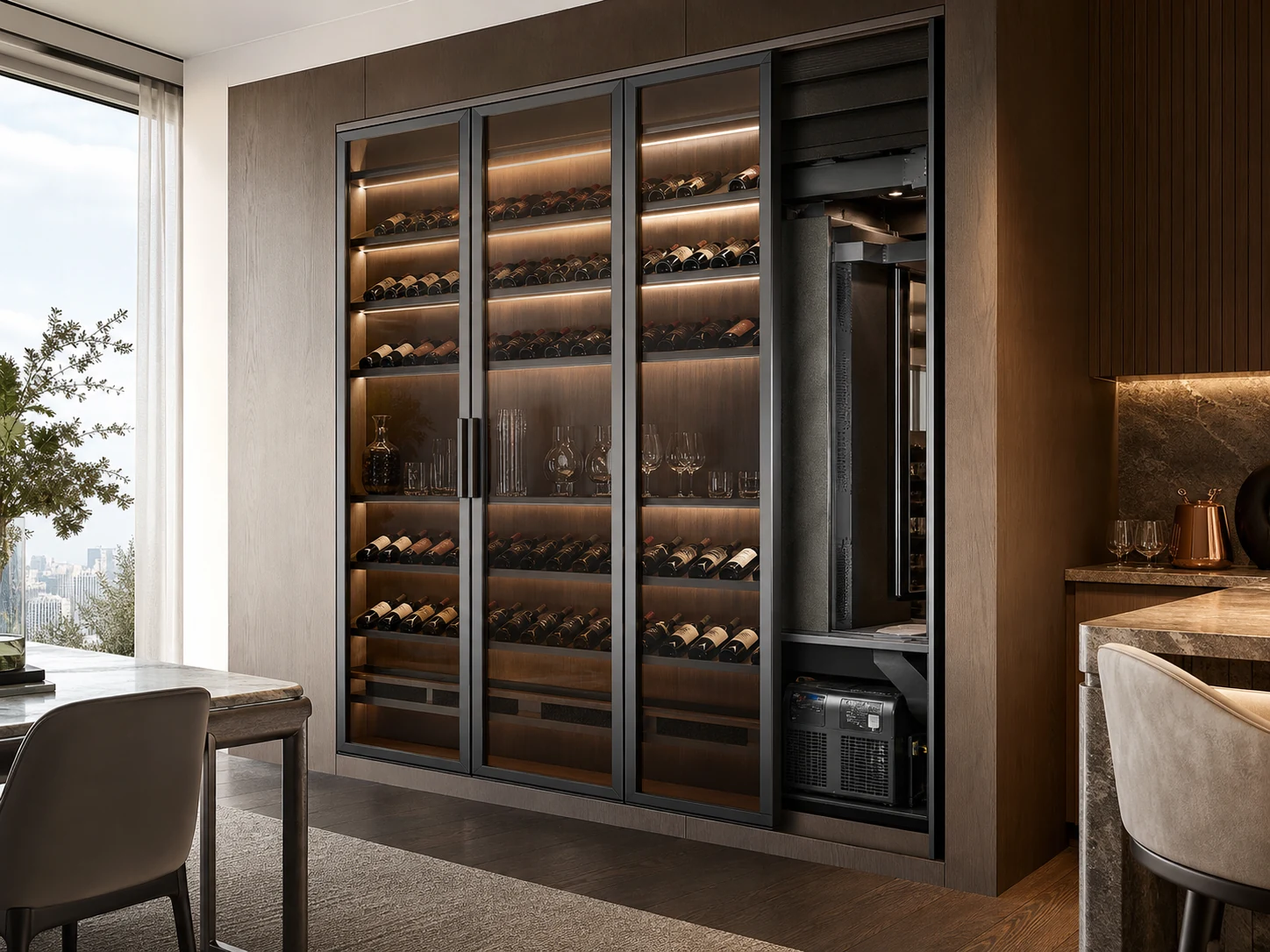
 A built-in wine cabinet can look finished from the front while the cooling unit behind it is still struggling for air. This is why wine cabinet ventilation for cooling unit planning should not be treated as a small detail after the cabinet shape is approved. A cooling unit needs a path for intake air, a path for heat exhaust, enough clearance around the equipment and a way to reach it for maintenance.
The hidden problem is simple: the cabinet may be designed around a neat opening, bronze glass doors and clean metal frames, but the airflow may be trapped behind a full back panel or inside a closed niche. When that happens, the wine cabinet is not only a display feature. It becomes a small mechanical space that was never properly planned.
Why the Airflow Problem Is Easy to Miss
The airflow problem is easy to miss because most cabinet decisions begin with what is visible. The front elevation shows door frames, glass color, lighting, shelves and the position of the cooling unit opening. It may not show whether fresh air can enter, whether hot air can leave or whether a technician can reach the unit later.
For a built-in wine cabinet, the cooling unit should not be imagined as a simple appliance placed inside a box. It is part of a small air system. When the system is planned correctly, air can move through the cabinet area according to the unit requirements. When it is not planned, the unit may pull in warm air, push heat into a closed cavity or recycle air inside the same enclosed space.
A cabinet opening is not an airflow plan
Leaving an empty opening for the cooling unit is only a starting point. It does not answer where the intake air comes from, where the exhaust air goes, how much space the unit requires or how the cabinet can be serviced later. In custom cabinetry, those questions should be answered before production drawings are finalized.
Cooling creates heat that still has to leave
A cooling unit removes heat from the wine storage area, but that heat does not disappear. It has to leave the surrounding cabinet space. If the exhaust side faces a closed back panel, a sealed top cavity or a wall with no planned outlet, heat can remain close to the equipment. This is the hidden airflow problem behind many built-in wine cabinet cooling units.
Where Built-In Wine Cabinets Trap Heat
Heat traps usually happen when the wine cabinet is treated as furniture first and mechanical planning second. A built-in design may be surrounded by tall panels, side cabinetry, a ceiling filler or a wall niche. These details make the cabinet look integrated, but they can also reduce air movement if the cooling unit has no planned route.
Closed rear cavities and full back panels
The rear of the cabinet is one of the first places to check. A full back panel may make the cabinet easier to manufacture or visually cleaner from the inside, but it can block service access or exhaust space if the cooling unit needs rear ventilation. In some designs, a removable back panel, planned opening or service cavity may be needed. The exact solution depends on the cooling unit model and the manufacturer’s installation instructions.
Decorative gaps that do not create real exhaust
A narrow shadow gap or decorative reveal is not always a ventilation path. It may look open in a rendering but still be too indirect, too blocked or too close to the wrong side of the unit. Wine cabinet ventilation for cooling unit airflow should be mapped as a route, not assumed from the appearance of a gap.
Wine Cabinet Ventilation for Cooling Unit Planning Starts Before Drawings
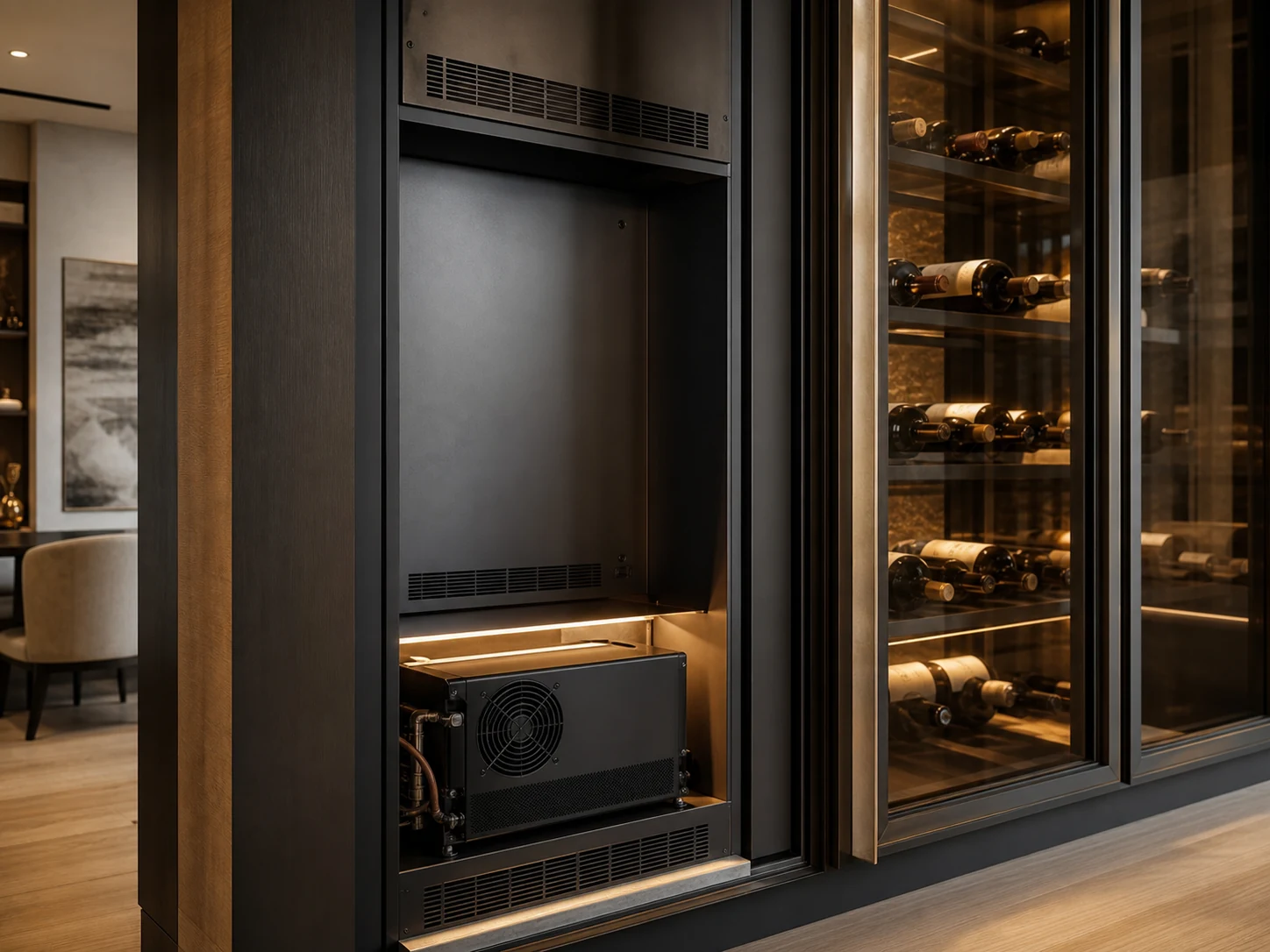
The safest time to solve ventilation is before the cabinet drawings are approved. Once the cabinet carcass, back panel, side panels, glass doors and surrounding trim are produced, changing the airflow path may become difficult. That is why wine cabinet ventilation for cooling unit planning should begin with the equipment, not with the final look alone.
Confirm the cooling unit model and airflow direction
Different cooling units can have different intake, exhaust and clearance requirements. Some designs may need front ventilation. Others may require rear, side or ducted airflow. The cabinet maker should not guess. Before production, the project team should confirm the cooling unit model, installation manual, intake direction, exhaust direction, power access and service method.
Map intake, exhaust, clearance and service access
Once the unit requirements are known, the cabinet drawing should mark four things clearly: where fresh air enters, where hot air leaves, what clearance is required and how the unit can be reached. This simple mapping step can prevent the cabinet from becoming a sealed box around a mechanical device.
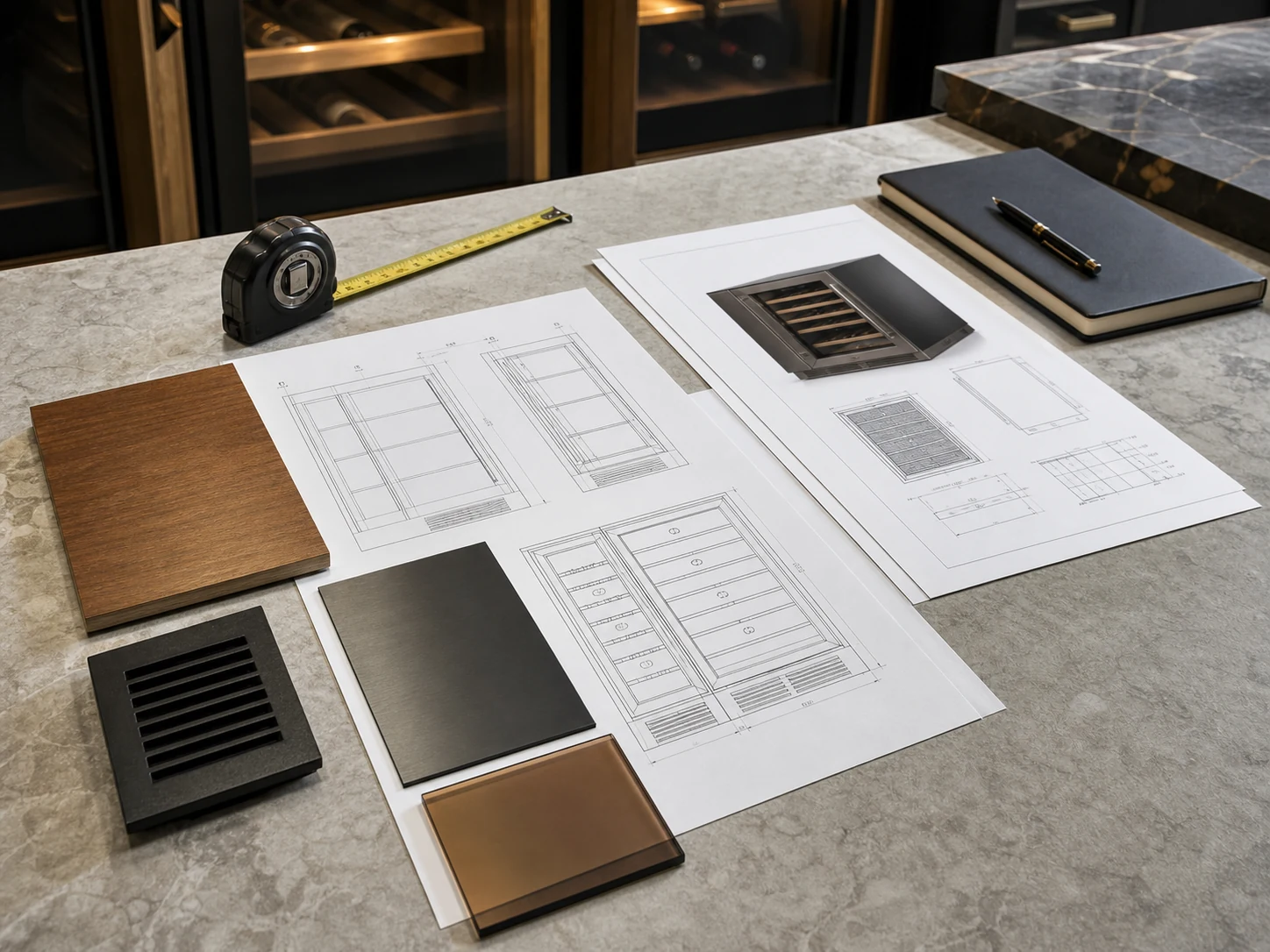
For overseas projects, this information is especially important because the cabinet supplier may not be able to inspect the site directly. Drawings, site photos, equipment cut sheets and installation notes help reduce assumptions before the wine cabinet is made.
Grilles, Back Panels and Service Access Are Structural Decisions
Grilles, back openings and service panels are sometimes treated as minor details to be adjusted later. In a built-in wine cabinet, they are structural decisions. They affect the cabinet layout, the visual design, the cooling unit space and the service path.
Grille position depends on the unit, not only the facade
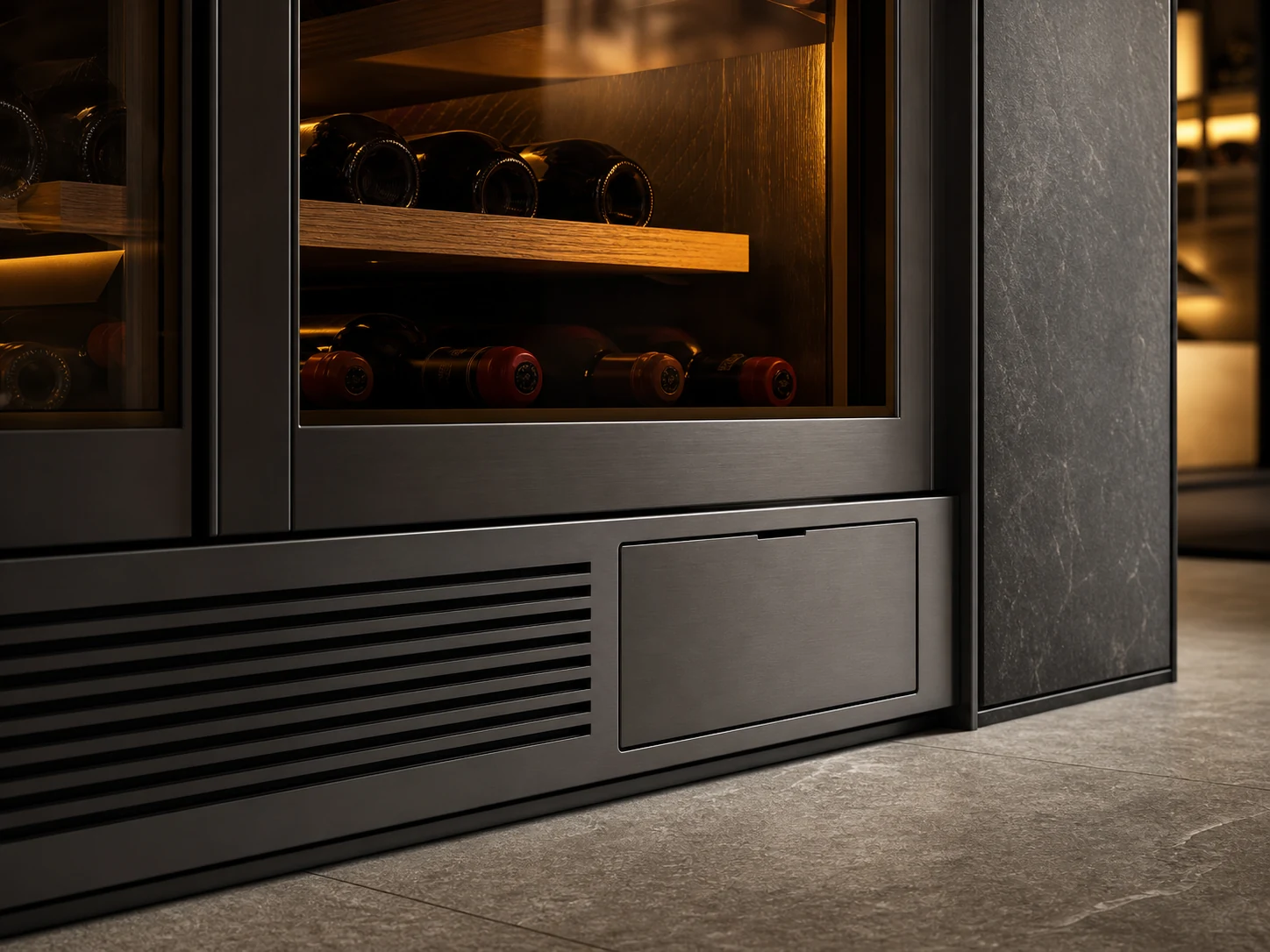
The best grille position is not simply the place that looks most symmetrical. It should respond to the cooling unit’s airflow direction. A grille placed near the wrong side of the unit may not help the air path. A hidden grille can work only if it still supports real intake or exhaust movement.
Service access should remain reachable
A fully hidden cooling unit may look elegant, but it should not become unreachable. Service access may be provided through a removable panel, accessible grille area, rear access route or another planned method. The right solution depends on the cabinet structure and equipment. What matters is that maintenance is considered before the cabinet is built, not after a problem appears.
Glass Doors and Display Design Still Affect Cooling Stability
Wine display cabinets are often designed around glass, lighting and metal framing. Those choices create the visual value of the cabinet, but they also affect performance details. Door seals, glass type, opening frequency and the relationship between the display area and the cooling unit should be reviewed together.
Door seals, glass performance and opening frequency
A glass door does not automatically make a wine cabinet unstable, but it does require planning. The door seal should close properly. The glass specification should match the design requirement. The user should understand that frequent opening can affect temperature stability. These are not reasons to avoid glass; they are reasons to coordinate glass design with cooling and ventilation.
Where bronze glass and metal-framed wine cabinets fit
A bronze glass stainless steel wine display cabinet can work well in dining rooms, bar areas, apartments or hospitality spaces when the cabinet is planned as both a display feature and a technical installation. In this article, that product type is a useful example because it shows the balance between clean appearance and hidden airflow. The cabinet should look refined from the front, but the cooling unit still needs air behind the design.
Pre-Production Checklist for Wine Cooling Ventilation
Before approving a built-in wine cabinet with a cooling unit, review the following points:
- Cooling unit model and installation manual.
- Intake air direction and exhaust air direction.
- Manufacturer clearance requirements.
- Front, rear, side or top ventilation path.
- Grille position and whether it supports real airflow.
- Back panel openings or removable service panels.
- Power access and any equipment service requirements.
- Glass door sealing and expected opening frequency.
- Surrounding niche, wall, ceiling filler and side cabinetry conditions.
- Final cabinet drawings showing cooling unit space, openings and access.
This checklist does not replace the cooling unit manufacturer’s instructions or local installation review. It helps organize the information that should be visible before custom cabinet production.
Frequently Asked Questions
Does a wine cooling unit need ventilation?
Yes. A wine cooling unit needs an intake and exhaust path based on its design. The cabinet should not block the airflow required by the manufacturer.
Can a wine cooling unit be completely hidden inside a cabinet?
It can be visually integrated, but it should not be sealed away from airflow or service access. Hidden installation still needs planned ventilation and a reachable maintenance method.
Where should the grille be placed in a wine cabinet?
The grille position depends on the cooling unit’s intake and exhaust direction. It should support real airflow, not only visual symmetry.
Do glass doors affect wine cabinet cooling?
Glass doors can affect temperature stability if the seal, glass specification or opening frequency is not considered. They can still be used, but they should be coordinated with cooling and ventilation planning.
What should be confirmed before cabinet production?
Confirm the cooling unit model, airflow direction, clearance requirements, grille or opening positions, power access and service method before the cabinet drawings are approved.
Final Thought: A Clean Wine Cabinet Still Needs a Clear Air Path
A built-in wine cabinet should not force a choice between a clean front view and practical cooling. The best result comes when the visual design and the hidden airflow route are planned together. Bronze glass, metal frames, lighting and shelves can create the display effect, while grilles, openings, clearance and access panels support the equipment behind the scene.
For a custom wine cabinet project, prepare the cooling unit model, installation instructions, site dimensions and cabinet concept before production drawings begin. With those details, the design team and cabinet manufacturer can plan a wine display that looks integrated from the front and still gives the cooling unit room to breathe.