 English
  日本語
日本語  العربية
  Deutsch
  Español
  Français
  한국어
한국어  Português
  Татар теле
  Русский
 Many dining room storage cabinet ideas start with the look of the cabinet: glass doors, painted finishes, open shelves or a long sideboard wall. That is understandable, but it is not the best first decision. A dining cabinet stays organized when the owner knows what should be seen, what should stay hidden and what needs to be reached quickly during meals.
Glass doors can make tableware and wine glasses feel intentional. Closed base cabinets can calm the room by hiding heavier or less decorative pieces. Drawers can handle small dining items that become messy on shelves. The right plan is rarely all glass or all closed. It is usually a balanced cabinet layout that matches the dining routine.
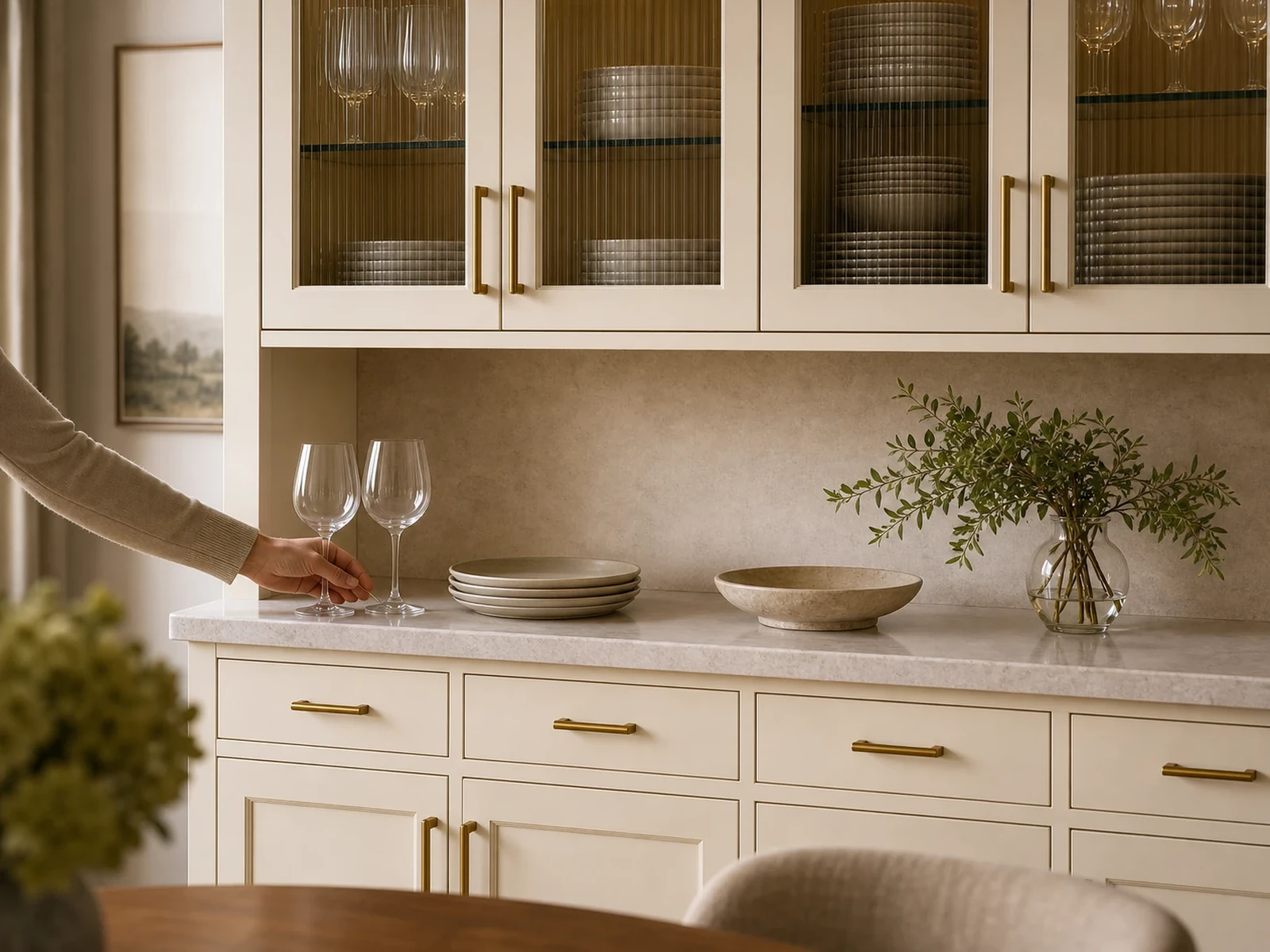
Start by Sorting Dining Items Into See, Hide and Reach Zones
Before choosing a sideboard, hutch or built-in cabinet, list the items that will actually live in the dining room. This usually includes dinner plates, wine glasses, serving bowls, trays, table linens, candles, seasonal dishes, coffee accessories and a few decorative objects.
The list should not be treated as one storage problem. Dining items behave differently. Some are attractive enough to display. Some are useful but visually busy. Some need to be reached during a meal without opening a large cabinet door. This is why the first step is to sort the storage into three zones: see, hide and reach.
Items That Deserve Glass Display
Glass display works best for items that are consistent in shape, color or use. Wine glasses, selected ceramics, a small dinnerware set, serving bowls and a few decorative objects can look composed behind glass if the shelves are not overcrowded.
The goal is not to show everything the household owns. A glass door makes storage visible, so it also makes disorder visible. If the upper cabinet is filled with mismatched daily items, packaging, extra mugs and occasional pieces, the cabinet may look busy even when the doors are closed.
Items That Usually Belong Behind Closed Doors
Closed storage is better for heavier, irregular or less decorative items. Large platters, spare tableware, seasonal pieces, linens, candles, small appliances and backup glassware often work better in the lower cabinet. These items may be useful, but they do not need to become part of the dining room view.
Closed base cabinets also help a dining room feel calmer. When the lower half of the cabinet hides visual weight, the upper glass display can stay lighter and more edited.
Glass Doors Work Best When the Display Is Edited
Glass doors are useful when the homeowner wants visibility without fully open shelving. They protect items from daily traffic and make a sideboard hutch feel more architectural than a loose display shelf. They are also helpful when the dining room connects to a living room, because selected objects behind glass can soften the transition between practical storage and decorative display.
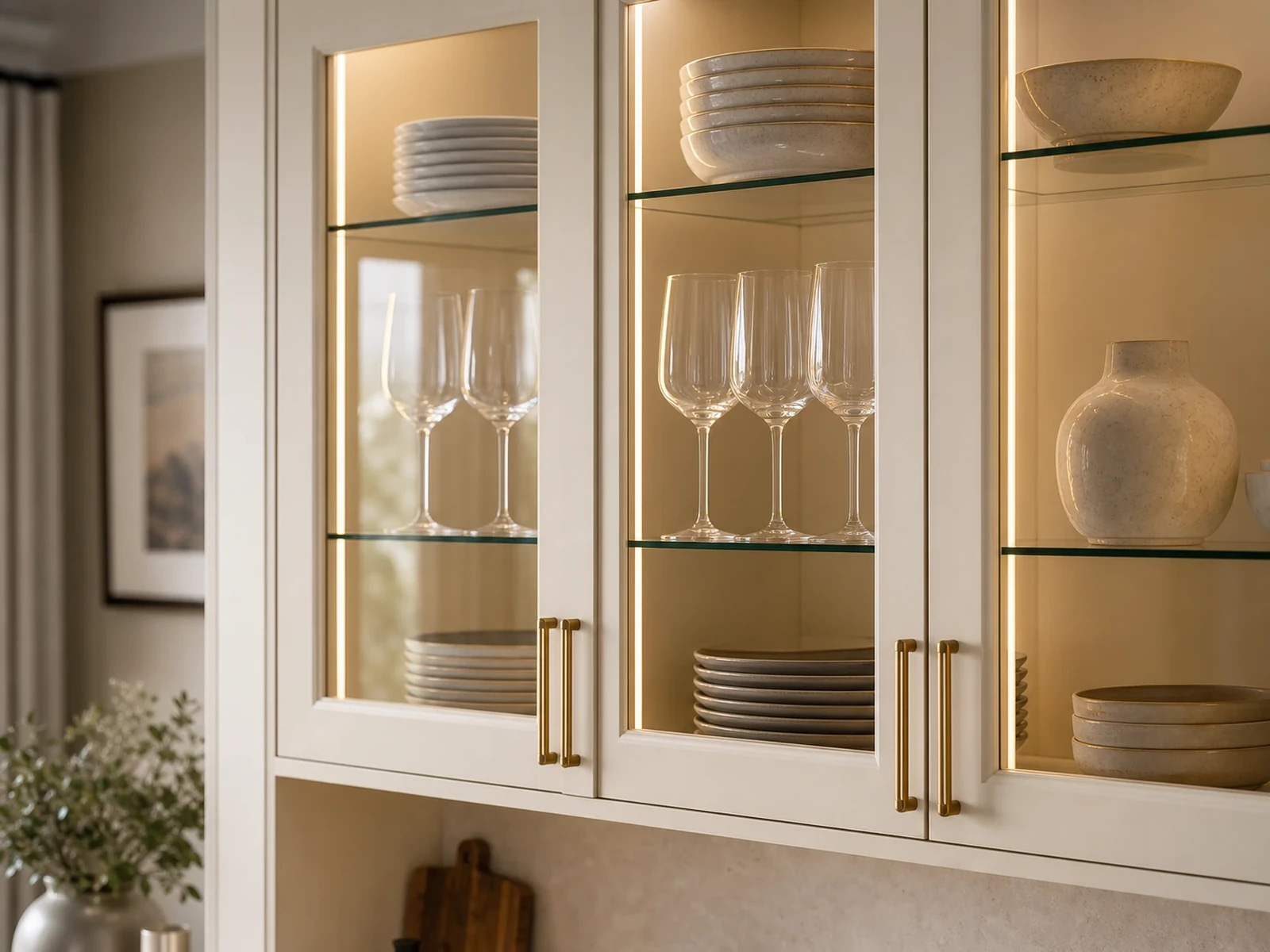
Plan Shelf Spacing, Door Frames and Lighting Together
A glass-door dining cabinet should be planned around the objects it will hold. Tall wine glasses need different shelf spacing from plates or short ceramic bowls. Framed glass doors may give the display a more structured look, while clear, reeded, fluted or lightly tinted glass changes how much of the stored items can be seen.
Lighting should also be discussed early. Warm shelf lighting can make glassware and ceramics look more intentional, but the wiring route, transformer access and future maintenance should be planned before production. If the lighting channel is hidden too completely, service access may become awkward later.
Do Not Treat Glass Doors as a Clutter Solution
Glass doors do not hide clutter. They make a cabinet feel organized only when the display is edited. If the dining room needs to store many everyday items, the design should combine glass doors with closed base cabinets, drawers or deeper hidden storage.
It is also better to avoid describing glass doors as dustproof. A residential dining cabinet can reduce exposure compared with open shelves, but it is still furniture with door gaps, hinges and daily use. The honest planning question is not “Can glass solve everything?” but “Which items deserve to be seen?”
Closed Storage Should Carry the Weight of Daily Dining Life
The quieter half of a dining cabinet is often the most important. Closed storage can hold the practical items that make meals easier without making the room look crowded. A dining room sideboard cabinet should not depend on display alone, especially in homes that host guests, keep multiple tableware sets or use the dining room as part of an open-plan living area.
Lower Cabinets for Heavy or Irregular Items
Lower cabinets are suitable for serving platters, heavier bowls, spare dinnerware, drinkware boxes, table linens and seasonal items. Adjustable shelves can help if the stored pieces change over time. For custom cabinetry, the cabinet depth, shelf thickness, hinge direction and access around baseboards or wall sockets should be reviewed in the drawing stage.
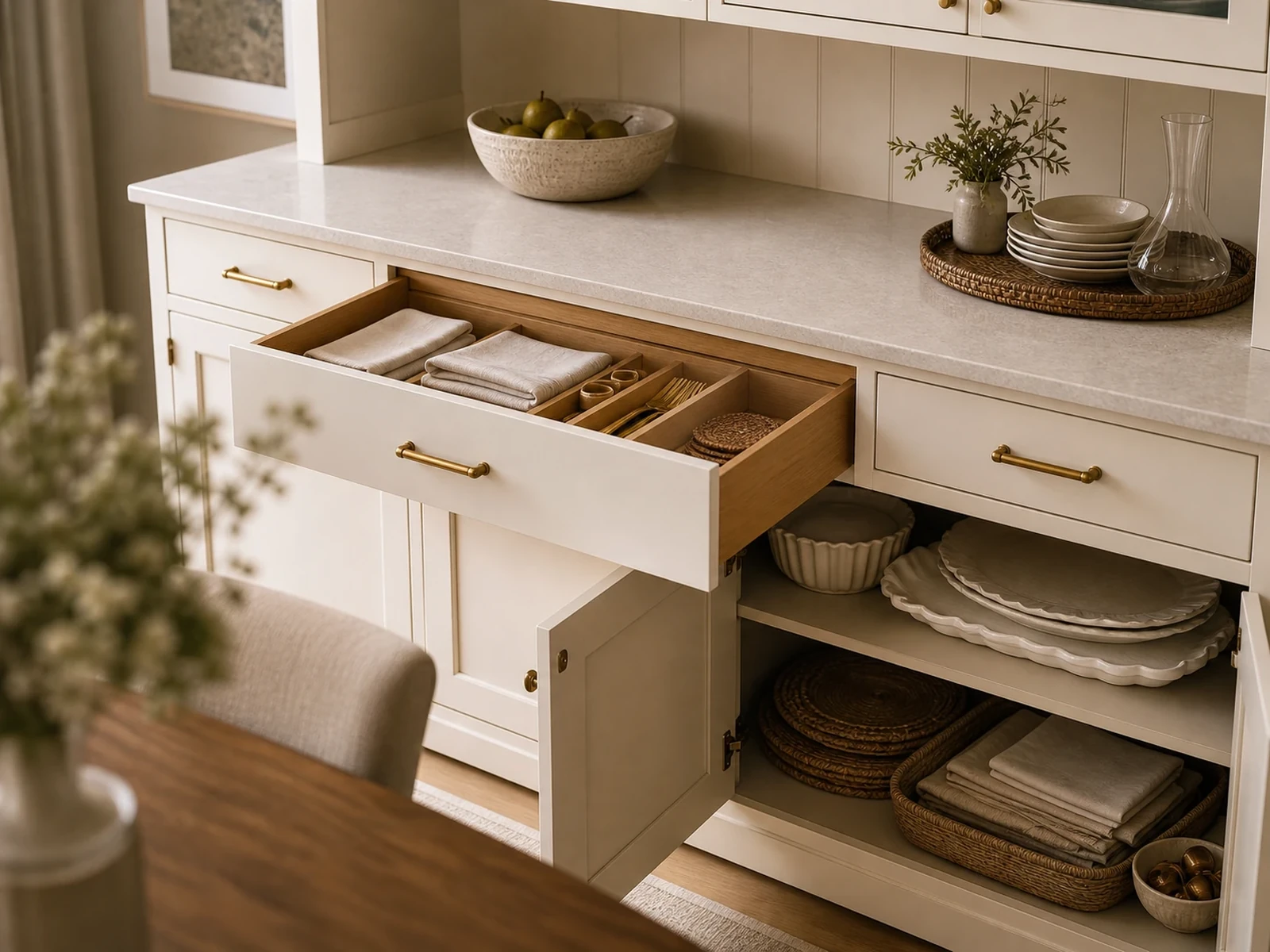
Drawers for Small Dining Items
Drawers are often more useful than homeowners expect. Napkin rings, candles, placemats, coasters, cutlery used for entertaining, bottle openers and small serving tools can disappear on deep shelves. A shallow drawer with dividers keeps these items visible from above and easier to return after meals.
Drawer height should match the item group. Very shallow drawers can work for linens and flat accessories, while deeper drawers may be better for stacked placemats or serving tools. The design should also consider how far the drawer pulls out relative to the dining table and nearby chairs.
A Sideboard Hutch Can Combine Display, Counter and Storage
A sideboard hutch is useful because it does not force one storage type to do all the work. The upper section can provide glass display. The middle opening can serve as a counter for plates, drinks or coffee accessories. The lower base can hide the heavier and less decorative items.
This structure is especially helpful when the dining room does not have space for several separate pieces of furniture. One vertical cabinet can carry display, staging and hidden storage while still reading as a dining room feature rather than a kitchen wall.
Why the Middle Counter Matters
The middle counter is easy to overlook, but it changes how the cabinet is used. During a meal, it can hold plates before serving, a water carafe, wine glasses, dessert plates, a tray or coffee tools. Between meals, it can stay mostly clear so the cabinet does not become another crowded surface.
Counter opening height, recess depth, backsplash material and lighting should be planned from the real dining routine. If the opening is too shallow, trays and plates may feel awkward. If it is too deep or too dark, the counter can become a clutter pocket.
Where the P09 Cream Sideboard Hutch Fits
For readers comparing a real product format, a cream sideboard hutch cabinet with glass doors is a relevant example because it combines upper glass display, a serving counter area and lower closed base storage in one dining room cabinet. The value is not only the cream finish. The value is the zoning: display above, practical counter in the middle and hidden storage below.
The final specifications still need to be confirmed for each project, including cabinet width, wall condition, glass type, handle finish, shelf spacing, lighting route and table clearance. Those details decide whether the cabinet works in the room after installation.
Use a Simple Decision Table Before You Choose the Cabinet Layout
Use this quick table before deciding the cabinet layout:
| Dining Item or Use | Best Storage Zone | Why It Works |
|---|---|---|
| Selected wine glasses or ceramics | Upper glass doors | They look intentional when spaced and lit properly. |
| Spare plates and seasonal dinnerware | Closed base cabinets | They are useful but do not need daily display. |
| Linens, napkin rings and small tools | Drawers | They stay organized and easy to see from above. |
| Serving trays and platters | Lower cabinets or wide drawers | They need stable support and easy access. |
| Drinks, coffee tools or plates before serving | Middle counter | The counter supports meal setup without using the dining table too early. |
| Decorative objects | Limited glass display | A few selected pieces help the cabinet feel calm rather than crowded. |
This table should be adjusted for the household. A family that hosts often may need more drawer and serving space. A collector may need more glass display. A compact apartment may need deeper closed storage because the dining cabinet has to do more work.
What to Confirm Before Custom Dining Room Cabinet Drawings
Dining room storage cabinet ideas become useful only when they can be translated into drawings. Before production, the design team should understand the room, the storage list and the way the cabinet will be used.
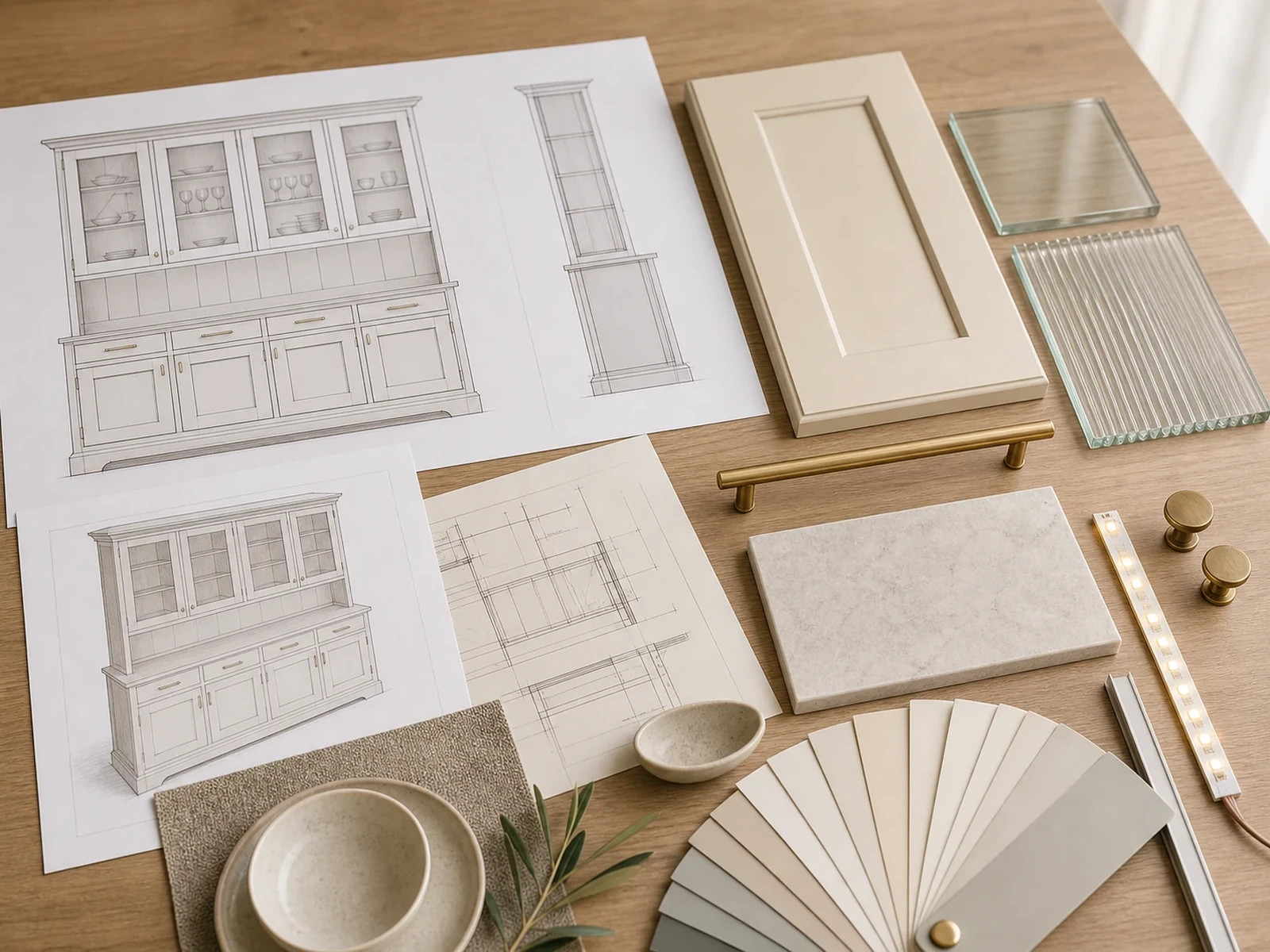
Dimensions, Door Swing and Table Clearance
Measure the wall width, ceiling height, baseboard detail, window or door positions, socket locations and distance from the dining table. Door swing and drawer pull-out space matter because a cabinet can look correct on elevation drawings but become awkward when chairs are pulled out.
For a hutch, the designer should also confirm the counter opening height, upper cabinet depth, lower cabinet depth and whether the upper glass doors need to clear crown molding, ceiling details or nearby walls. In open-plan homes, the cabinet should also relate to kitchen finishes, living room sight lines and circulation.
Lighting, Sockets and Material Samples
If the cabinet uses lighting, decide where the LED strips, switch, driver and access point will be located. If the counter area may hold a coffee machine, lamp or small appliance, socket planning should happen early and follow local electrical requirements.
Material samples also matter. A cream finish can look warmer, cooler, flatter or glossier depending on the room light. Glass type, handle finish, countertop material and back panel color should be reviewed together, not as separate decisions.
Frequently Asked Questions
Are glass doors good for dining room storage cabinets?
Yes, if they are used for selected display rather than general storage. Glass doors work well for wine glasses, ceramics, tableware sets and objects that look calm when visible. They are less useful for packaging, crowded daily items or mismatched storage.
What should go in closed dining room storage?
Closed storage is better for heavy, irregular or less decorative items such as spare plates, platters, linens, candles, seasonal dinnerware and small dining appliances. It helps the room feel more organized.
Is a sideboard hutch better than a low sideboard?
It depends on the room and storage list. A low sideboard works when the room mainly needs a counter and base storage. A sideboard hutch is better when the room also needs vertical display, glass doors and more storage on one wall.
Should dining room cabinet drawers be included?
Drawers are useful for small items such as napkins, placemats, cutlery for entertaining, coasters, candles and small serving tools. They prevent small pieces from getting lost on deep shelves.
What should be confirmed before ordering a custom dining room cabinet?
Confirm the storage list, wall width, ceiling height, cabinet depth, table clearance, door swing, drawer height, glass type, lighting route, socket positions, finish samples and whether the cabinet should connect visually with the kitchen or living area.
Plan What People See and What the Cabinet Quietly Handles
The best dining storage is not simply more storage. It is better separation. Glass doors should show the pieces that improve the room. Closed cabinets should handle the heavier and less decorative items. Drawers should keep small dining tools from disappearing. A serving counter should support meals without becoming permanent clutter.
If you are planning a custom dining room cabinet, start with the storage list before choosing the final door layout. Sunrise Furnishing can help turn that list into cabinet drawings, finish samples and practical dining room storage zones for sideboard, hutch and open-plan projects.