English
  日本語
日本語  العربية
  Deutsch
  Español
  Français
  한국어
한국어  Português
  Татар теле
  Русский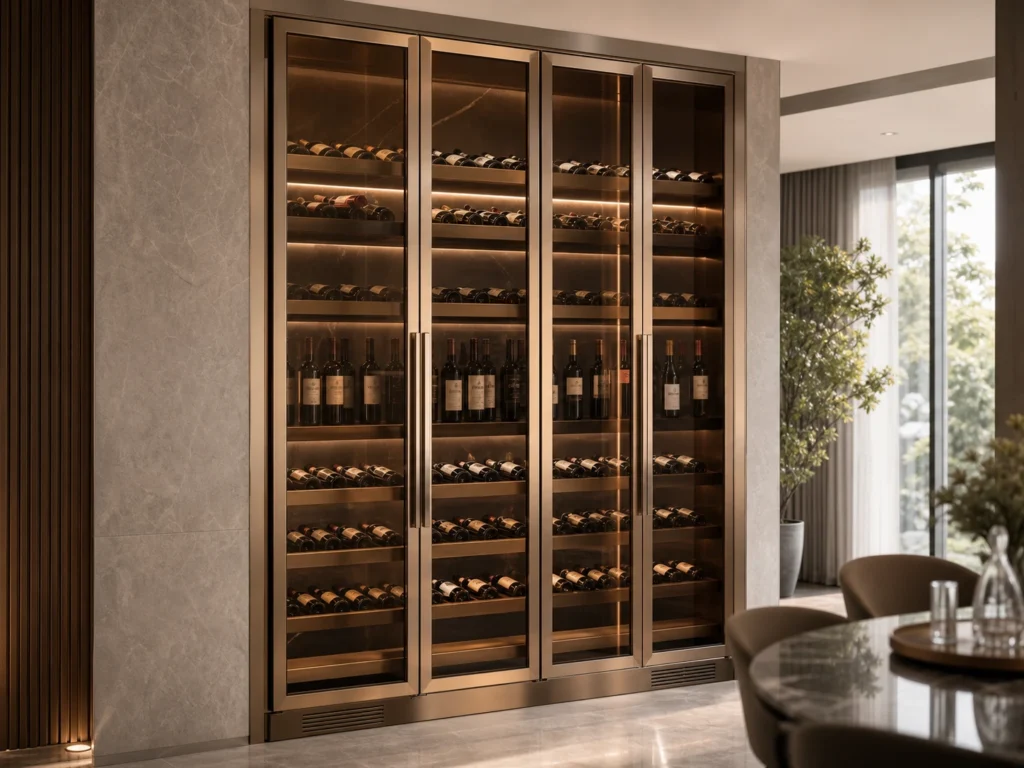
Bronze Glass Stainless Steel Wine Display Cabinet
A custom framed wine display cabinet with bronze glass doors, stainless steel structure, lighting, bottle storage, cooling planning and ventilation support.
A Framed Wine Display Cabinet for Premium Rooms
This bronze glass stainless steel wine display cabinet is planned for villas, apartments, dining rooms, private bars and hospitality projects where wine storage needs to look refined while still supporting real use. The cabinet combines bronze tinted glass doors, a slim stainless steel frame, warm lighting and organized bottle display zones.
As part of a custom Stainless Steel Wine Cabinet project, the cabinet size, glass tone, frame finish, shelf spacing, lighting route, cooling unit position and ventilation path can be reviewed from drawings. For early technical planning, the related wine cabinet ventilation for cooling unit guide helps buyers check clearance, air intake, heat exhaust and service access before ordering.
Softer Display Through Tinted Glass
Bronze glass gives the wine cabinet a warmer and more private display effect than clear glass. It softens the direct visibility of each bottle, shelf bracket and interior detail, which is useful in dining rooms and bar areas where the cabinet should feel integrated with the space instead of visually busy.
The final glass tone should be confirmed with the room lighting, background wall color and bottle display requirement. A lighter bronze glass can keep more visibility, while a deeper tint can create a calmer mood and reduce the exposure of the storage layout behind the door.
Slim Metal Structure for Glass Door Cabinets
The stainless steel frame gives the cabinet a slim and ordered structure, especially when paired with tall glass doors. Frame width, mullion spacing, hinge position and edge details should be planned together so the cabinet feels light from the front while still supporting daily opening and closing.
Finish options such as brushed bronze, champagne stainless steel or darker metal tones can be coordinated with the bronze glass and surrounding furniture. The frame should also leave practical room for door seals, lighting routes and installation adjustments rather than being treated only as a decorative border.
Shelf Layout Planned Around Real Bottle Use
Wine bottle storage can be planned with horizontal shelves, angled display shelves, divided bottle zones or a combination of display and reserve storage. Shelf spacing, bottle angle, shelf material and bottle neck support should be confirmed according to the collection type and desired capacity.
The display layout should not only look balanced behind bronze glass; it should also allow bottles to be placed and removed comfortably. For project work, elevation drawings can show shelf heights, display zones, lighting positions and any lower equipment area before the cabinet enters production.
Cooling Unit Clearance Confirmed Before Production
This wine cabinet can be planned with a cooling unit, but the equipment model, air intake, heat exhaust, cable route and service clearance should be confirmed before production. Cooling performance depends on the selected unit and site conditions, so the cabinet design should reserve the correct space instead of assuming one universal layout.
Ventilation grilles, lower access panels or rear clearance may be needed depending on the cooling unit location. Sunrise Furnishing can coordinate cabinet drawings around the chosen unit, while the project team should confirm local electrical conditions, maintenance access and site installation requirements.
Warm Display Lighting with Serviceable Details
Integrated lighting can highlight the bottle display through the bronze glass and make the stainless steel frame feel more refined in the evening. LED strip positions, wiring paths, driver access and color temperature should be discussed before production so the lighting supports the cabinet instead of creating glare on the glass.
Door seals and closing gaps are also important, especially when cooling or humidity control is part of the project. The frame, glass door, seal position and hinge adjustment should be reviewed together so the cabinet can be installed, used and maintained with realistic access to lighting and electrical components.
Custom Drawings, Packing and Overseas Coordination
For overseas projects, Sunrise Furnishing can support custom cabinet dimensions, bronze glass selection, stainless steel finish, shelf layout, lighting planning, cooling unit coordination, ventilation review, packing and export communication. The most useful starting information includes room dimensions, elevation drawings, preferred bottle capacity, cooling unit model and site ventilation conditions.
Before production, the project team should confirm the frame finish, glass tone, shelf spacing, door swing, lighting access, cooling clearance and maintenance route. This keeps the wine cabinet suitable for dining rooms, private bars, apartment interiors and hospitality spaces where both display effect and technical planning matter.
Frequently Asked Questions
Yes, it can be planned with a cooling unit, but the unit model, clearance, air intake, heat exhaust and service access should be confirmed before production. The cabinet drawings should match the selected equipment instead of using a generic space.
Bronze glass softens the display and reduces the direct visibility of every bottle, shelf and interior detail. It can make the cabinet feel warmer and more integrated with a dining room, apartment bar or hospitality space.
Yes. Stainless steel works well for a slim framed structure and pairs naturally with glass doors. Frame thickness, hinge position, finish color and door seal details should be planned together for the final cabinet.
Yes. Bottle angle, shelf spacing, display zones and storage capacity can be adjusted by project drawings. The layout should consider bottle size, display direction, lighting position and access for daily use.
Yes, especially when cooling, lighting and electrical components are included. Access panels, ventilation grilles, wiring routes and driver positions should be planned before production so future service work is realistic.