English
  日本語
日本語  العربية
  Deutsch
  Español
  Français
  한국어
한국어  Português
  Татар теле
  Русский
 An entryway cabinet can look complete on installation day and still feel cluttered two weeks later. Shoes remain on the floor, bags land on the bench, coats hang outside the cabinet, and keys disappear into the nearest tray. In many homes, the problem is not that the cabinet is too small. The problem is that the entryway cabinet storage planning did not match the way people actually arrive, leave, sit, clean, and move through the doorway.
Good planning starts before the door panels, wood finish, or handle style. It asks what needs to happen in the first few steps after someone enters the home: where wet shoes go, where daily shoes stay, whether a person can sit without blocking the hall, where bags pause, how coats dry, and how the cabinet works when everyone is leaving at the same time.
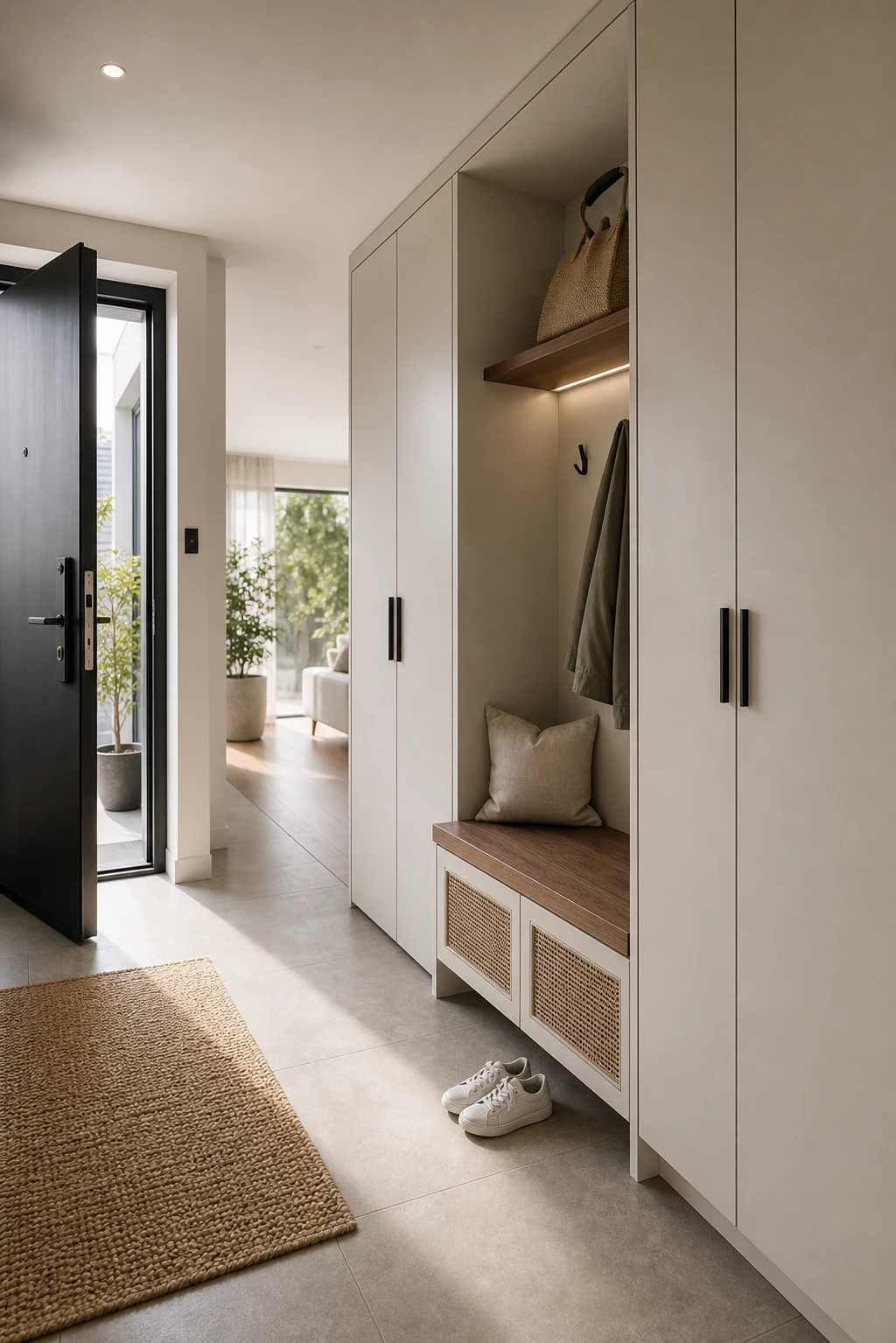
The Cabinet Solved the Furniture Problem, Not the Entry Routine
Many entryway cabinets fail quietly. They are not broken. They may even look elegant, with clean doors, warm finishes, and a bench that photographs well. But once daily life begins, the same clutter returns because the cabinet solved the furniture problem, not the routine problem.
A routine-based entryway plan studies the order of actions. Someone enters, removes shoes, drops a bag, hangs a coat, puts down keys, picks up a parcel, or takes a cleaning cloth for wet footprints. If the cabinet does not support that sequence, the nearest surface becomes the storage system. The floor becomes shoe storage. The bench becomes a parcel shelf. A decorative open niche becomes a mixed tray for everything.
This is why entryway cabinet storage planning should begin with behavior, not appearance. Before choosing a door style, the planning should confirm which items need instant access, which items can be hidden, which items need air circulation, and which movements must stay clear.
Why storage volume alone does not stop clutter
Large storage can still feel messy if the wrong things are difficult to reach. A deep closed cabinet may hold many shoes, but if daily shoes are behind a heavy door or stacked behind seasonal pairs, people will leave them outside. A tall coat cabinet can look tidy, but if hooks are not convenient for quick jackets or school bags, coats may stay on the bench.
The useful question is not only “How much can this cabinet hold?” It is “Will the right item be easy to put away at the exact moment people use it?”
What entryway cabinet storage planning should check first
Start with a simple entry audit:
- What arrives at the door every day?
- What arrives only in certain seasons?
- Which items are clean, wet, dusty, heavy, or used by children?
- Which items need open access, and which can stay behind doors?
- Where does a person stand or sit while using the cabinet?
- What path must remain open for the door, hallway, or stairs?
This audit gives the cabinet a job description. Without it, even a beautiful custom entryway cabinet can become a polished place where clutter returns.
Mistake 1: Shoe Storage Was Planned by Quantity, Not Behavior
Shoe storage is often planned by counting pairs. That matters, but it is not enough. Daily shoes behave differently from seasonal shoes. Wet shoes behave differently from formal shoes. Children’s shoes, boots, and slippers all need different access patterns.
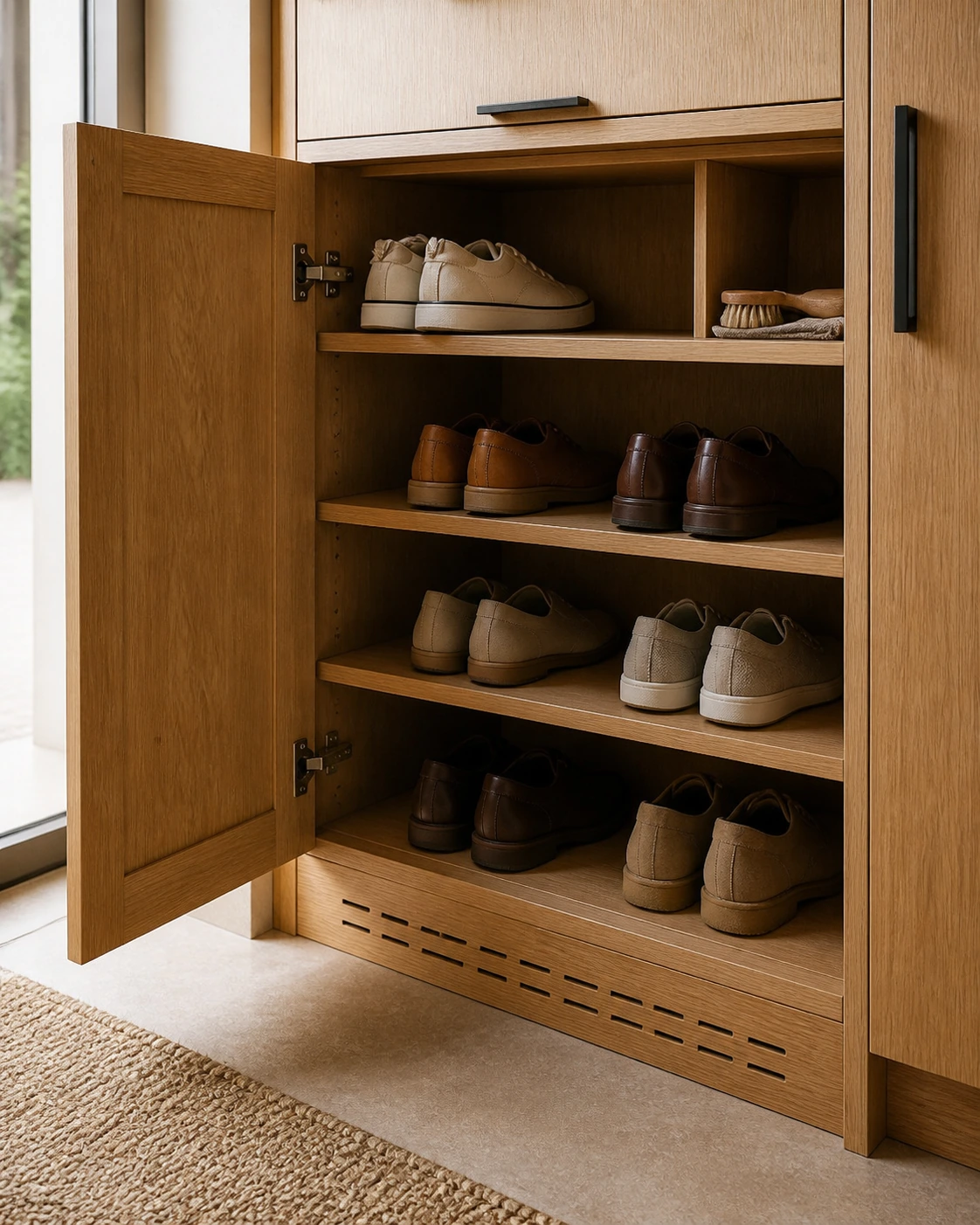
If every pair is treated the same, the cabinet may look organized on paper but feel inconvenient in use. Daily shoes should be the easiest to reach. Seasonal shoes can be higher, deeper, or less visible. Wet or recently worn shoes need some allowance for air movement, especially when the cabinet is enclosed.
Daily shoes need faster access than seasonal shoes
A practical shoe zone usually separates fast-access shoes from long-term storage. The daily area should be near the entrance path and simple to use. If a person must open two doors, bend awkwardly, or move other shoes first, the floor becomes the easier option.
For custom cabinetry, this is where shelf spacing, pull-out fittings, open lower zones, or a ventilated shoe section can make the cabinet easier to live with. The final choice depends on the home’s size, shoe types, and the level of visual tidiness the owner wants.
Ventilation and shelf height affect whether shoes actually go inside
Ventilation is not only a comfort detail. It affects whether the family is willing to close shoes inside the cabinet. Enclosed shoe storage should be planned with air movement in mind, especially for daily shoes, wet weather, or humid climates.
Shelf height also matters. If the cabinet is planned only for low shoes, boots or taller footwear will be forced into awkward positions. If shelves are too widely spaced, capacity is wasted. The goal is not to guess one universal size, but to confirm the actual shoe mix before production.
Mistake 2: The Bench Became a Drop Zone Instead of a Seat
A bench is one of the most attractive entryway cabinet features, but it can also create clutter if it is not planned carefully. The bench should support seated shoe changing. If it is placed where people naturally drop bags, parcels, helmets, or jackets, it may stop functioning as a seat.
The question is not simply whether an entryway needs a bench. The better question is whether the bench has enough surrounding support: shoe access below or beside it, hooks or coat storage nearby, a place for bags, and enough clearance for someone else to pass.
When bench seating helps daily routines
A bench works well when the home needs seated shoe changing, when the entry has enough depth, and when the bench is connected to the right storage zones. It should feel like part of the routine: sit down, change shoes, place shoes nearby, hang the coat, and leave the walking path clear.
For families with children, older users, or frequent shoe changes, a bench can be more than a visual feature. It can make the entryway calmer and easier to use.
When a bench blocks movement or collects bags
In a narrow hallway, a bench can become a traffic problem. If the seat projects too far, if drawers open into the walking path, or if the bench is the only open horizontal surface, it may attract clutter. Bags and parcels will land there because it is convenient.
If space is limited, the design may need a shorter bench, a recessed seating niche, a standing shoe-change area, or a dedicated bag shelf. This is also where a related product such as a modern oak entryway cabinet with bench can be considered as an example of how seating, warm finish, and coat storage may work together when the entry has enough room.
Mistake 3: Closed Doors Hid the Clutter but Slowed the Routine
Closed cabinet doors create a calm look, but they do not automatically create a calm routine. If everything is hidden behind doors, the entry can become slower to use. People may stop opening the cabinet for items they touch many times a day.
A good entryway storage plan balances open, closed, and semi-open areas. The goal is not to display clutter. The goal is to make the most frequent actions easy enough that people actually follow the system.
What should stay open, hidden, or semi-open
Daily shoes, quick jackets, keys, umbrellas, and bags often need faster access. Seasonal shoes, extra cleaning supplies, formal coats, and less-used items can be hidden. Some items work best in semi-open zones: a tray inside an open niche, a drawer near the door, hooks behind a side panel, or a small shelf for parcels.
The right mix depends on how formal the entry should look. A villa entrance may prioritize a cleaner visual wall. A busy apartment entry may need more open access. A family home may need lower hooks or reachable compartments for children.
How hooks, drawers, trays, and niches reduce repeat clutter
Small fittings can do more than large empty compartments. A shallow drawer can hold keys, sunglasses, pet leashes, or masks. A tray can keep loose items from spreading. Hooks can handle coats that are worn every day. An open niche can hold a bag temporarily without taking over the bench.
These details should be discussed before drawings are finalized. Once production begins, changing drawer positions, open niches, or hook zones may be more difficult than adjusting surface styling.
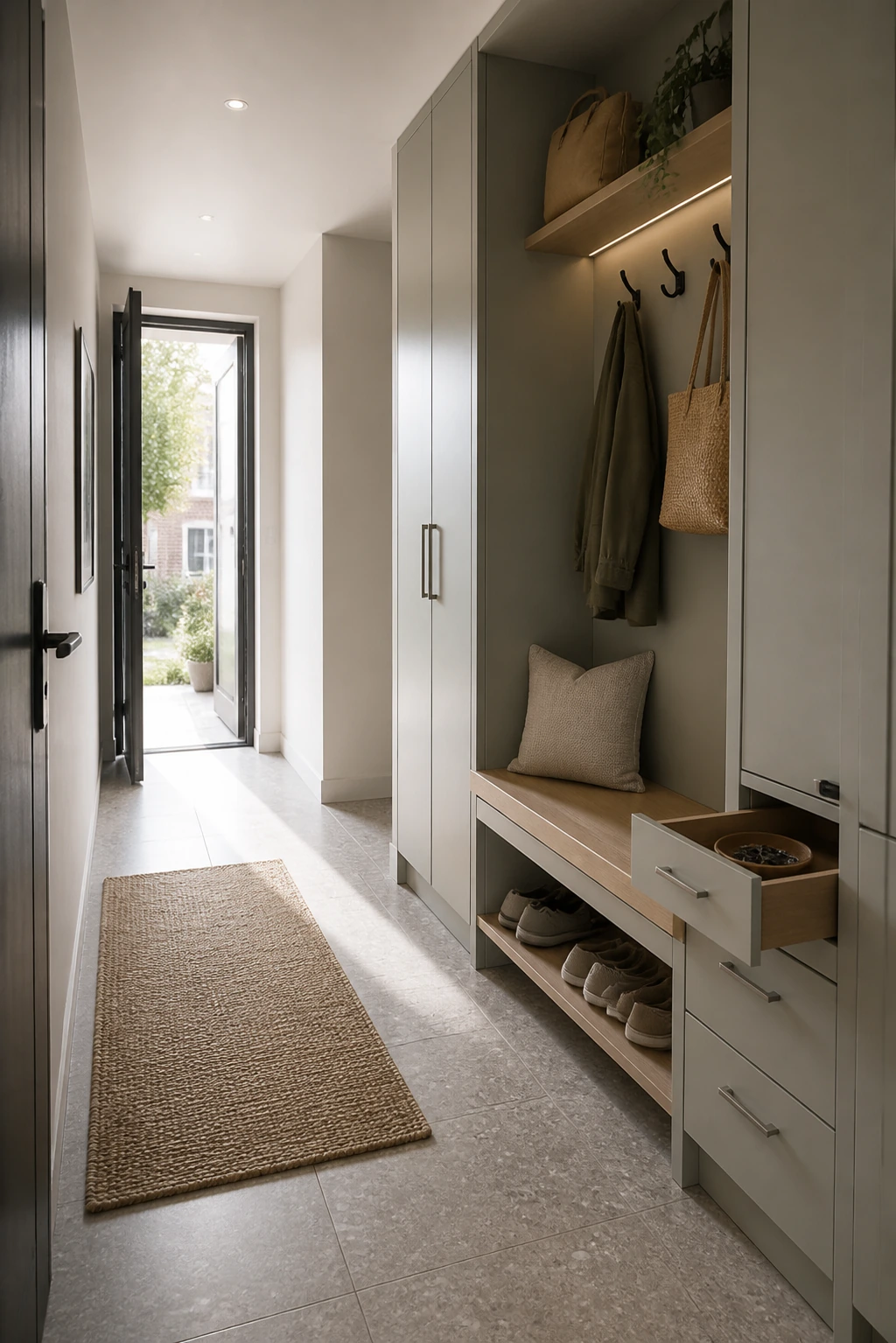
Mistake 4: Small Items and Cleaning Tools Had No Real Home
Entryway clutter is often caused by small things, not large things. Keys, wallets, umbrellas, parcels, pet leashes, shoe brushes, cleaning cloths, and reusable bags are easy to ignore during design. After installation, these items appear everywhere because they never received a planned location.
If the cabinet only provides large shelves and coat space, it may miss the details that shape daily use. A clean entryway usually needs a layered plan: visible access for frequent items, closed storage for visual calm, and a small cleaning zone near shoes or umbrellas.
Keys, bags, parcels, umbrellas, and pet items need their own zones
The entryway is a transition space. It needs to hold objects that are not quite indoor and not quite outdoor. Bags may need a landing shelf. Parcels may need a temporary surface. Umbrellas may need a moisture-tolerant position. Pet items may need a hook or drawer near the door.
Without these small zones, people create their own system. That system is usually the bench, the floor, or the top of the shoe cabinet.
Cleaning access matters near shoe storage
Shoe storage and cleaning are linked. If wet footprints, dust, or outdoor dirt are common, the cabinet should make cleaning easy. A small compartment for brushes, cloths, or shoe care items can be more useful than another decorative shelf.
Material and finish choices also matter. Entryway cabinet surfaces should be chosen with daily touch, shoe contact, and cleaning in mind. A warm wood finish can make the entrance feel less cold, but the finish still needs to fit the home’s maintenance expectations.
Mistake 5: The Wall Was Measured, but the Entryway Was Not Tested
For a custom entryway cabinet, measuring the wall is only the beginning. The design also needs the conditions around the wall: door swing, corridor width, skirting, corners, sockets, switches, lighting points, floor level, and any nearby stairs or room doors.
Some cabinets feel cluttered because the space around them was not tested. A door may hit the cabinet. A drawer may open into the walking path. A bench may reduce the turning area. A socket may end up behind a panel. These are not styling problems; they are planning and coordination problems.
Door swing, corridor width, sockets, and corners change the design
The cabinet depth should be checked against the actual entry path. Door panels, sliding doors, drawers, and pull-outs all need operating space. A cabinet that looks reasonable in elevation can feel awkward if the plan view is not tested.
Electrical points should also be considered before production. If the entry uses lighting, charging, a smart lock accessory, or a small appliance nearby, socket and cable positions should be coordinated early.
Site photos and drawings reduce production misunderstandings
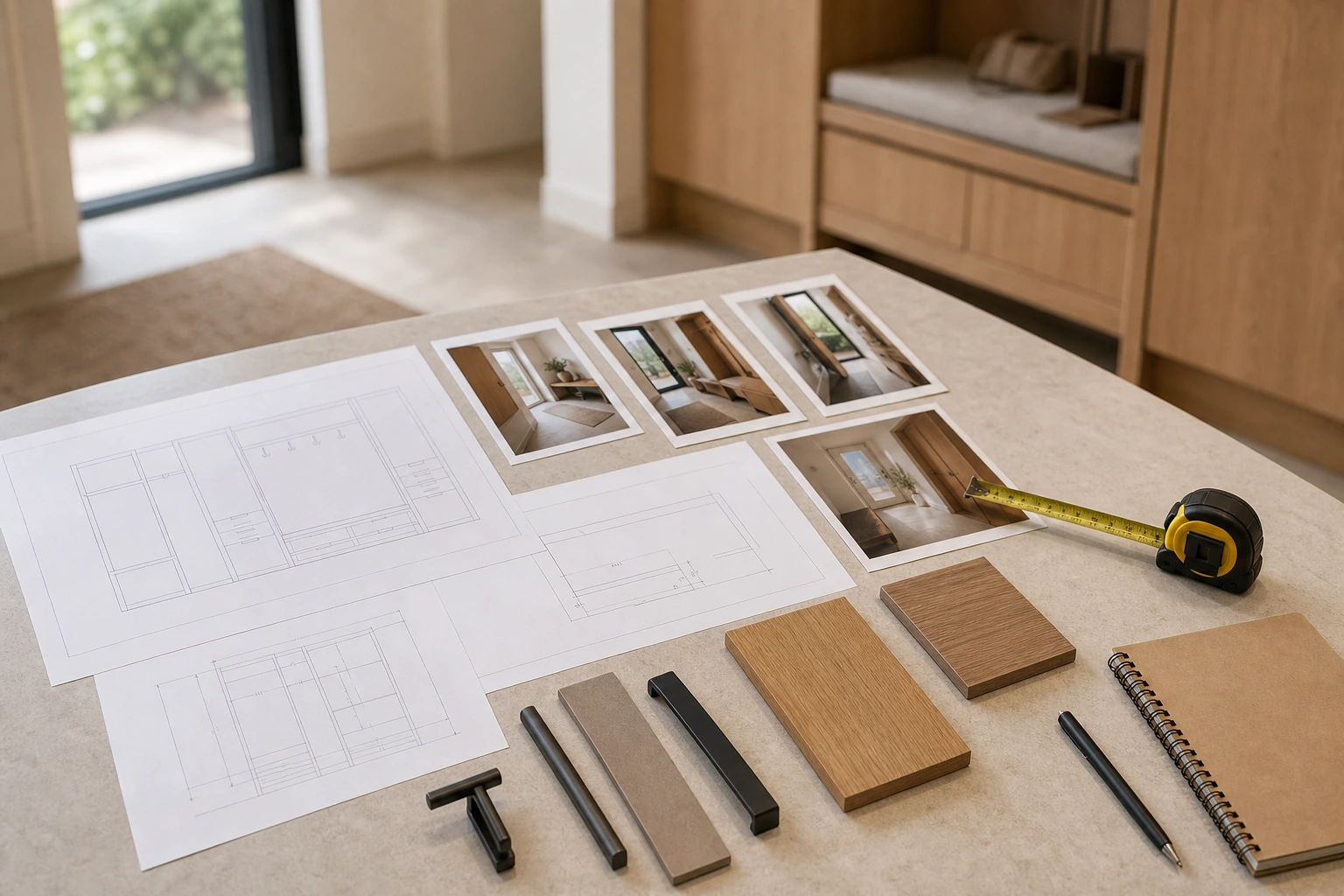
Before approving a custom entryway cabinet, prepare clear wall measurements, site photos, a simple plan view, ceiling or lighting notes if relevant, and a list of daily storage priorities. Drawings help the manufacturer understand the cabinet, but photos help reveal site realities.
For overseas projects, this coordination becomes even more important because the manufacturer may not visit the home directly. Clear information reduces guesswork and keeps the design tied to real conditions.
Where a Bench and Coat Storage Cabinet Can Still Work Well
The lesson is not that benches, coat cabinets, or warm wood finishes are risky. They can work very well when they match the entry routine. A cabinet with bench seating can support shoe changing. A coat zone can keep jackets from spreading across chairs. A warm oak tone can make a hard entrance feel softer and more residential.
The important point is fit. The bench needs clearance. The coat zone needs the right position. Shoe storage needs access and ventilation. Small items need drawers or trays. When these parts work together, the entryway can feel both calm and practical.
For this reason, a product such as the P10 Modern Oak Entryway Cabinet with Bench and Coat Storage is best discussed as one possible example for spaces that can support seating, coat storage, and a warm wood presence. It should not replace the planning process. The right cabinet still begins with the home’s measurements, habits, and traffic path.
A Practical Pre-Order Checklist for a Less Cluttered Entryway
Before approving drawings or placing an order, use a checklist that connects daily routine with production details.
Storage zones to confirm
- Daily shoe storage
- Seasonal shoe storage
- Wet or recently worn shoe area
- Bench or standing shoe-change area
- Coat hanging zone
- Bag shelf or bag hook
- Key tray or small drawer
- Umbrella or parcel area
- Cleaning and shoe-care compartment
- Open, closed, and semi-open storage balance
Site details to confirm before custom production
- Wall width and height
- Cabinet depth in relation to walking clearance
- Door swing and nearby room openings
- Drawer, door, and bench operating space
- Socket, switch, and lighting positions
- Corner conditions, skirting, and floor level
- Site photos from several angles
- Material, finish, and hardware expectations
- Installation conditions and access path
This checklist is not meant to make the design complicated. It is meant to make the cabinet easier to use after installation.
Frequently Asked Questions
What should an entryway cabinet store?
An entryway cabinet should be planned around the objects that actually arrive at the door: daily shoes, seasonal shoes, coats, bags, keys, umbrellas, parcels, cleaning tools, and sometimes pet items. The exact mix depends on the home and family routine.
Is a bench necessary in an entryway cabinet?
Not always. A bench is useful when seated shoe changing is part of the routine and the entry has enough clearance. In a narrow hallway, a smaller bench, recessed niche, or no-bench solution may work better.
Why do shoes still stay outside after a shoe cabinet is installed?
Shoes often stay outside when daily shoe storage is hard to reach, poorly ventilated, too crowded, or mixed with seasonal shoes. The easiest storage position usually wins in daily life.
Should everything be hidden behind closed doors?
No. Closed storage keeps the entry visually calm, but frequent-use items may need open or semi-open access. A balanced plan can include closed cabinets, hooks, drawers, trays, and open niches.
What should be prepared before ordering a custom entryway cabinet?
Prepare wall measurements, photos of the entry, door swing information, socket and switch positions, storage priorities, preferred finish direction, and any special needs such as bench seating or shoe ventilation.
Plan the Routine Before You Approve the Cabinet
An entryway cabinet should not only fill a wall. It should make the first and last moments of the day easier: shoes go where they are meant to go, bags have a place to pause, coats do not take over the bench, and the walking path stays clear.
If you are preparing a custom entryway cabinet, start with the routine before approving the cabinet face. Confirm what arrives at the door, what must stay easy to reach, what should be hidden, and what site conditions may affect production. That is the difference between a cabinet that looks complete on installation day and a cabinet that still works after real life begins.