English
  日本語
日本語  العربية
  Deutsch
  Español
  Français
  한국어
한국어  Português
  Татар теле
  Русский
 Outdoor kitchen cabinet planning often starts with style references: black doors, brushed metal, wood-look panels, stone counters or a clean modern BBQ station. Those choices matter, but outdoors they should not come first. Before the final style is approved, the cabinet material system needs to answer harder questions: Will the cabinet face rain or humidity? How close is it to the grill? Will the sink need drainage access? Can the countertop load be supported? How will the cabinet be cleaned after cooking?
Style decides how the outdoor kitchen looks. Material planning decides whether the cabinet can work in the actual site. That is why the most useful outdoor kitchen cabinet planning process begins with exposure, structure and utilities before it turns into a color board.
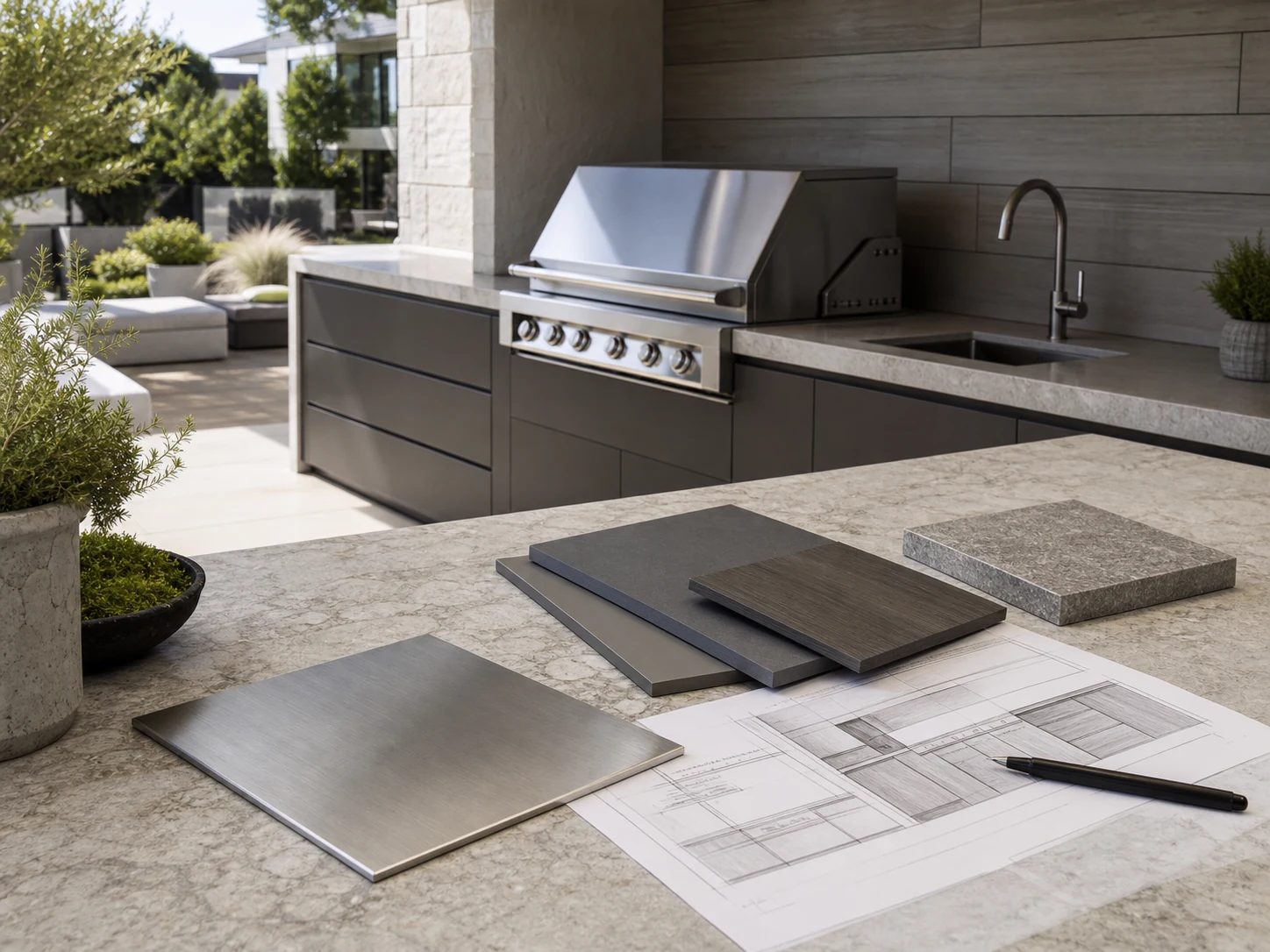
Why Materials Come Before Style in Outdoor Kitchen Cabinet Planning
A cabinet style can be changed late in the design process. A cabinet material decision is harder to treat casually because it affects the carcass, frame, edges, hardware, sink base, countertop support, ventilation gaps and service access. In an indoor kitchen, a finish may mainly need to match the room and daily cleaning habits. In an outdoor BBQ area, the same finish also has to face moisture, heat, sun, food residue and site conditions.
This is the reason material planning should sit near the beginning of the project. It gives the designer and manufacturer a more realistic basis for drawings, quotation and production notes. If the material system is still vague, the drawing may look complete while important performance decisions remain unresolved.
Style Samples Do Not Answer Weather, Heat or Cleaning Questions
A style sample can show color, texture and visual direction. It cannot tell you whether a cabinet edge should be protected differently near rain exposure, whether a sink base needs easier access, or whether the zone beside a grill needs better heat tolerance and ventilation. It also does not confirm how frequently the cabinet will be cleaned, whether grease will build up near cooking zones, or whether the surface will be exposed to strong sun.
For outdoor cabinets, the right question is not only “Which style looks best?” It is also “Which material system fits this site, this cooking equipment and this maintenance routine?”
Material Choice Changes Cabinet Structure and Drawings
Material choice can influence cabinet depth, frame support, panel thickness, door weight, hardware selection and countertop detail. It also changes what the drawing team must show. A sink cabinet may need plumbing space and removable access. A grill cabinet may need ventilation and heat clearance. A stone countertop may need a stronger support frame. A weather-exposed side panel may need more careful edge and joint detailing.
When the material plan is confirmed early, the drawings can show more than a nice front elevation. They can show how the cabinet will be built, installed, opened, cleaned and serviced.
Start With the Site Exposure, Not the Color Board
Every outdoor cabinet project has a different exposure level. A covered patio is not the same as an open garden BBQ island. A rooftop terrace may have stronger sun, wind and drainage concerns than a sheltered villa courtyard. Before choosing a color, confirm what the cabinet will face in daily use.
Rain, Humidity and Cleaning Frequency
Rain and humidity affect more than the front door material. They can affect the cabinet carcass, edge details, hinges, drawer slides, fasteners and the way water is kept away from storage zones. If the cabinet includes a sink, the planning should also cover water supply, drainage route, cleaning access and the possibility of wet items being stored below or near the sink.
Cleaning frequency matters too. Outdoor cooking areas collect grease, dust, food residue and moisture. Materials near the grill and sink should be easy to wipe and should not depend on delicate surface treatment in a zone that needs practical maintenance.
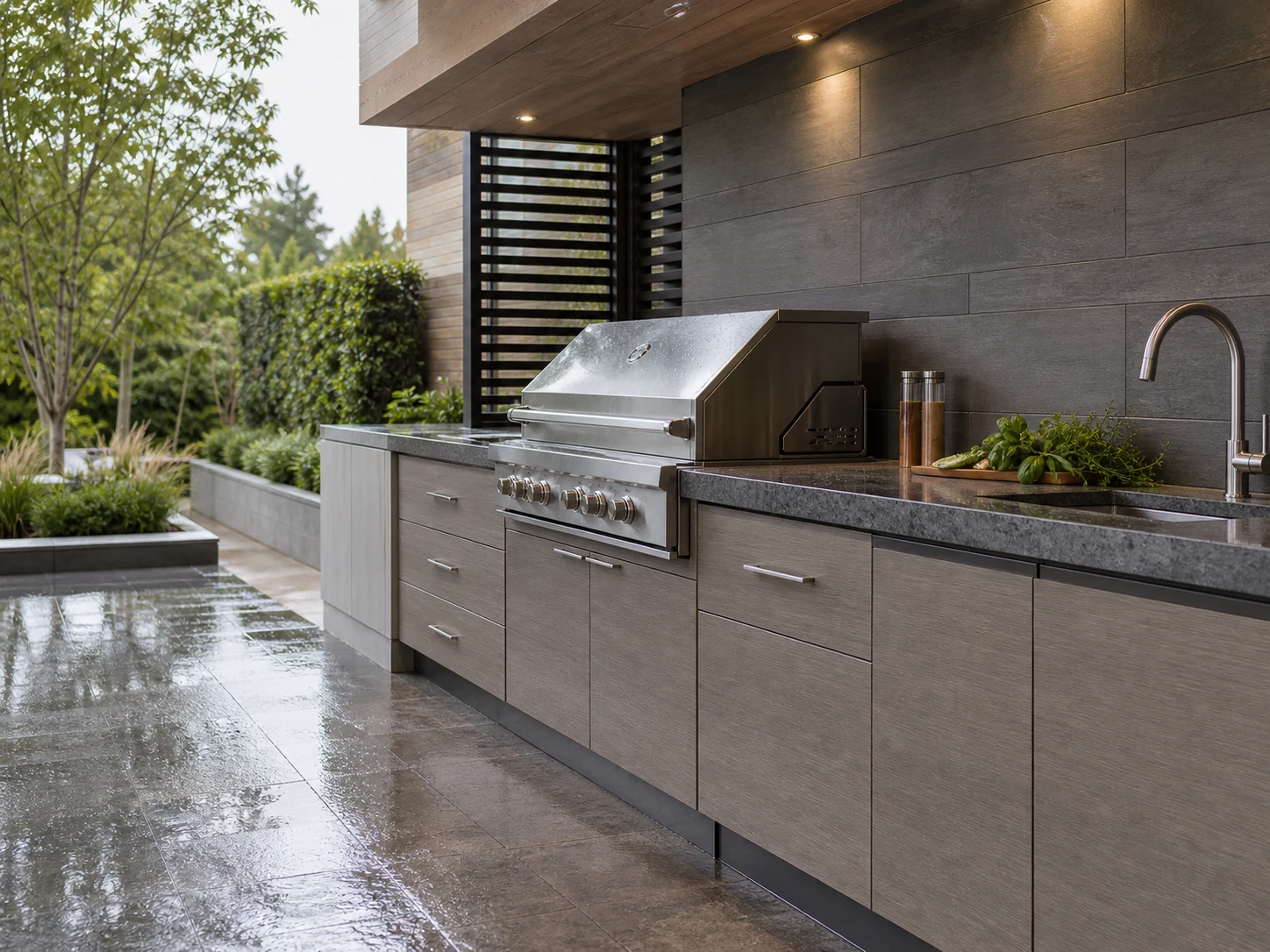
Sun, Heat and Grill-Adjacent Zones
Strong sun can change how some finishes age visually. Grill heat can affect nearby cabinet panels, doors, ventilation areas and countertop transitions. The goal is not to guess a universal material for every project. The goal is to identify which cabinet zones are exposed to heat, which are mainly storage, which are close to water and which are mostly decorative.
Match Materials to Grill, Sink and Utility Zones
Good outdoor kitchen cabinet planning treats the grill, sink and utilities as material decision points. These zones decide where stronger frames, cleaner surfaces, ventilation gaps and access panels may be needed.
Cooking Zones Need Heat Clearance and Ventilation
A built-in grill should not be treated like a decorative opening. The cabinet plan needs the grill specification, cutout requirements, clearance guidance, ventilation requirements and service access. The surrounding cabinet material should be selected with cleaning and heat-adjacent use in mind.
If gas bottles, outdoor cooking tools or cleaning supplies are stored nearby, the cabinet layout should also consider ventilation and safe access. The final design should be checked against the actual grill model and the local site requirements before production.
Sink Zones Need Water, Drainage and Service Access
A sink changes the cabinet below and beside it. The plan should allow water supply, drainage route, maintenance access and enough working space around the sink. If the sink is placed between prep and grill zones, the material around it should support frequent cleaning and occasional splashing.
This is also where a modular brushed stainless steel outdoor BBQ cabinet with sink can make coordination easier in some projects when the grill, sink, storage and drainage decisions need to be reviewed together.
Compare Outdoor Cabinet Material Options by Use Condition
There is no single outdoor cabinet material that automatically fits every site. A better approach is to compare materials by exposure, cleaning needs, cabinet structure and the role of each zone.
| Material Direction | Where It Often Makes Sense | What to Confirm Before Drawings |
|---|---|---|
| Stainless steel | Grill-adjacent zones, sink modules, cleaning-heavy areas, modern BBQ stations | Finish, edge detail, frame structure, hardware, sink and utility access |
| Aluminum | Lighter outdoor cabinet systems, corrosion-conscious projects, mixed material layouts | Panel system, joint details, finish durability, hardware compatibility |
| Weather-resistant panels | Sheltered patios, decorative side panels, mixed cabinet fronts | Core material, edge sealing, moisture exposure, sun exposure and cleaning method |
| Stone or compact countertops | Prep surfaces, BBQ counters, sink areas | Weight, support frame, overhangs, drainage, installation access |
Stainless Steel for Cleaning, Moisture and Grill Support Zones
Stainless steel is often a strong candidate where cleaning, moisture resistance and grill-adjacent use matter. It can suit outdoor BBQ cabinets, sink modules and areas where food preparation creates frequent cleaning needs. However, it should still be specified carefully. The article should not claim that any stainless steel cabinet is maintenance-free or suitable for every climate.
For a brushed stainless steel outdoor BBQ cabinet with sink, the practical value is not only the metal appearance. It is the way the material, sink, grill zone and cleaning routine can be planned together.
Aluminum and Weather-Resistant Panels for Mixed Layouts
Some outdoor kitchens do not need every cabinet face to be stainless steel. Aluminum systems or weather-resistant panels may be useful in lighter layouts, sheltered areas or decorative zones where the cabinet is not directly beside the grill or sink. These materials can also soften the visual effect when the project needs a warmer or more architectural style.
The important point is to avoid choosing a panel only because it looks good on a mood board. Confirm the core material, edge sealing, joint treatment, hardware compatibility and cleaning method before style approval.
Why Edge, Fastener and Hardware Details Matter
Outdoor cabinet problems often start in small details. Edges, screw positions, hinge areas, drawer slides, handles and junctions can face moisture, cleaning water, dust and movement. A strong material choice can still underperform if the details are not designed for the site.
This is why material planning should include hardware, fasteners and exposed edges, not only door color.
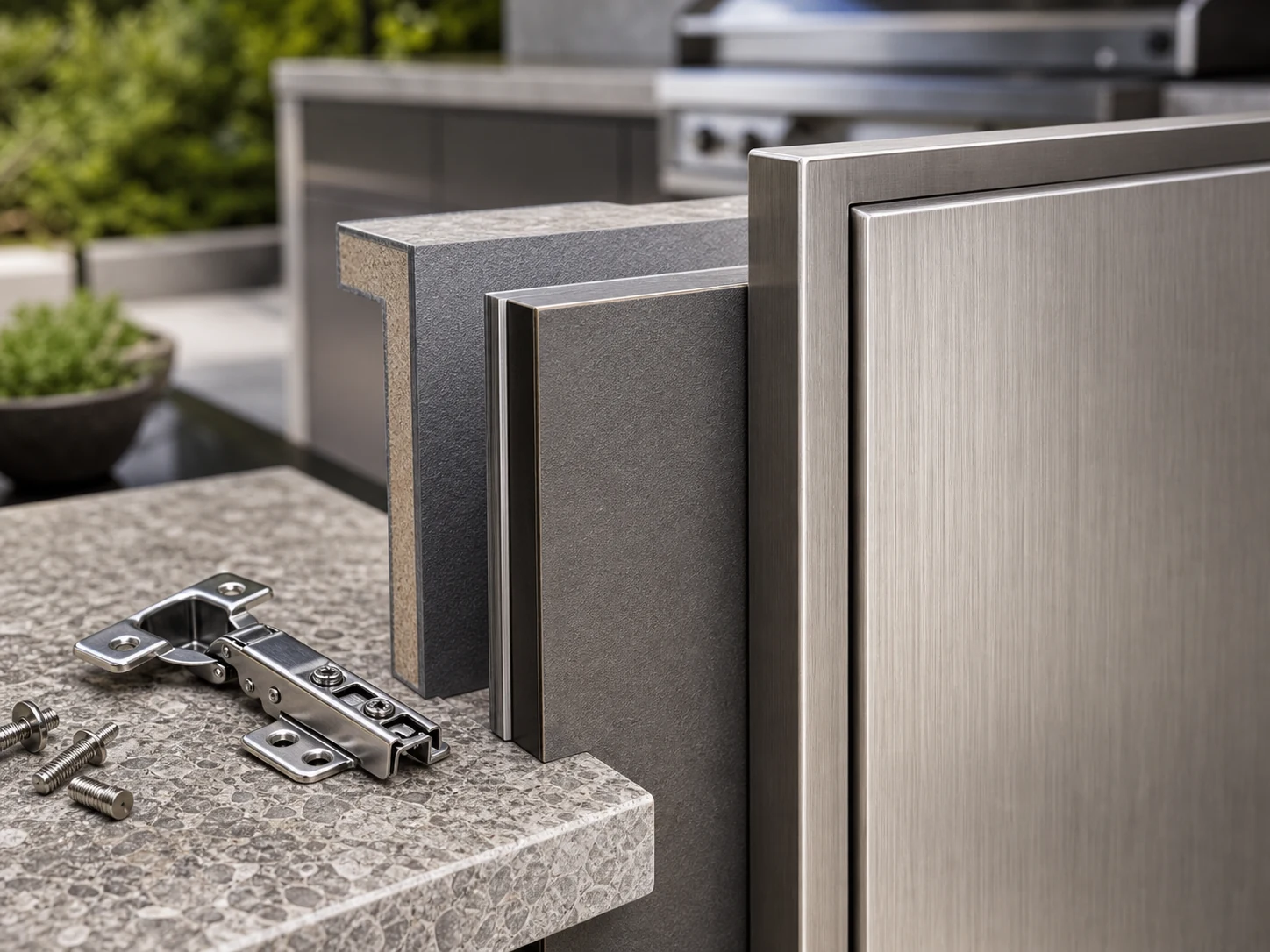
Do Not Let Style Hide Cabinet Structure
Outdoor cabinet style can make a project look finished before the structure is fully discussed. A clean cabinet elevation may hide the decisions that decide whether the cabinet can be built and installed properly.
Cabinet Carcass, Frame Support and Countertop Load
Countertops used outdoors may be heavy, especially when stone or thick slabs are selected. The cabinet frame, leveling system and support points should be planned before the style is finalized. Sink cutouts, grill cutouts and long countertop runs can all change the support requirement.
The cabinet carcass also needs a suitable relationship with the selected material. A door finish, carcass material and frame support system should not be chosen as separate decorative decisions. They need to work together.
Floor Slope, Leveling and Installation Tolerances
Outdoor floors often include slope for drainage. A cabinet system placed on that surface may need leveling feet, plinth adjustments, frame planning or installation notes. If the floor slope is ignored during style approval, the final installed cabinet may not match the clean look shown in early renderings.
Before production, drawings should identify site floor conditions, cabinet base treatment, countertop level and service access. This is especially important for patios, gardens and rooftop terraces where outdoor conditions are not as controlled as an indoor room.
Where a Stainless Steel BBQ Cabinet With Sink Fits
A stainless steel BBQ cabinet with sink fits best when the outdoor kitchen needs a practical cooking and cleaning zone in one coordinated module. It can be useful for villa patios, garden BBQ areas and rooftop terraces where the buyer wants a cleanable surface, sink access and a durable BBQ cabinet presence.
Villa Patios, Gardens and Rooftop Terraces
In a villa patio, the cabinet may need to balance cooking, serving, storage and cleaning. In a garden BBQ area, weather exposure and cleaning may become more important. On a rooftop terrace, wind, sun, drainage and delivery access may affect both material and installation planning.
The same visual style may not work equally well in all three settings. That is why site condition and material planning should guide the final style decision.
When a Modular BBQ Cabinet Is Easier to Coordinate
A modular BBQ cabinet can be easier to coordinate when the grill, sink and storage functions are already connected in the project brief. It can reduce the number of separate site decisions, but it still needs confirmed grill dimensions, sink position, utility route, drainage plan and countertop detail.
If the project uses a brushed stainless steel outdoor BBQ cabinet with sink, treat it as part of the wider outdoor kitchen cabinet planning process. The module should support the layout, not replace the need for site and material review.
Material-First Checklist Before Style Approval
Before approving the final outdoor cabinet style, review these points:
- Is the cabinet area fully covered, partially covered or exposed to rain?
- Which zones are close to the grill, sink, drainage route or utility points?
- What surfaces will need frequent cleaning after cooking?
- Does the cabinet material fit the expected moisture, sun and heat exposure?
- Are edge details, hardware and fasteners suitable for the outdoor setting?
- Has the sink cabinet allowed water supply, drainage and service access?
- Does the grill cabinet respect the appliance specification and ventilation needs?
- Is the countertop material supported by the cabinet frame?
- Has the floor slope or leveling condition been checked?
- Are all material assumptions marked clearly in the drawings and quotation notes?
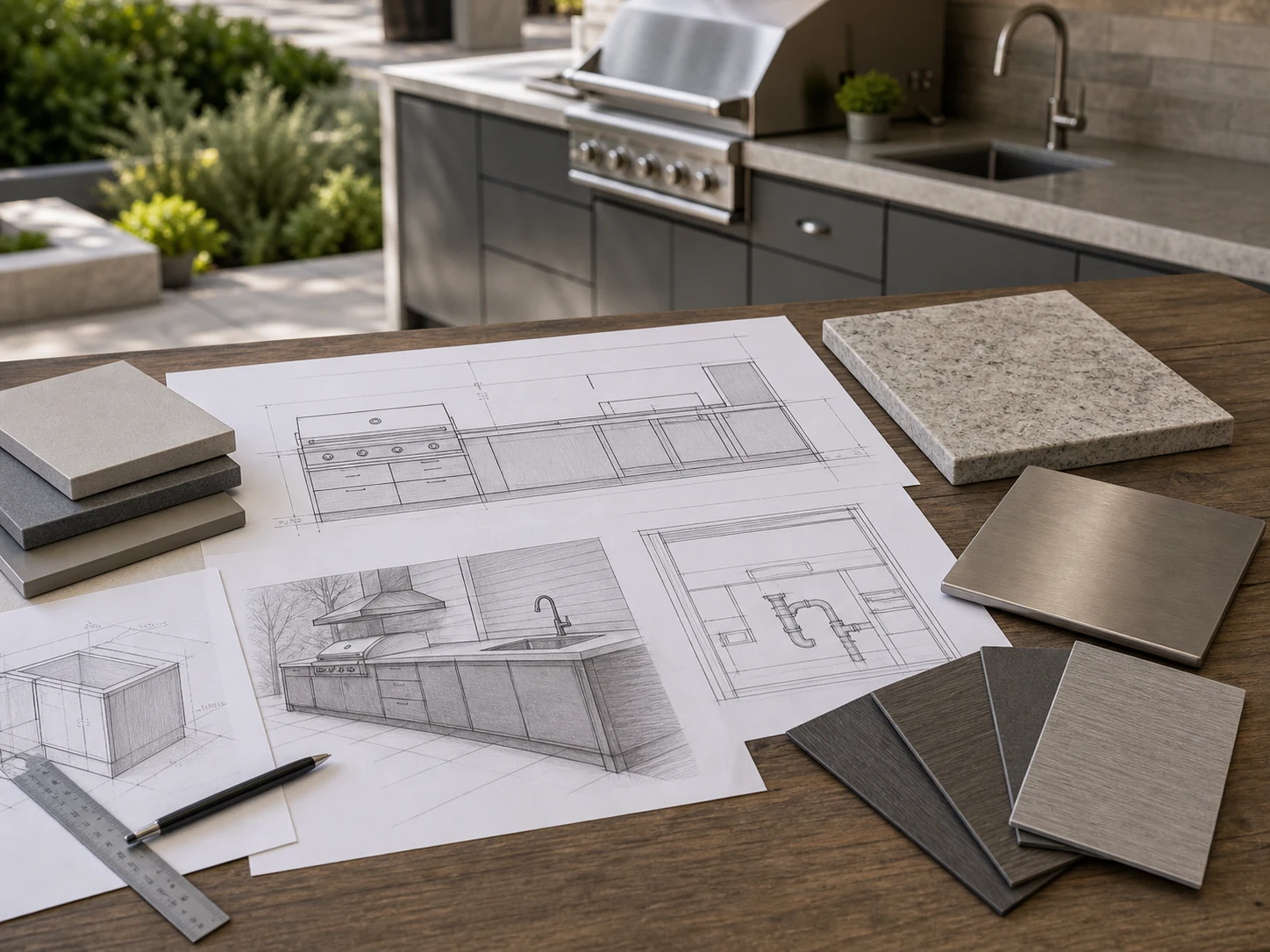
Frequently Asked Questions
What should be planned first in outdoor kitchen cabinet planning?
Start with site exposure, grill specifications, sink position, utilities, drainage, ventilation, countertop support and cabinet material system. Style and color should come after the cabinet has a realistic outdoor performance basis.
Is stainless steel suitable for outdoor kitchen cabinets?
Stainless steel can be suitable for outdoor BBQ cabinets, sink modules and cleaning-heavy zones, especially where moisture and food preparation are important. The final suitability still depends on finish specification, site exposure, edge details, hardware and maintenance expectations.
Can an outdoor kitchen include a sink?
Yes, but the sink should be planned early. It affects cabinet structure, water supply, drainage route, service access, countertop cutout and the relationship between prep, cooking and cleaning zones.
Does an outdoor BBQ cabinet need ventilation?
Ventilation may be needed around grill heat, enclosed storage, gas-related areas or equipment zones. Requirements depend on the appliance, cabinet structure and local site conditions, so the final plan should be checked before production.
What drawings are useful before production?
Useful drawings include cabinet layout, elevations, sections, grill cutout, sink position, countertop detail, utility points, drainage route, ventilation zones, material notes and installation conditions.
Practical Summary
Outdoor cabinet style is important, but it should be the visible result of better planning, not the starting point. When material decisions come first, the project can respond to rain, humidity, grill heat, sink use, cleaning, countertop load and installation conditions with more confidence.
For Sunrise Furnishing, a practical outdoor kitchen cabinet discussion should start with the site: grill model, sink needs, water and drainage points, utility access, countertop choice, floor condition, material preference and project drawings. Once those details are clear, the final style can be selected with fewer hidden assumptions.
If you are preparing an outdoor kitchen or BBQ cabinet project, share the grill dimensions, sink requirements, site photos, utility points and preferred material direction before the cabinet drawings move toward approval.