English
  日本語
日本語  العربية
  Deutsch
  Español
  Français
  한국어
한국어  Português
  Татар теле
  Русский
 A bathroom vanity can look large enough on the wall and still lose the drawer space you expected to use. The mistake often happens when the cabinet width is chosen before the sink bowl, P-trap, wall or floor plumbing, drawer depth and walking clearance are checked together. Good bathroom vanity size and storage planning is not only about finding a cabinet that fits between two walls. It is about protecting the storage that remains after the sink and pipes are installed.
For a custom vanity, the most useful question is not simply “How wide can the cabinet be?” A better question is “How much of that width can become real drawer storage after the plumbing, sink type, cabinet structure and daily access are planned?”
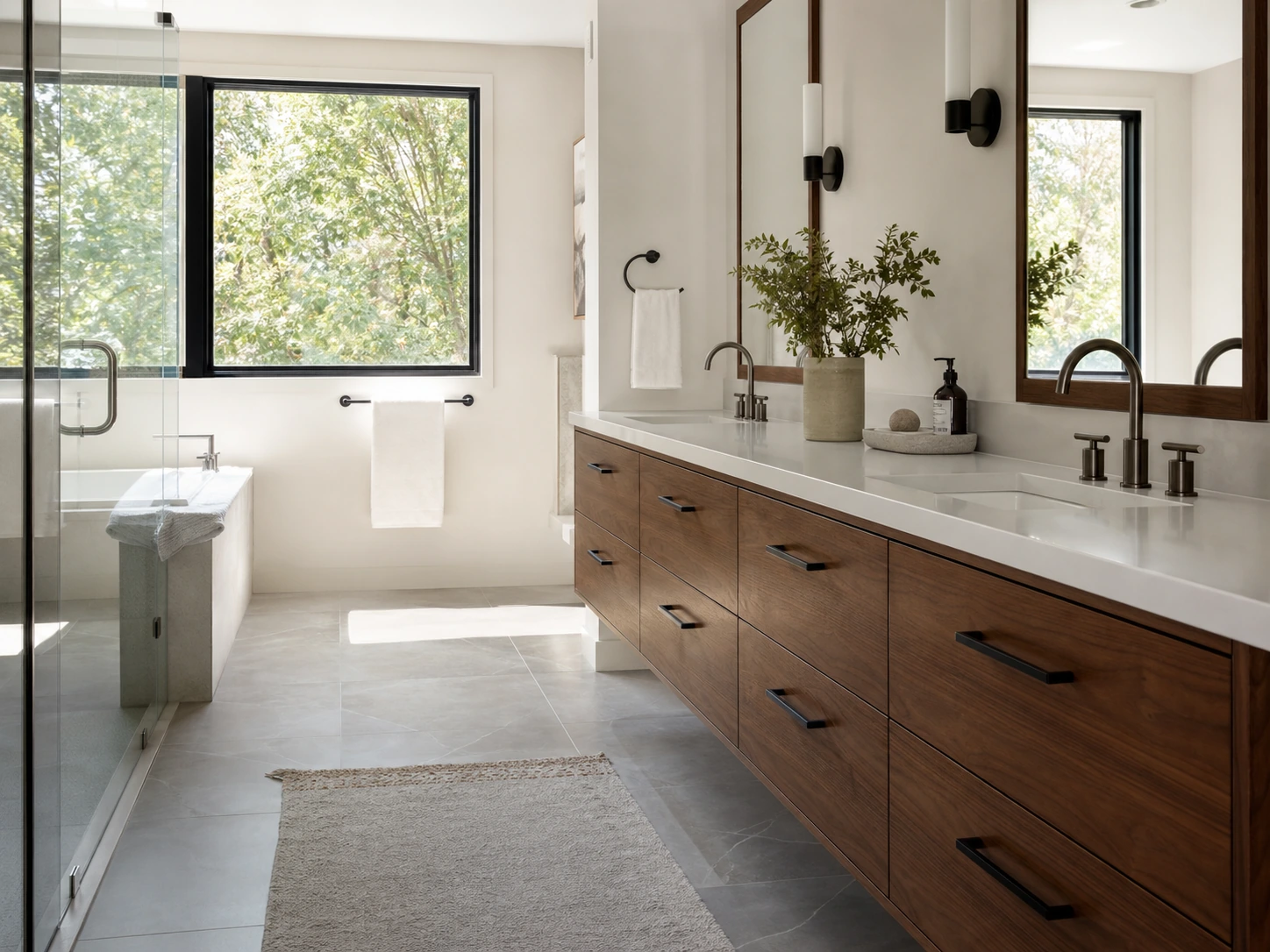
Where Bathroom Vanity Size and Storage Planning Goes Wrong
The first planning error is treating the vanity as an empty box. On a drawing, the cabinet may look wide, symmetrical and generous. In the finished bathroom, the center area may be occupied by a sink bowl, drain, P-trap, supply lines or drawer cutouts. If those zones are not planned early, the vanity can appear larger while storing less.
Outside width is not the same as drawer space
Outside width measures the full cabinet. Drawer space measures what can actually open, hold items and avoid the pipes. A 48-inch vanity, for example, may not feel more useful than a smaller cabinet if the middle drawers are shallow, interrupted or blocked by plumbing. The exact dimensions should always be checked against the sink and site conditions rather than copied as a universal rule.
The pipe zone should be planned before the front design
The most attractive drawer front does not solve a conflict behind it. Before choosing a fluted, flat, stone or painted front design, mark the pipe zone on the vanity section. That zone should show where the drain drops, where the trap sits, where supply lines enter and how the drawers avoid them.
Mistake 1: Choosing the Width Before Checking Plumbing
Plumbing is often the hidden reason drawer storage disappears. If the drain is centered but the drawer layout is planned as full-depth drawers, the middle section may need cutouts. If the drain is off-center, the storage zones may need to shift. If the pipes come through the floor, the lower drawer area may be affected more than expected.
Wall plumbing and floor plumbing affect drawers differently
Wall plumbing can sometimes leave more lower storage open, but it still needs a trap zone behind the sink. Floor plumbing may require a vertical pipe path through the cabinet base or lower drawer area. Neither is automatically better. The important point is to confirm the actual pipe route before the drawer count, drawer height and internal dividers are approved.
P-trap clearance should be visible in a section drawing
A front elevation shows how the vanity looks. A section drawing shows whether it works. For bathroom vanity size and storage planning, the section should include the sink bowl depth, countertop thickness, drawer box depth, P-trap position and any drawer cutout. Without this view, the cabinet may be approved from the front while hiding a storage conflict inside.
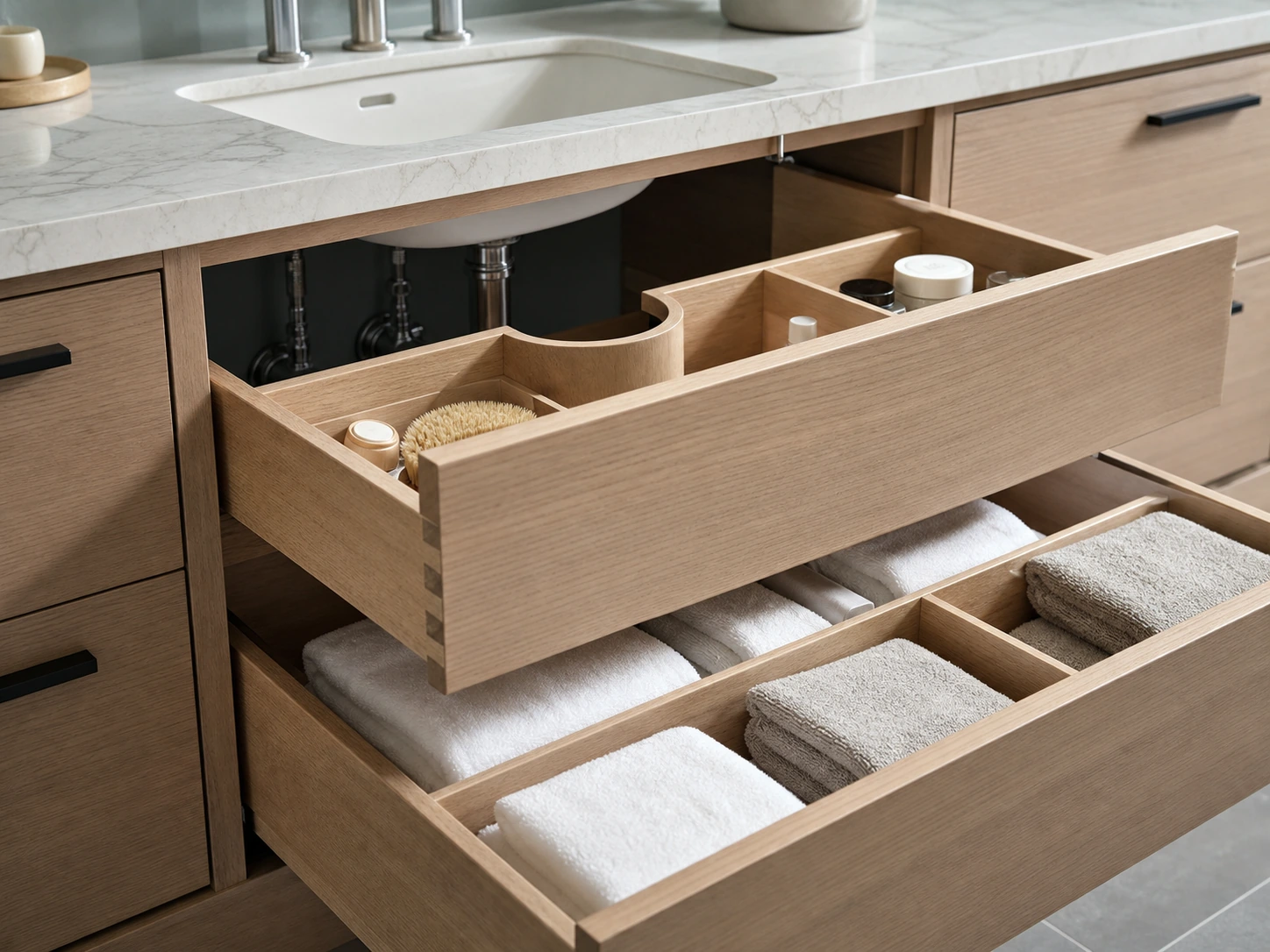
Mistake 2: Planning Drawers Before the Sink Type
The sink is not just a style choice. It changes how much cabinet space remains below the countertop and how the drain connects to the vanity. If the drawer layout is fixed before the sink type is selected, the final cabinet may need awkward revisions.
Integrated, undermount and vessel sinks use cabinet space differently
An integrated sink may create a clean surface but still has bowl depth and drain placement below. An undermount sink needs countertop support, sink opening accuracy and enough room for hardware around the bowl. A vessel sink may sit higher on the counter, but it can change faucet height, mirror relation and daily splash area. Each option affects drawer depth in a different way.
Single sink and double sink layouts change drawer zones
A double sink can look balanced in a wide vanity, but it divides plumbing and may reduce central drawer storage. A single sink can leave more counter landing space or wider drawer zones if the bathroom use allows it. The right choice depends on who uses the bathroom, how much countertop space is needed and whether the storage priority is towels, bottles, grooming tools or cleaning supplies.
Mistake 3: Counting Every Drawer as Useful Storage
More drawer fronts do not always mean more usable storage. A shallow drawer may work for small items but fail for tall bottles. A deep drawer may hold towels but become messy without dividers. A drawer with a pipe cutout may still be useful, but only if the remaining space has a clear purpose.
Tall bottles, towels and small items need different drawer heights
Start with daily bathroom items. Tall bottles, hair tools, towels, spare paper, grooming products and cleaning supplies do not need the same drawer height. If every drawer is designed only for a neat front rhythm, the inside may not match real use. A custom vanity should balance the visual front with practical internal zones.
Dividers help only when the drawer depth is real
Dividers can make storage easier, but they cannot create space around a drain pipe. Before planning inserts, confirm the real drawer box depth and any cutout. Then decide where dividers, trays or open shelf areas will be most useful. This keeps the article’s main promise practical: storage planning should protect real daily access, not just make the elevation look organized.
Mistake 4: Ignoring Walking Clearance Around the Vanity
Drawer storage also depends on the room around the vanity. A drawer that opens into a toilet, shower screen or door swing will not feel useful. A cabinet that fills the full wall width may reduce cleaning access or make the room feel tighter. The best vanity size should respect both storage goals and movement in the bathroom.
Toilet distance, shower access and door swing can limit usable width
Before approving the vanity width, check the door swing, toilet position, shower entry and any nearby wall return. A narrow gap may make drawer use uncomfortable even if the cabinet technically fits. For compact bathrooms, the most useful vanity may be the one that leaves enough space for standing, opening drawers and cleaning around the cabinet.
Mirror height and outlet position should not be checked too late
Mirror size, faucet height, backsplash, outlet position and lighting all affect the vanity area. If outlets are placed where a mirror cabinet, backsplash or tall faucet needs to go, the site may need adjustment. These details should be reviewed with the vanity drawing so that the cabinet, countertop, mirror and wall services work as one area.
Mistake 5: Treating Floating Vanities as Style Only
Floating vanities are often chosen for a clean, lighter bathroom look. But a wall-mounted cabinet is also a structural decision. The wall, fixing method, cabinet weight, pipe route, drawer layout and finished height all need to work together.
Wall fixing, installation height and cabinet weight matter
A floating vanity should not be planned only from a front image. Confirm the wall type, fixing points, desired finished height and bottom clearance. The bottom gap should be easy to clean without making the countertop too high for daily use. The cabinet weight, countertop weight and loaded drawer weight should be considered by the project team before installation.
Fluted stone fronts are a material-specific planning example
When a design uses a fluted stone floating bathroom vanity, the front is not only decorative. Stone or stone-look fronts can affect weight, edge detailing, groove cleaning and hardware planning. This product example connects floating structure, fluted surface, stone-front planning and drawer storage without turning the whole article into a product page; it simply shows why material and structure should be checked together.
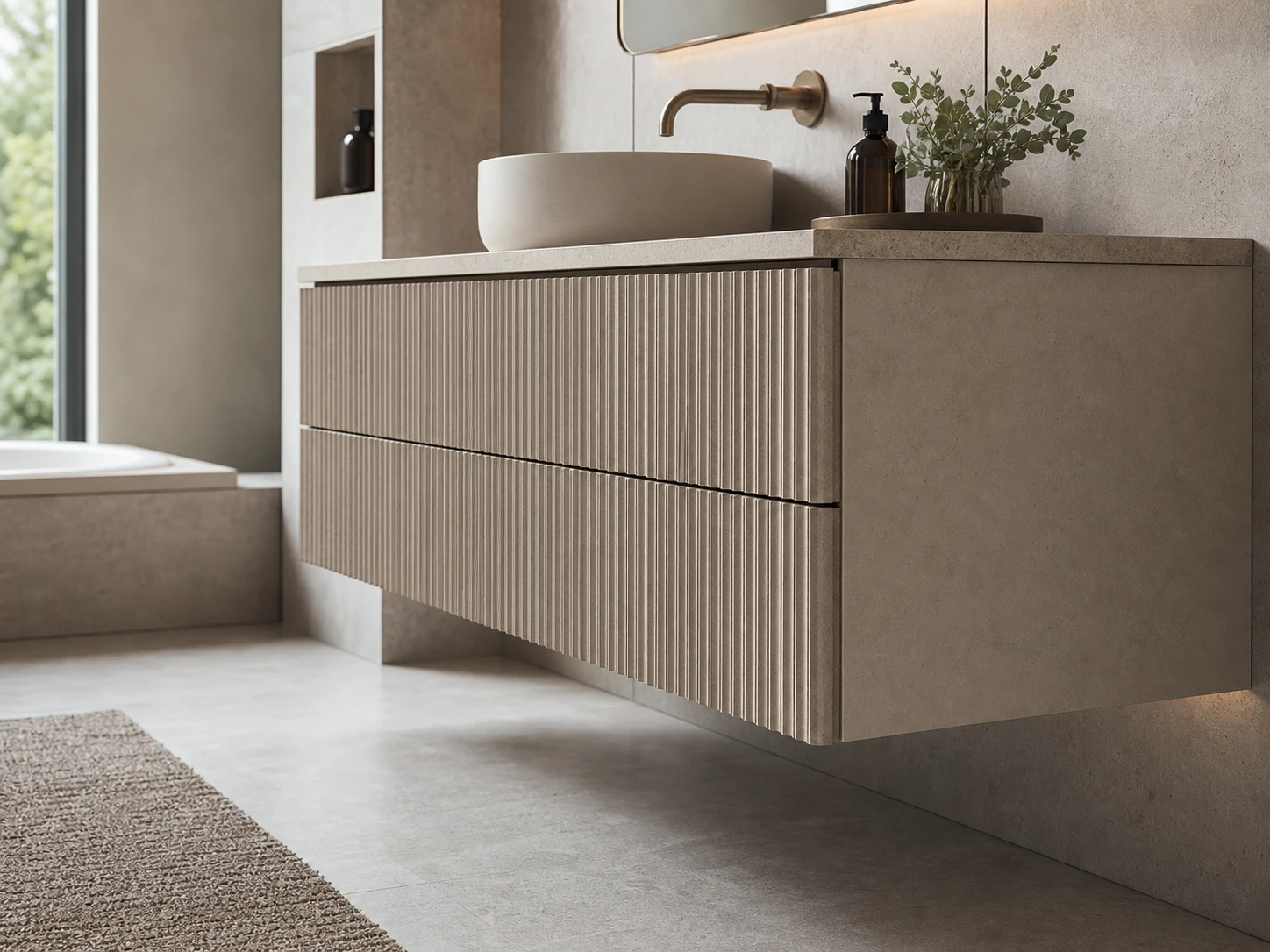
Drawings to Confirm Before Production
The final protection against drawer-space mistakes is a drawing set that shows more than the front view. For custom bathroom vanity production, the drawings should explain how the cabinet looks, how it is built and how it meets the site plumbing.
Front elevation, section drawing and plumbing drawing
The front elevation shows drawer fronts, door lines, open shelves and visual balance. The section drawing shows sink depth, drawer box depth, P-trap clearance and countertop thickness. The plumbing drawing shows drain and supply positions. These three views should agree before production begins.
Sink opening, drawer cutout, outlet position and installation notes
Also confirm the sink opening, faucet hole, outlet location, mirror relation, installation height, wall fixing notes and any drawer cutout. If the project is overseas, clear drawings and site measurements are especially important because the cabinet maker may not be able to verify every condition in person.
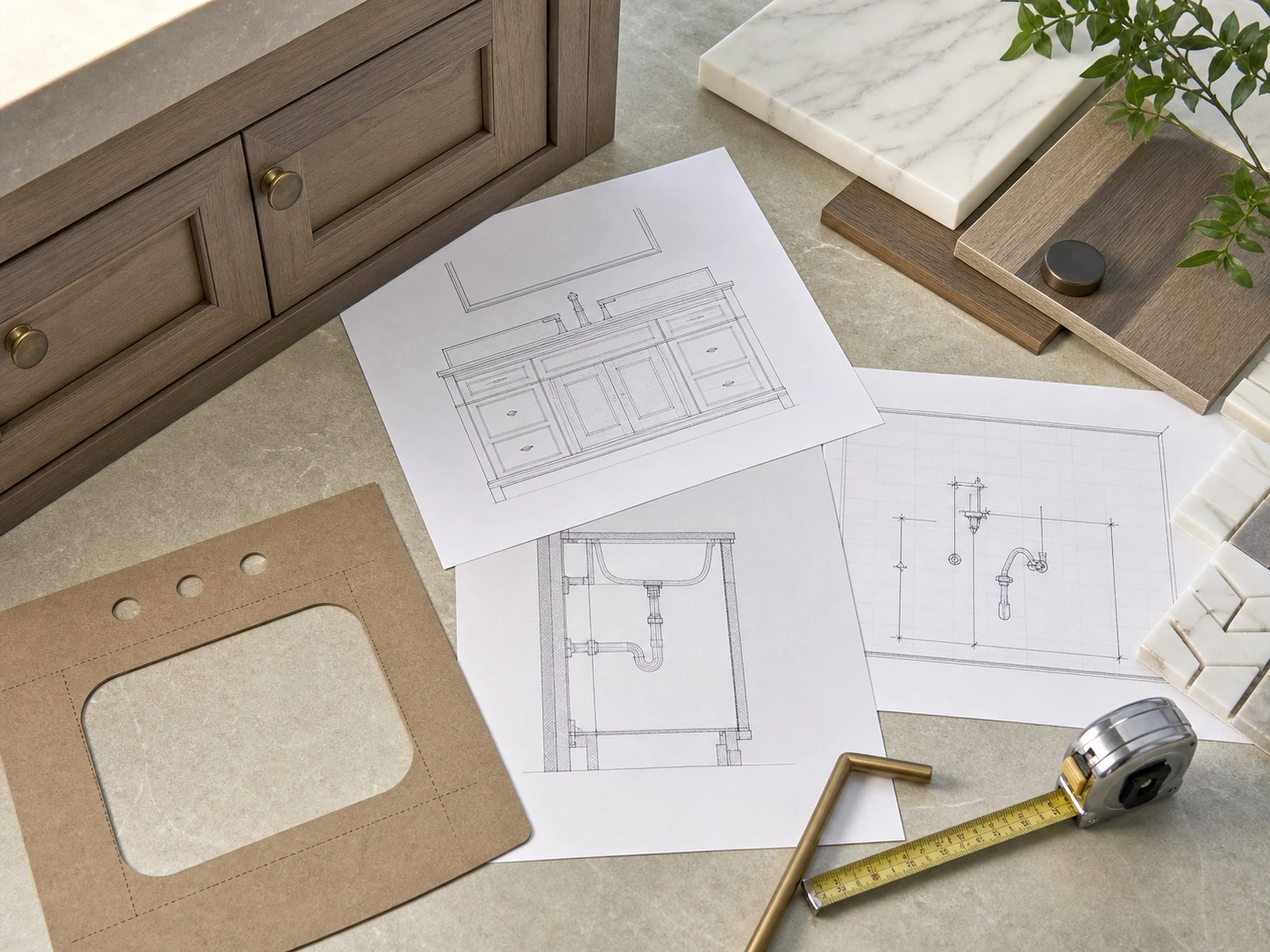
Pre-Production Checklist
Before approving a custom vanity, review these points:
- Bathroom wall width, available depth and walking clearance.
- Toilet, shower, door swing and cleaning access.
- Sink type, sink opening, faucet position and countertop landing space.
- Wall plumbing or floor plumbing position.
- P-trap clearance and drawer cutout.
- Drawer height for tall bottles, towels, small items and cleaning supplies.
- Mirror height, outlet position and lighting relation.
- Wall type, fixing points and installation height for floating vanities.
- Cabinet material, front weight, hardware and edge details.
- Front elevation, section drawing, plumbing drawing and installation notes.
This checklist does not replace local plumbing or electrical review. It helps organize the information a custom cabinetry team needs before the vanity is made.
Frequently Asked Questions
What size bathroom vanity should I choose?
Choose a vanity size based on bathroom width, walking clearance, sink type, plumbing position and daily storage needs. Do not choose by wall width alone. The useful size is the one that leaves enough room for pipes, drawers, countertop use and cleaning access.
Does a wider vanity always offer more drawer storage?
No. A wider vanity can still lose storage if the sink bowl, P-trap, pipe route or drawer cutouts take up the center of the cabinet. A narrower but better-planned vanity may feel more useful in daily use.
Are drawers better than cabinet doors for a bathroom vanity?
Drawers are convenient for many daily items, but they must be planned around the sink and plumbing. Cabinet doors may work better in some pipe-heavy zones or for taller cleaning supplies. The best layout often combines different storage types.
What should be checked before choosing a floating vanity?
Check the wall structure, fixing points, cabinet weight, plumbing route, finished height and bottom cleaning clearance. A floating vanity is both a style choice and an installation decision.
Do stone vanity fronts affect cabinet planning?
Yes. Stone or stone-look fronts can affect weight, edge details, groove cleaning and hardware planning. These details should be reviewed with the drawer structure and wall fixing method before production.
Final Thought: Protect the Drawer Space Before You Pick the Front
The bathroom vanity size mistake that steals drawer space is not usually a dramatic design failure. It is a quiet planning gap: the cabinet fits the wall, but the pipes, sink and cutouts claim the storage before the user ever opens the drawer.
Before choosing the final front style, prepare the bathroom dimensions, plumbing position, preferred sink type, storage list and site photos. With those details, a custom vanity plan can protect drawer space, support the installation and still achieve the floating, stone-front or fluted look you want.