English
  日本語
日本語  العربية
  Deutsch
  Español
  Français
  한국어
한국어  Português
  Татар теле
  Русский
 Kitchen cabinet layout planning matters most when a U-shaped kitchen looks attractive on paper but begins to close in the room. Three cabinet runs can create generous storage and short working distances, yet the same three runs can crowd an entrance, trap appliance doors, or make two people compete for the same standing space. Before choosing greige fronts, stone worktops, handles, or lighting, the cabinet plan needs to prove that the room can carry the layout.
A U-shaped layout should not be approved just because it adds more cabinets. It should be tested against circulation, appliance positions, work zones, corners, utilities, and final drawings. The finish board can wait; the room cannot.
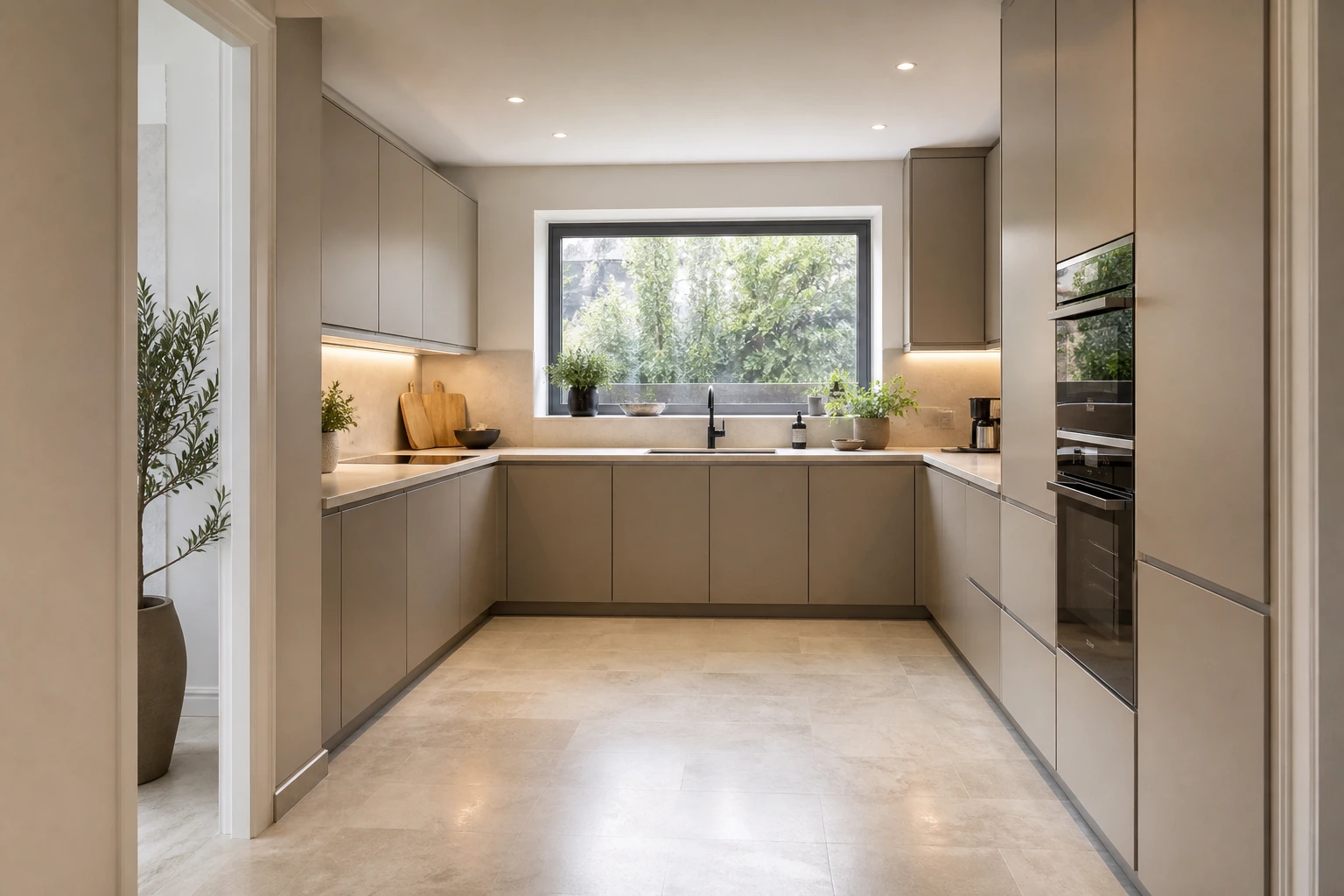
Start With the Room Opening, Not the Cabinet Shape
The first question is not whether the U shape looks efficient. It is whether the open side of the U gives the room enough breathing space. In a new-build, this may depend on door positions, window walls, island ambitions, dining access, and the route from nearby rooms. In a renovation, it may also depend on existing plumbing, columns, wall thickness, uneven corners, or a doorway that cannot be moved.
A U-shaped kitchen usually has one open side. That opening carries most of the movement in and out of the work area. If the opening is too narrow, the kitchen may feel enclosed even when the cabinet fronts are light. If the opening is generous but the refrigerator or oven door swings into it, the layout can still fail during daily use.
Layout Planning Note: Review the U shape from the user standing position, not only from a top-down plan. A cabinet line that looks clean in plan view may feel tight when tall units, handles, appliance doors, and people are added.
Give Each Cabinet Run a Separate Job
A U-shaped kitchen becomes easier to judge when each run has a clear role. If every wall tries to hold every function, the layout becomes busy. If each run supports a specific job, the room feels more deliberate and the cabinet drawings become easier to review.
The Cooking Run
The cooking run usually needs a hob or range, extraction route, heat-safe surrounding materials, nearby utensil drawers, pan storage, and enough landing space for hot cookware. If the cooking run sits on the back wall, check whether upper cabinets, extractor depth, and splashback height leave a balanced working zone. If the cooking run sits on a side wall, check whether the cook stands in the main entrance path.
The Cleaning Run
The sink, dishwasher, waste pull-out, cleaning storage, and daily dish storage should be close enough to work as a group. The dishwasher door is one of the easiest conflicts to miss. When it opens, it can block a corner, stop a drawer from opening, or interrupt the standing position at the sink. This is why appliance model information belongs in the layout stage, not after cabinet production drawings are almost finished.
The Tall Storage or Preparation Run
The third run may support pantry storage, integrated refrigerator housing, built-in ovens, breakfast appliances, or deeper preparation drawers. In a modern greige U-shaped kitchen cabinet layout, this wall can become the calm vertical anchor of the room. It still needs to be checked carefully: tall doors, oven doors, refrigerator hinges, ventilation space, and socket access all affect whether the cabinet run works in real use.
Keep Movement Paths Clear Before Adding Storage
Extra storage is useful only if people can still move through the kitchen comfortably. A U-shaped plan may be used by one cook, two family members, a parent and child, or a homeowner and guest moving around the same preparation zone. The layout should be tested for the users who will actually use it.
Plan for One Cook or Several Users
For one cook, the main concern is the distance between preparation, cooking, cleaning, and food storage. For several users, the question changes. Can someone reach the refrigerator while another person stands at the hob? Can the dishwasher be loaded while someone prepares food? Can a guest take a drink without crossing the cooking zone?
Test Appliance Doors in the Main Walkway
Appliance doors should be drawn and reviewed in their open positions. This is especially important for refrigerators near side walls, ovens facing the entrance, dishwashers near corners, and tall pull-out pantry units. The final answer depends on the appliance model, hinge direction, handle depth, and local site dimensions, so it should be checked against the actual appliance schedule.
| Common Mistake | Why It Causes Trouble | Better Fix |
|---|---|---|
| Placing the dishwasher tight to a corner | The open door can block drawers, corner access, or the sink standing area. | Review the dishwasher swing with adjacent drawers and leave the required filler or spacing. |
| Putting a refrigerator directly against a wall without checking the hinge | The door may not open wide enough for drawers or shelves to be removed. | Confirm the appliance manual, hinge side, handle projection, and wall filler before drawings are approved. |
| Letting the oven door open into the only entrance path | The user may block the kitchen while loading or removing trays. | Test the oven door in plan and elevation, then adjust the tall cabinet wall or walkway relationship. |
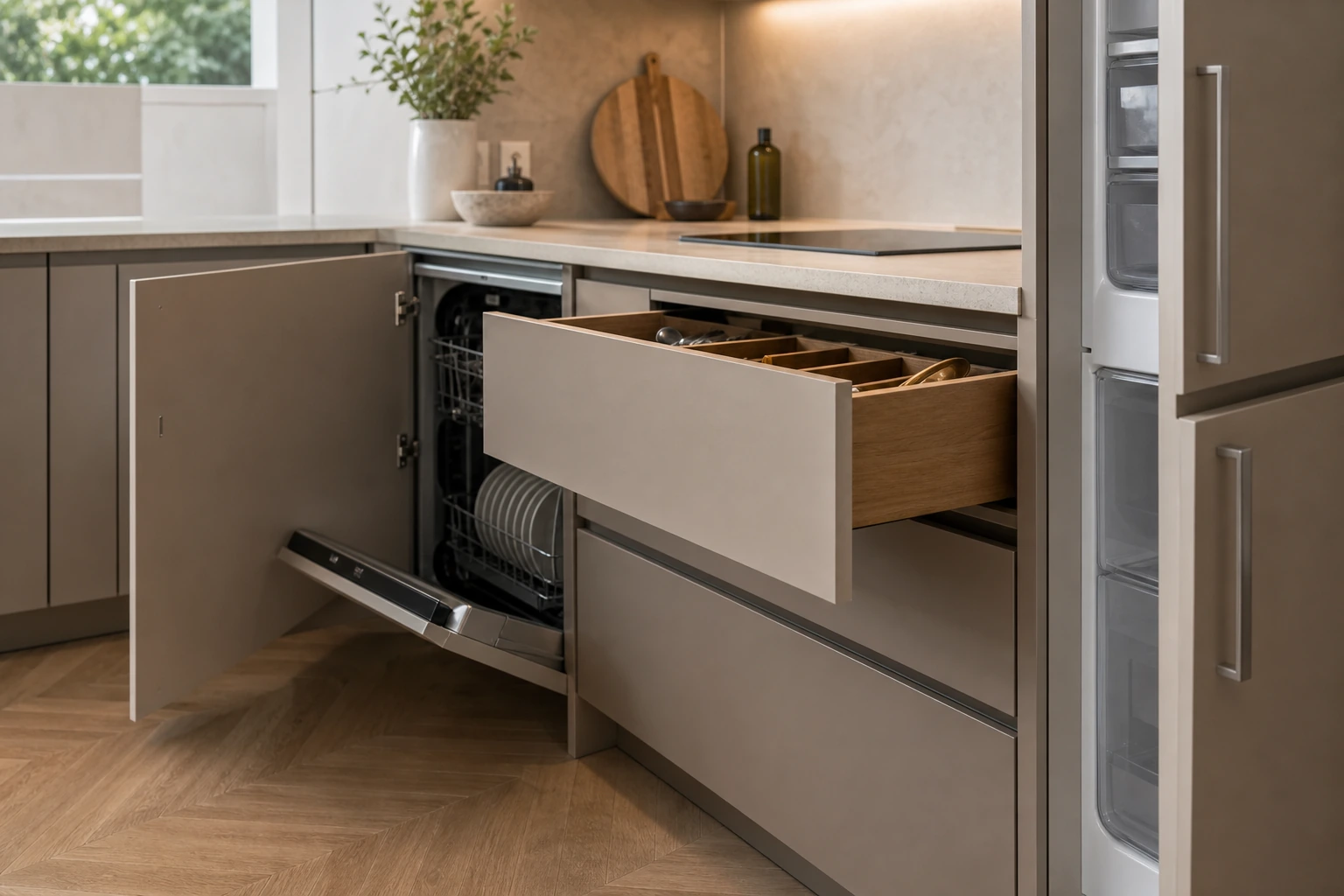
Treat the Two Corners as Layout Pressure Points
A U-shaped kitchen normally creates two corners. These corners should not be treated only as hardware shopping decisions. They influence drawer placement, door swing, appliance position, worktop continuity, and how much useful storage the cabinet run actually provides.
When Corner Hardware Earns Its Space
Corner hardware may be useful when the corner stores occasional cookware, larger items, or objects that do not need to be reached several times a day. Pull-out systems can improve access, but they also require space, budget, hardware quality, and accurate installation. The opening width, door type, and adjacent cabinet run must support the mechanism.
When Drawers May Be More Useful
In some kitchens, it is better to accept a less active corner and use straight runs for deep drawers. Wide drawers near the preparation and cooking zones may serve daily use better than a complex corner mechanism. The goal is not to rescue every hidden inch. The goal is to make the main working storage easy to reach.
Bring Utilities Into the Layout Early
Utilities can quietly decide whether a U-shaped kitchen stays practical. Sink plumbing, dishwasher connections, hob or range requirements, extraction route, oven power, refrigerator outlet, water filtration, and countertop appliance sockets all need to be coordinated before cabinet openings are fixed.
Sink, Dishwasher, and Plumbing Positions
The sink and dishwasher are usually planned together, but site conditions may limit where they can sit. Check drain position, water supply, dishwasher hose route, cabinet base protection, and whether the sink cabinet leaves room for waste storage or water filtration. Local plumbing requirements and installer advice should guide final decisions.
Hob, Oven, and Extraction Requirements
Cooking appliances need more than a front opening. They may require ventilation clearance, heat protection, electrical or gas coordination, service access, and extraction planning. If the hob sits below a wall cabinet or extractor, the cabinet heights and surrounding materials must be reviewed with the appliance instructions and local regulations.
Sockets for Fixed and Countertop Appliances
Countertop appliances often reveal weak layout planning. Coffee machines, kettles, mixers, toasters, rice cookers, and charging points may all need sockets in different zones. If sockets are decided too late, the worktop can become cluttered or cables may cross wet, hot, or busy areas.
Compare the U Shape With Simpler Alternatives
A U-shaped kitchen is not automatically better than a one-wall, galley, or L-shaped kitchen. It simply offers a different balance of storage, enclosure, worktop length, and circulation. Before approving the U shape, compare it with simpler options.
- One-wall layout: may suit linear apartments or open rooms where circulation matters more than enclosed storage.
- Galley layout: can work well when two parallel runs have enough space between them and appliance doors do not block each other.
- L-shaped layout: often keeps one side of the room more open, which may help dining or living connections.
- U-shaped layout: can provide three working runs and strong storage, but it must be checked for entrance comfort, two corners, and appliance swings.
This comparison does not need to be emotional. It should be based on the room, the appliance list, the user routines, and the final drawings.
What to Confirm in the Final Kitchen Drawings
Once the layout direction is chosen, the final drawing review should confirm more than the shape. Plans, elevations, and sections should show how the cabinet runs actually meet walls, appliances, fillers, panels, worktops, lighting, and utilities.
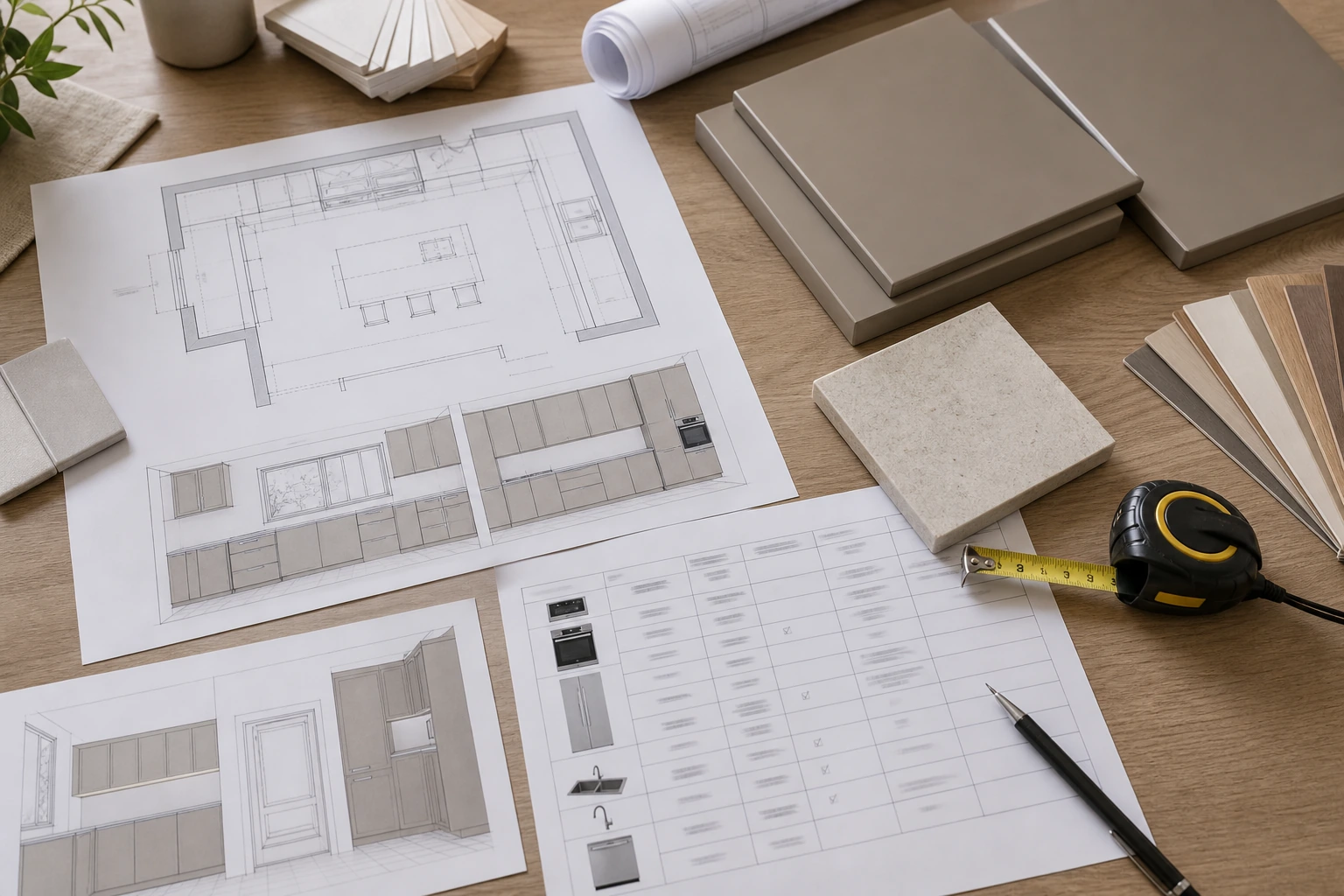
Plans, Elevations, and Sections
The plan shows cabinet runs and circulation. Elevations show vertical proportions, tall cabinet alignment, wall cabinet heights, backsplash relationships, and appliance stacking. Sections help confirm depths, clearances, worktop details, and junctions that may not be obvious from the front view.
Appliance Schedule and Cabinet Openings
Every fixed appliance should have a model reference, opening size, ventilation requirement, hinge direction where relevant, and service-access note. If the appliance is not final, the drawings should clearly mark what still needs confirmation.
Fillers, Panels, and Wall Junctions
Fillers and side panels are not leftover details. They help doors open, cover wall irregularities, protect appliances, and make the cabinet line meet the room cleanly. In a U-shaped kitchen, small fillers near corners or walls can protect the whole layout from daily-use conflicts.
Frequently Asked Questions
Does a U-shaped kitchen always provide more storage?
It can provide more cabinet length, but usable storage depends on corner access, drawer placement, appliance positions, and circulation. A smaller layout with better drawer access may sometimes work better than a crowded U shape.
How do I stop a U-shaped kitchen from feeling enclosed?
Check the open side of the U, keep the entrance comfortable, avoid placing tall units where they visually close the room, and test appliance doors in the main movement path. Light finishes can help, but they cannot fix a layout that is too tight.
Should appliances be selected before the cabinet layout is finalized?
Yes, at least the key appliances should be known before final cabinet drawings. The refrigerator, dishwasher, oven, hob, extractor, sink, and any integrated appliances can affect openings, clearances, ventilation, utilities, and service access.
Is the kitchen work triangle still useful?
The work triangle can still be a quick reference, but it is not enough for many modern kitchens. Work zones, storage jobs, appliance doors, multiple users, waste storage, and serving paths often give a more realistic layout review.
Approve the Layout Before the Finish Board
The cabinet finish should support the layout, not distract from unresolved planning. Before choosing the final door color, stone tone, handle, or lighting detail, confirm the cabinet runs, appliance positions, movement paths, corner decisions, utilities, and final drawings. A U-shaped kitchen can be a strong storage and working layout, but only when the room has enough space for the three runs to work without closing in the people who use it.
For overseas residential, villa, apartment, or project kitchens, Sunrise Furnishing can review floor plans, appliance information, site notes, finish direction, and cabinet drawings so the layout is easier for buyers, designers, builders, and installers to confirm before production.