English
  日本語
日本語  العربية
  Deutsch
  Español
  Français
  한국어
한국어  Português
  Татар теле
  Русский
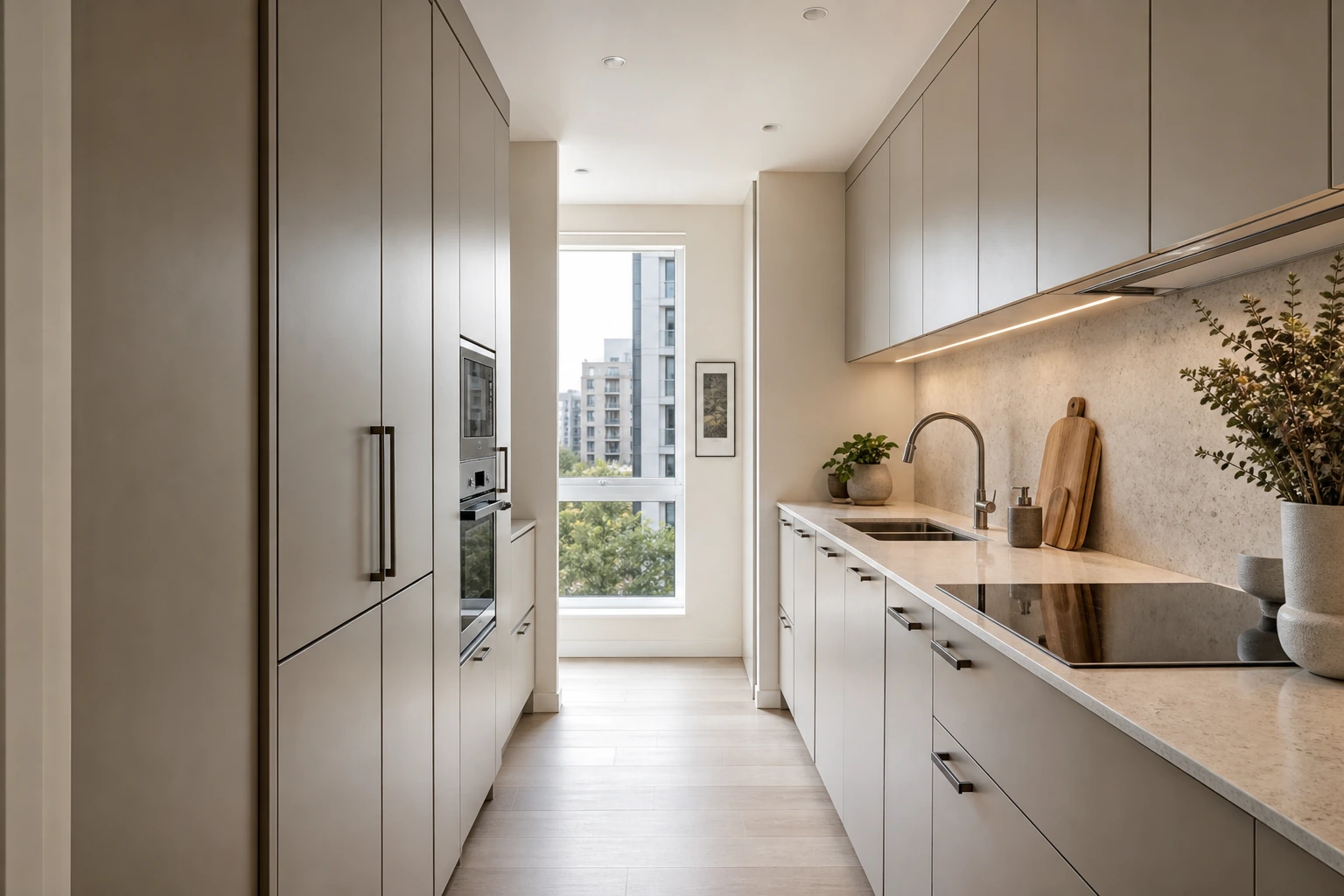
 When you are planning galley kitchen cabinets for small condo renovation, the first question is not only how the kitchen will look. The more practical question is whether the cabinet line will leave enough movement, appliance access, countertop landing space, and storage after production and installation. A small condo galley kitchen usually has fewer margins for adjustment than a large open kitchen, so the cabinet plan should be checked before the order moves into manufacturing.
Why a Galley Kitchen Feels Different in a Condo
A galley kitchen in a condo often works along one narrow wall or between two tight parallel surfaces. The available length may be interrupted by a window, a pipe chase, a structural column, a service door, or an existing water point. Even when the room looks simple, the cabinet design has to respond to several fixed conditions at the same time.
For a condo owner, this means the cabinet layout should be read as a working line. Where does cooking start? Where does rinsing happen? Where can a hot tray, wet bowl, grocery bag, or small appliance land for a moment? If the drawing only counts cabinet boxes without testing the working line, the kitchen may look tidy on paper but feel crowded in daily use.
Measure the Working Line Before Choosing Cabinet Depth
Cabinet depth is one of the first details to review in a small galley kitchen. A deeper base cabinet may increase storage, but it can also reduce walkway comfort, make appliance doors harder to open, or push handles into the movement path. A shallower cabinet may protect the walkway, but it can limit drawer depth, sink selection, and countertop use. There is no single depth that fits every condo kitchen; the right answer depends on the wall length, appliance sizes, door swing, and how the room is entered.
For a custom cabinet supplier, the useful information is not just the wall measurement. It is also the location of plumbing, electrical points, gas or hob requirements, ceiling height, window sill height, and any wall unevenness that may affect installation. These details help the cabinet depth, countertop line, filler panels, and appliance openings stay realistic.
Keep sink, hob, and prep space from fighting for one short run
The sink, hob, and preparation area should not be squeezed into one short section without a landing zone. A narrow kitchen still needs short countertop spaces beside high-use points. Without them, the user may end up placing wet dishes near the cooktop, moving hot cookware too far, or using the only clear surface for several tasks at once.
A practical layout check is to mark the main tasks on the drawing before finalizing cabinet fronts. If a sink, cooktop, dishwasher, oven, and pantry cabinet all compete for the same short line, the plan may need adjustment before production.
Wall cabinets need clearance, not only capacity
Wall cabinets can add useful storage, but the door movement and reach height matter. In a narrow condo kitchen, a wall cabinet door that opens toward the user can interfere with cooking or dishwashing. Lift-up doors, narrower door leaves, open shelves in limited positions, or glass-front display sections may help in some projects, but each choice should match the user’s habits and the room’s clearance.
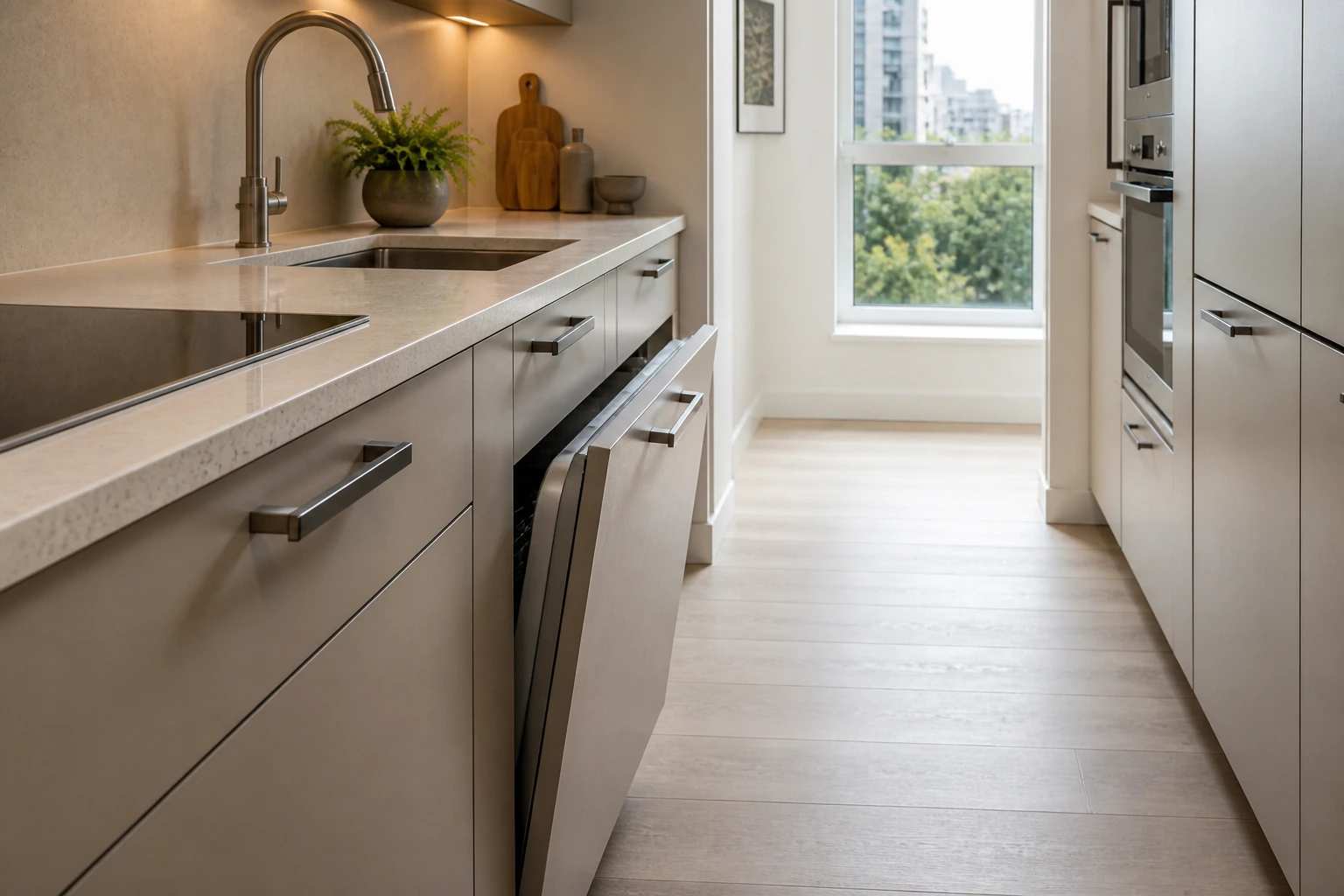
This is also where handle style becomes more than a visual detail. Slim pulls, recessed profiles, or handleless fronts can reduce visual clutter and keep the walking line cleaner. Deep projecting handles can look fine in a showroom and still become awkward in a tight galley walkway.
Tall Storage Helps Only When Appliances Are Planned Early
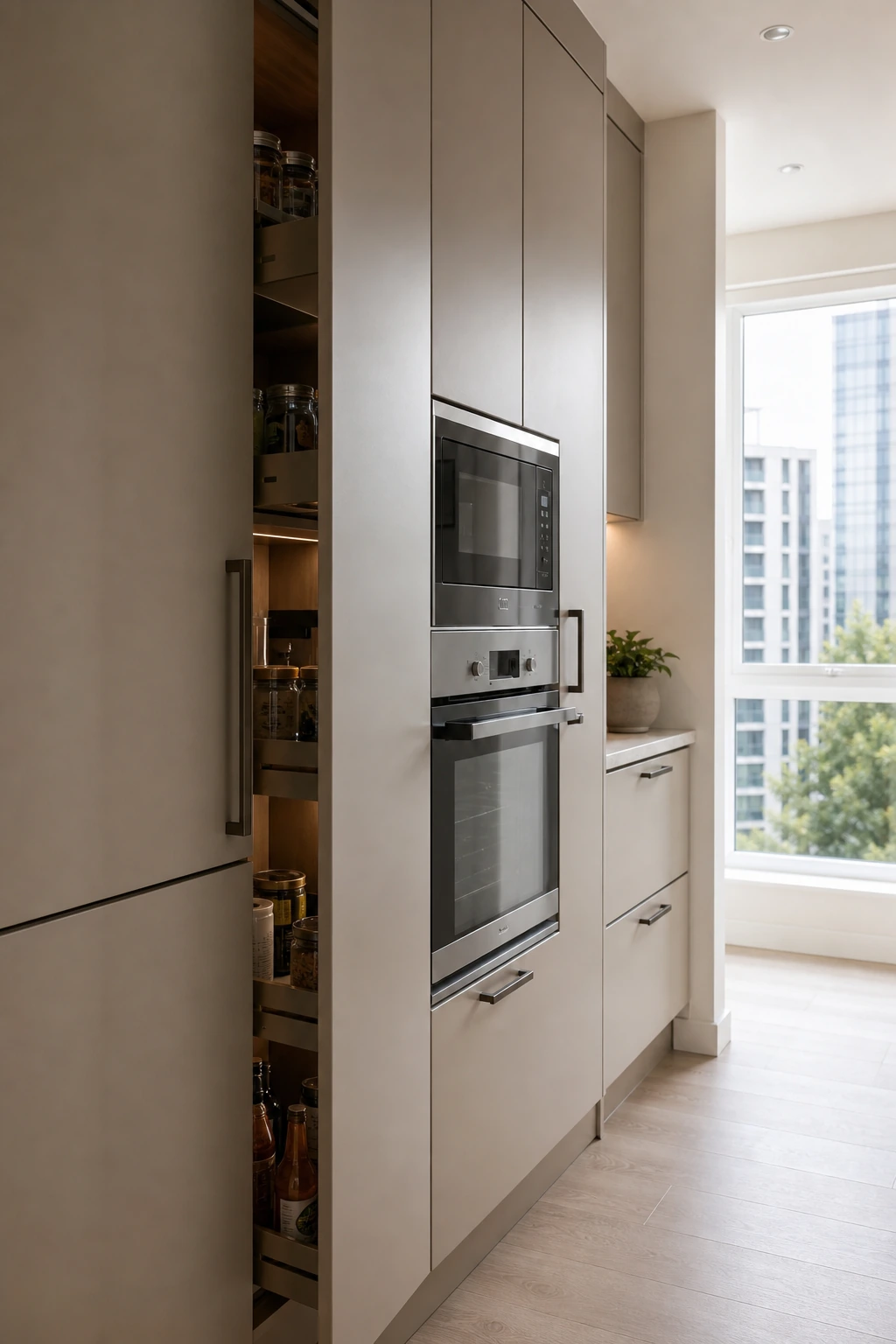
Tall storage is often attractive in a small condo because it uses vertical space. A pantry pull-out, appliance tower, or refrigerator surround can make the kitchen feel more organized. But tall units also take strong visual weight and may reduce countertop length if they are placed without a clear appliance plan.
The safest approach is to confirm appliance specifications early. Built-in ovens, microwaves, refrigerators, dishwashers, and ventilation equipment each need opening sizes, clearance, power points, and service access. If those requirements are treated as a later detail, the cabinet design may need costly changes or on-site compromises.
Oven, microwave, refrigerator, and pantry zones
In many condo kitchens, the tall zone works best at one end of the cabinet run, where it can hold a refrigerator, oven, microwave, or pantry storage without breaking the main countertop too severely. In other layouts, the refrigerator may need to stay near the entry, while the oven or microwave is integrated into a separate column.
What matters is sequence. The user should be able to take food from storage, rinse or prepare it, cook it, and place finished items without crossing the narrow kitchen too many times. A tall cabinet that looks efficient but interrupts this sequence may not support daily use.
Ventilation and service access behind built-in appliances
Built-in appliance zones need more than a front opening. Heat dissipation, cable access, socket position, and removable panels should be reviewed before cabinet production. For overseas apartment renovation projects, Sunrise Furnishing usually benefits from receiving appliance model information, marked drawings, and site photos before the cabinet drawings are locked.
If you are comparing article planning notes with a product detail example, the custom galley kitchen cabinet for apartment renovation page shows how cabinet depth, tall storage, appliance zones, countertop planning, and overseas drawing coordination can be presented as one product direction.
Mistakes That Make a Narrow Kitchen Feel Tighter
Small galley kitchens become difficult when several small decisions add pressure to the same walking line. These mistakes are not always obvious in a mood board. They appear when the cabinet is installed and the user starts cooking, cleaning, and opening doors every day.
Too many open shelves near the cooking zone
Open shelves can reduce visual heaviness, but too many shelves near the cooking zone may collect grease and make the kitchen harder to maintain. In a compact condo, open shelves should be placed with a clear purpose: frequently used items, display objects away from heavy cooking, or a small visual break between closed cabinets.
Deep handles along a tight walkway
Handles affect both appearance and clearance. In a narrow kitchen, deep pulls can catch clothing, interrupt movement, or visually crowd the cabinet line. A slim pull, integrated groove, or push-to-open solution can be considered, but hardware quality and daily use should be reviewed. A handleless look should still allow comfortable opening, especially for dishwasher-adjacent drawers and heavier pantry units.
No landing space beside the sink or cooktop
A small kitchen still needs short landing spaces. If the sink edge, cooktop edge, and tall cabinet all sit too close together, the countertop may become fragmented. Before confirming the design, check whether there is a practical place to set washed vegetables, hot cookware, small appliances, or grocery bags. This check is simple, but it often reveals whether the galley line is truly usable.
Manufacturer Notes for Apartment Renovation Projects
For a condo renovation, the cabinet design is connected to site access and installation sequence. A cabinet may be well designed but difficult to deliver if the lift, corridor, stair turn, or apartment entry cannot accept large panels. The wall condition also matters. Uneven walls, old tiles, ceiling drops, or unconfirmed service points may affect fillers, countertop fit, and final alignment.
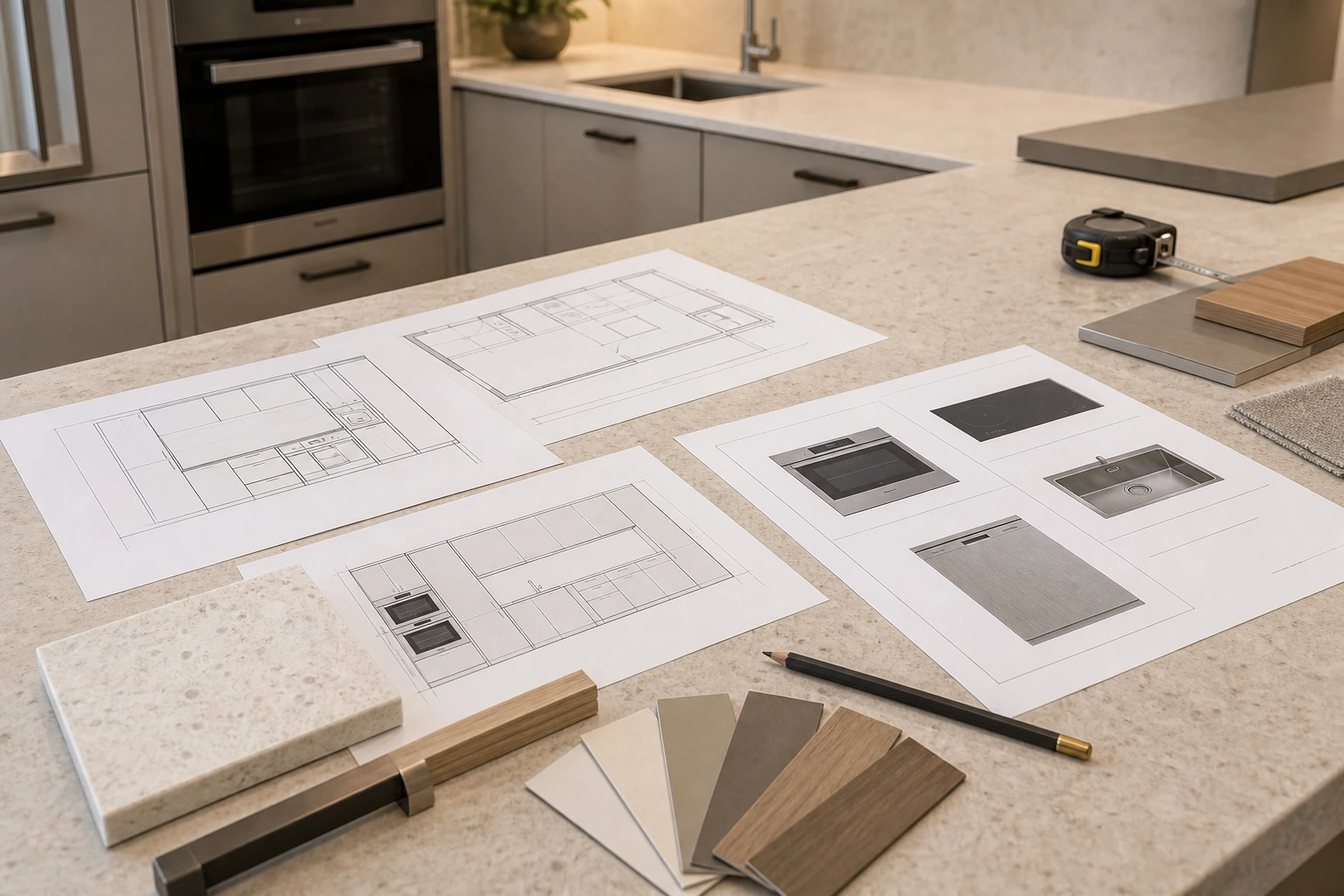
This is why drawings should not only show the front elevation. A useful cabinet package usually includes plan view, elevation, key section details, appliance information, material and finish choices, countertop edge direction, and notes about site constraints. For overseas projects, marked photos and short videos can also help the manufacturer understand what the drawing does not show.
Elevator access, wall condition, and installation sequence
Condo buildings may have stricter delivery and renovation rules than detached homes. Before production, it is worth checking lift dimensions, loading areas, permitted work hours, and whether long countertop pieces or tall cabinet panels need special handling. These checks should not become exaggerated promises; they are practical risk controls.
Why drawings should confirm cabinet depth before production
Once cabinet production begins, changing depth affects carcass panels, drawer boxes, hardware, countertop dimensions, appliance openings, and sometimes packaging. Confirming depth in the drawing stage helps avoid a chain of adjustments later. It also helps the buyer, designer, installer, and manufacturer use the same reference point.
When Custom Galley Cabinets Are Worth Considering
Custom galley cabinets are worth considering when the kitchen has a narrow walkway, unusual wall conditions, multiple built-in appliances, limited countertop length, or a strong need for tall storage. They are also useful when the project requires coordination across drawings, materials, overseas communication, and installation planning.
Custom does not mean every detail should become complicated. In a small condo, the better goal is often a quieter cabinet line: measured depth, durable carcass construction, practical hardware, controlled finish selection, enough landing space, and appliance zones that can be serviced. The result should feel planned rather than crowded.
Frequently Asked Questions
How deep should galley kitchen cabinets be in a small condo?
There is no universal depth for every small condo kitchen. Cabinet depth should be checked against walkway clearance, appliance dimensions, sink and hob requirements, drawer use, and countertop planning. A custom layout can adjust depth where needed, but the final choice should be confirmed in drawings before production.
Can a galley kitchen include tall pantry storage?
Yes, a galley kitchen can include tall pantry storage if the cabinet run, appliance sequence, and door clearance allow it. Tall units are often useful in small condos, but they should not remove all countertop landing space or block appliance service access.
Are handleless cabinets better for a narrow galley kitchen?
Handleless or slim-handle cabinets can make a narrow galley kitchen feel cleaner and reduce projection into the walkway. The hardware still needs to be comfortable and reliable, especially for heavier drawers, pantry pull-outs, and frequently used base cabinets.
What should be confirmed before ordering custom galley cabinets?
Confirm wall length, ceiling height, plumbing and electrical points, appliance specifications, cabinet depth, countertop material, finish, hardware, delivery access, and installation conditions. For overseas projects, clear drawings and site photos help reduce misunderstanding before production.
Practical Summary
Galley kitchen cabinets for a small condo work best when the cabinet line is planned as a real working sequence, not only a row of storage boxes. Before ordering, review cabinet depth, countertop landing space, tall appliance zones, handle clearance, wall cabinet access, and drawing details. If the kitchen is narrow, the most valuable design decision may be the one that prevents a daily movement problem after installation.
For an apartment renovation project, Sunrise Furnishing can review drawings, appliance information, material choices, and site notes before cabinet production, so the final cabinet plan is easier for the overseas buyer, designer, and installer to understand.