English
  日本語
日本語  العربية
  Deutsch
  Español
  Français
  한국어
한국어  Português
  Татар теле
  Русский
 Open-plan homes feel larger because the kitchen, dining area, and living room can breathe together. But that openness also means daily clutter has fewer places to hide. Tableware, glasses, coffee tools, wine bottles, serving trays, and small appliances often drift toward the dining table if there is no planned storage zone nearby.
That is why the best sideboard cabinet ideas are not only about door colors or decorative shelves. A well-planned sideboard cabinet can become the quiet connection point between the kitchen, dining room, and living space. It can store what you use every day, display what deserves attention, support serving moments, and help the whole open area feel more intentional.
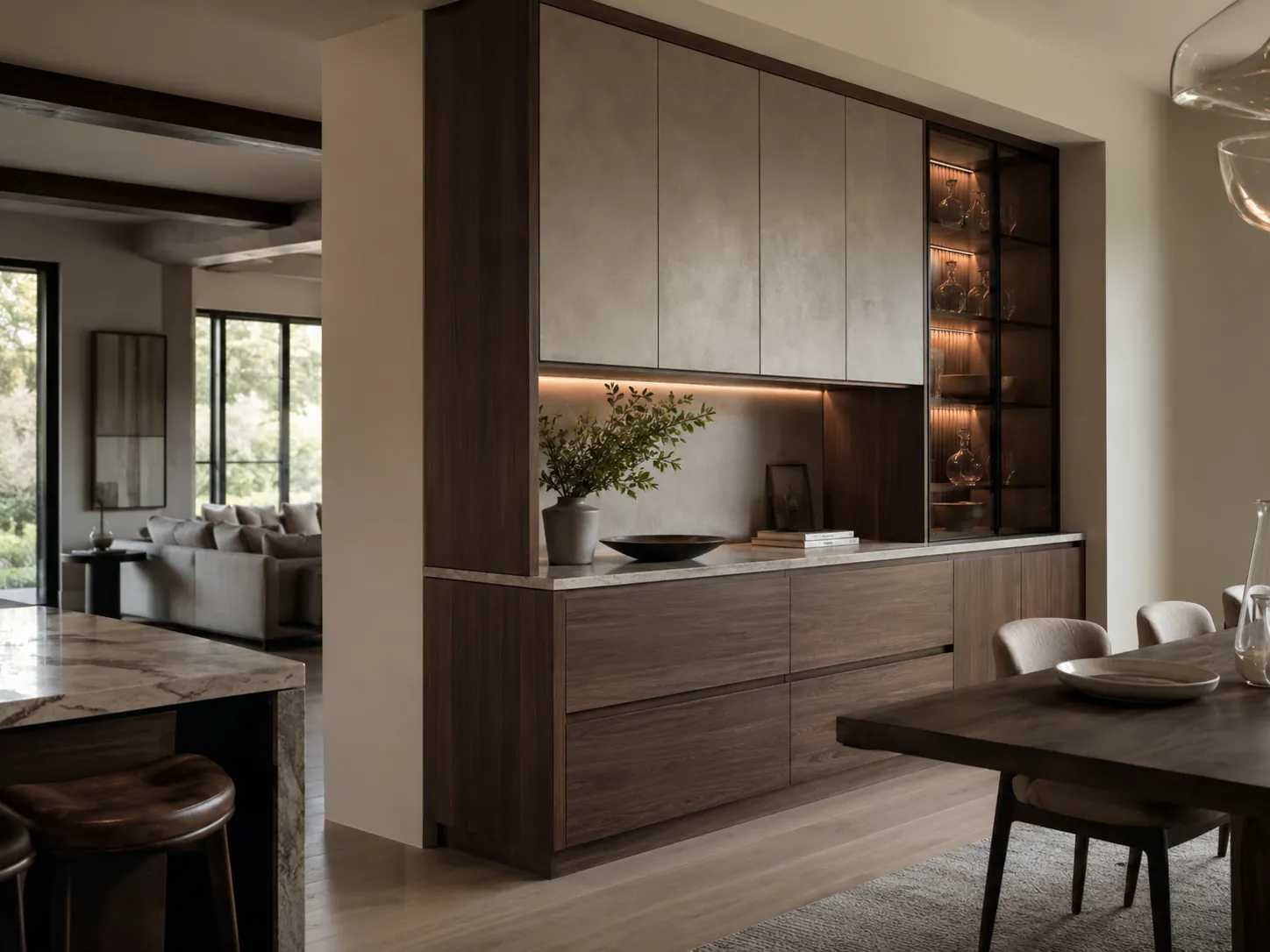
Why a Sideboard Cabinet Matters More in Open-Plan Homes
In a closed dining room, a sideboard cabinet can simply support the dining table. In an open-plan home, it has a larger job. It may be seen from the kitchen, the sofa, the entrance, and sometimes even the hallway. This makes its function and appearance more important.
A sideboard cabinet in an open home should not feel like a single piece of furniture pushed against an empty wall. It should help organize the rhythm of the room. It can hold tableware close to the dining table, keep serving items near the kitchen, and create a display moment that also belongs to the living area.
Open Spaces Make Dining Storage More Visible
Open spaces are generous, but they are not forgiving. A dining table covered with cups, napkins, chargers, bottles, and serving plates can visually disturb the whole room. This is especially true in apartments, villas, and open kitchen layouts where the dining area sits near the living space.
A sideboard cabinet helps create a proper place for the objects that usually float around the dining table. Everyday plates can stay behind closed doors. Glassware can sit in a display section. Coffee or tea tools can have their own counter zone. The result is not only better storage, but a calmer dining area.
A Sideboard Can Connect More Than One Room
The sideboard cabinet can borrow functions from nearby rooms. From the kitchen, it takes the role of serving and small appliance support. From the dining area, it takes the role of tableware storage. From the living room, it takes the role of display and visual balance.
This is where custom planning becomes useful. Instead of choosing a sideboard only by width and finish, the cabinet can be planned around how the open space is actually used.
Start with the Wall Between Kitchen, Dining, and Living Areas
Before choosing the finish, glass doors, or lighting, look at the wall or zone where the sideboard will sit. The best position is usually not just the longest empty wall. It is the place where storage, serving, and movement can work together.
For a custom sideboard cabinet, the wall condition matters. The designer or manufacturer needs to know the wall width, ceiling height, outlet positions, nearby furniture, and how much space remains when dining chairs are pulled out.
Place the Sideboard Where Daily Dining Actions Happen
A sideboard cabinet should support real dining actions. If the family often serves food from the kitchen to the dining table, the sideboard may work best along the path between them. If the home often hosts guests, the cabinet may need a counter area for drinks, desserts, or coffee tools.
If the sideboard is mainly for display, it can be placed where it is visible from both the dining table and living area. If it is mainly for tableware, it should stay close enough to the table to make daily use easy.
Avoid Blocking Chair Pull-Out and Walking Paths
A common mistake is planning the cabinet depth without checking the dining table and chairs. A sideboard cabinet may look perfect in elevation drawings, but feel uncomfortable if the chair cannot be pulled out properly.
The cabinet should allow enough movement between the dining table and cabinet doors. Drawers and hinged doors also need opening space. For narrow dining areas, sliding doors, shallower cabinets, or a lower sideboard may be more practical.
Use the Sideboard as a Visual Bridge
In open homes, the sideboard can soften the transition between kitchen and living room. It does not need to copy every material from both spaces. A better approach is to repeat selected details.
For example, the cabinet door finish may echo the kitchen cabinets, while the glass display section or metal frame may relate to the living room furniture. This creates continuity without making the whole room feel too matched.
Choose a Sideboard Layout Based on What It Needs to Connect
Different sideboard cabinet ideas work for different open-home conditions. The right layout depends on what the cabinet needs to connect: a kitchen, a dining wall, a living-dining room, or a full open-plan entertaining area.
Instead of starting with style names, start with the cabinet’s job. Does it need to hide clutter? Display glassware? Hold coffee tools? Support serving? Fill a large dining wall? Keep a small apartment dining area light? The answers shape the layout.
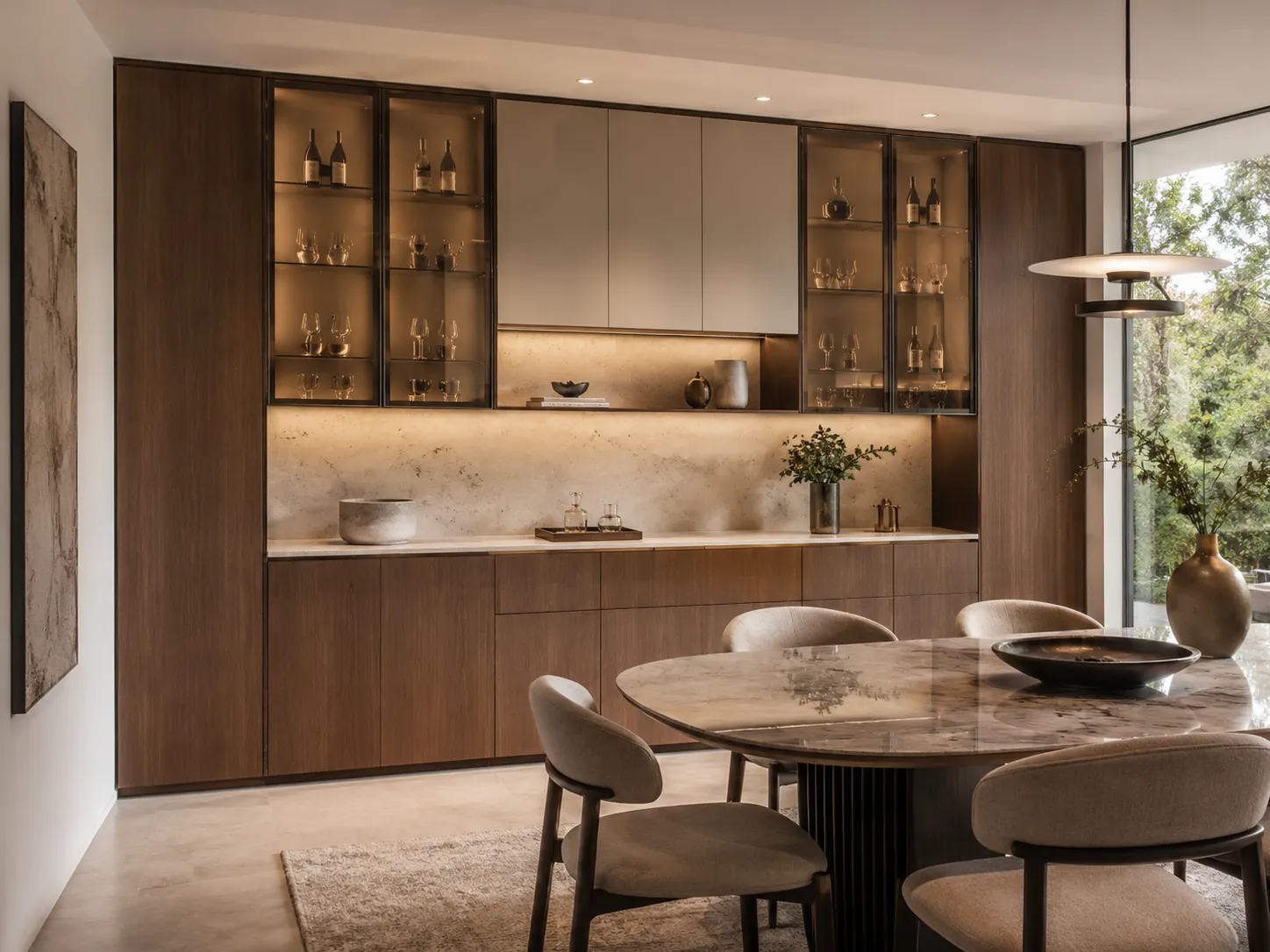
Full-Wall Sideboard for Large Dining Rooms
A full-wall sideboard works well in villas, large dining rooms, and open-plan homes with a strong dining wall. This layout can combine lower closed cabinets, a central counter, upper cabinets, and selected glass display zones.
The advantage is capacity. Tableware, glassware, serving trays, wine accessories, and seasonal dining items can all have planned storage. The challenge is visual weight. A full-wall cabinet should use balanced proportions, calm materials, and controlled lighting so it does not overpower the dining room.
Low Sideboard for Open Living-Dining Spaces
A low sideboard is useful when the dining area shares space with the living room. It provides storage without blocking sightlines. This works well in apartments, townhouses, and modern homes where the owner wants the room to stay open and light.
A low cabinet can sit under artwork, a mirror, a wall light, or a textured wall panel. It can hold daily tableware and small serving items while keeping the upper wall visually clean.
Sideboard with Glass Display for Dining and Living Areas
Glass display sections are useful when the cabinet needs to speak to both the dining room and the living space. They can display glassware, ceramics, decorative objects, or curated dining pieces.
But glass should be used with restraint. Too much glass can expose clutter. A stronger design often combines glass doors with closed storage. This allows the beautiful pieces to stay visible while the everyday objects remain hidden.
Sideboard with Serving Counter for Open Kitchens
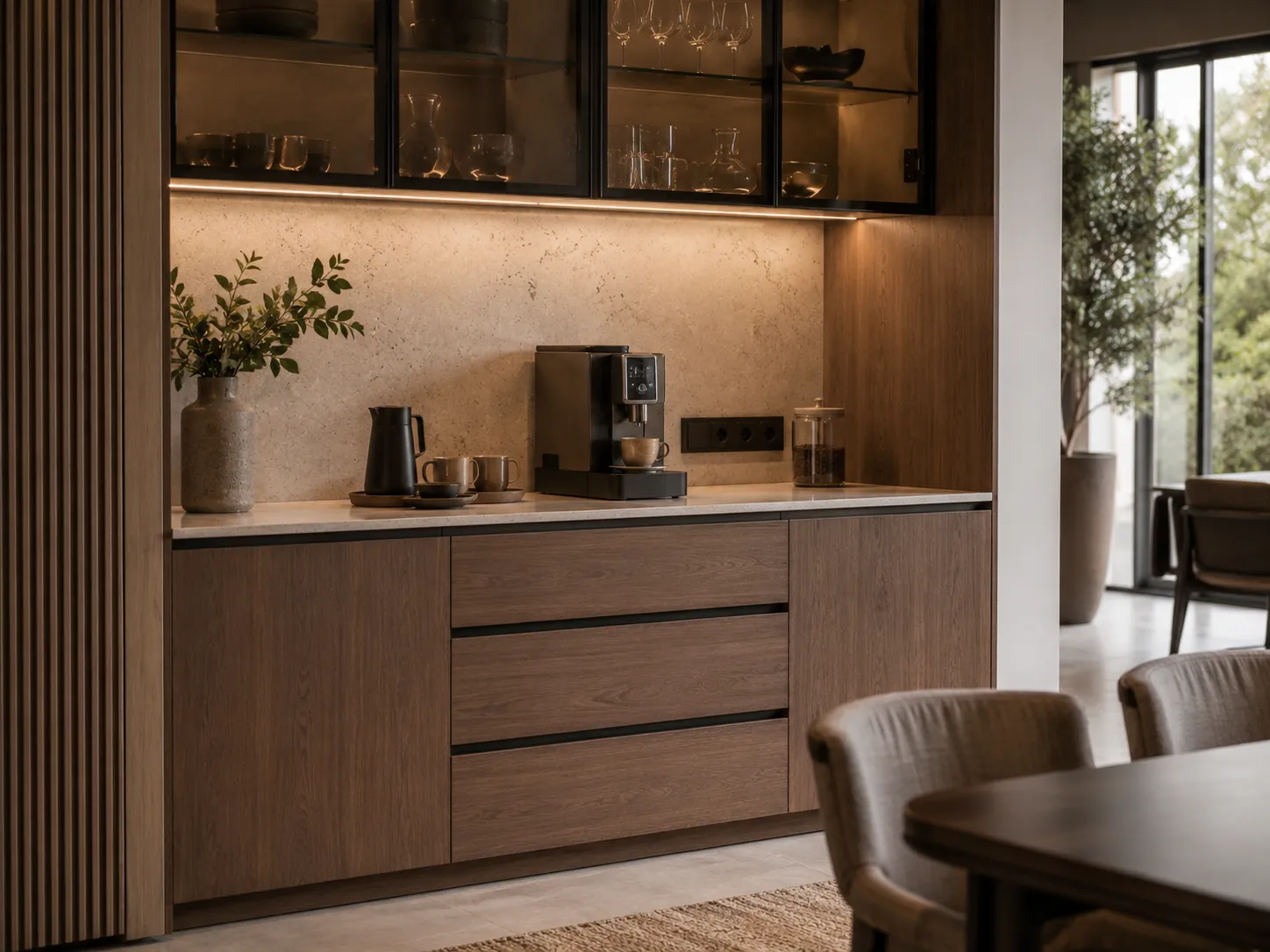
A sideboard placed near an open kitchen can become a serving station. This is especially useful for homes that use coffee machines, kettles, wine tools, dessert plates, or breakfast items near the dining area.
The counter zone should be easy to clean and should include socket planning if appliances will be used there. If the counter is too narrow, it becomes decorative only. If it is planned well, it becomes one of the most useful areas in the open-plan home.
Balance Display, Hidden Storage, and Serving Space
A good sideboard is usually not all display and not all closed storage. It needs a balance. Open-plan homes already show many surfaces at once, so the sideboard should help reduce visual noise.
One of the most practical sideboard cabinet ideas is to divide the cabinet into three roles: hidden storage for daily items, display storage for selected pieces, and a counter area for serving or small appliances. This makes the cabinet useful without making it feel busy.
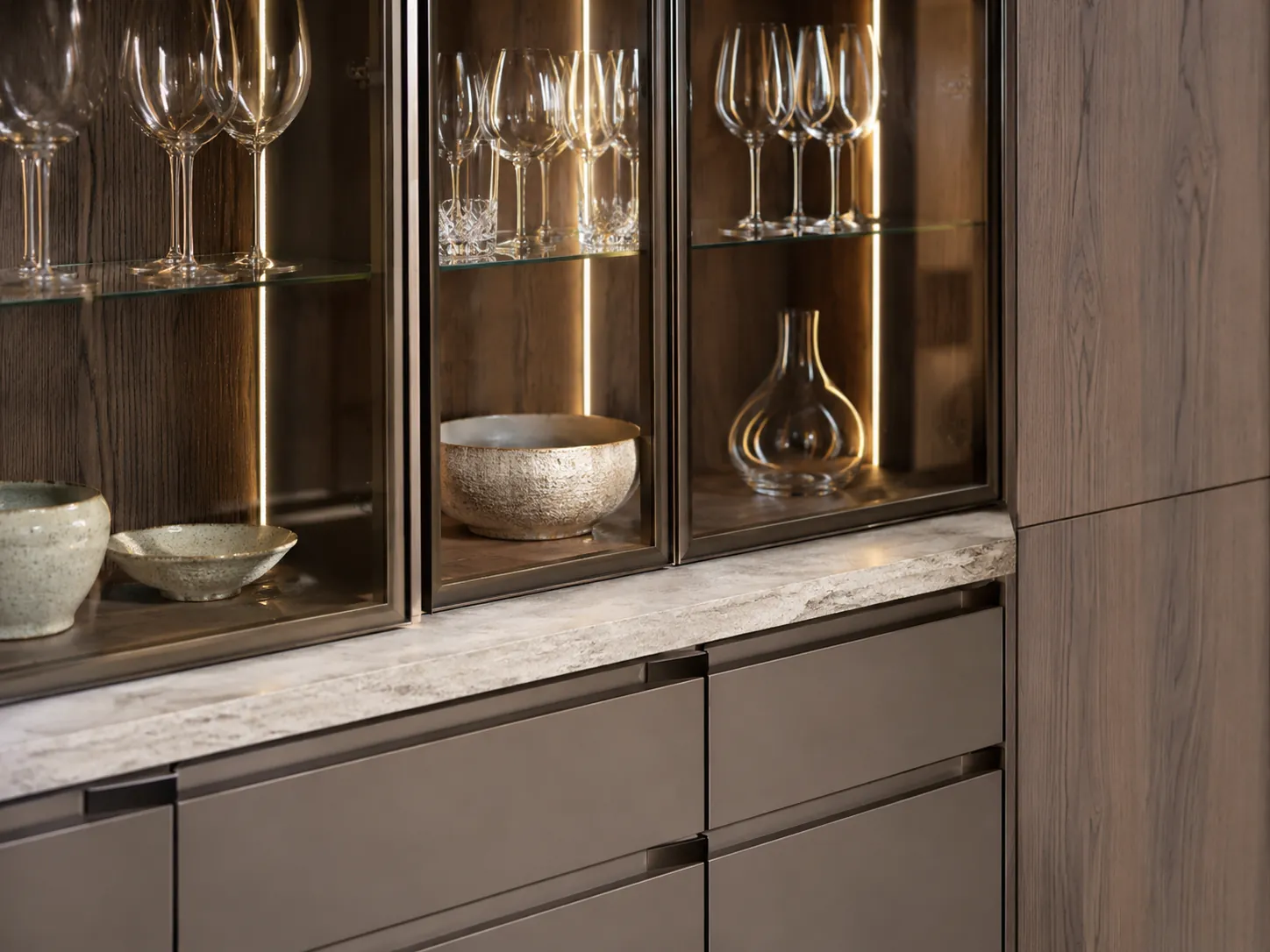
Use Closed Cabinets for Everyday Clutter
Closed doors are not less beautiful than open shelves. In many dining rooms, they are what keep the whole space calm. Items such as spare plates, napkins, table linens, packaged drinks, cleaning cloths, and seasonal dining pieces are often better stored behind solid doors.
For lower cabinets, drawers can be very useful. They allow plates, bowls, and cutlery to be organized by category. However, heavy tableware needs suitable drawer hardware and good internal planning.
Use Glass Doors Only Where Display Makes Sense
Glass doors work best when the objects behind them are meant to be seen. Wine glasses, fine tableware, sculptural ceramics, and neatly arranged objects can make the cabinet feel refined.
Glass doors also need proper hardware and lighting planning. The frame style, hinge quality, shelf thickness, and LED position all affect the final look. In a custom cabinet, these details should be discussed before production, not after installation.
Leave a Countertop Zone for Serving and Small Appliances
The counter zone is often the part that makes a sideboard useful every day. It can hold a coffee machine, water kettle, wine glasses during dinner, dessert plates, or serving trays when guests visit.
If small appliances will be used, sockets should be planned in advance. The material around the counter should also be easy to clean. A beautiful sideboard that cannot support daily use will quickly become a decorative background instead of a working cabinet.
Match the Sideboard Cabinet with Kitchen Cabinets and Living Room Furniture
In an open-plan home, the sideboard is rarely seen alone. It is seen together with the kitchen cabinets, island table, dining table, sofa, TV wall, lighting, and floor materials. This is why matching does not mean copying everything. It means building a visual conversation.
A sideboard cabinet can use one shared material, one shared tone, or one repeated detail to connect with the rest of the home. This is often more elegant than using the exact same finish everywhere.
Repeat One Material, Not Every Material
If the kitchen uses warm wood cabinets, the sideboard can repeat the same wood tone in a smaller proportion. If the island uses a light stone surface, the sideboard counter can echo that stone texture. If the living room has metal accents, the sideboard can use similar metal lines in handles or glass frames.
This approach keeps the home connected without making it look like a furniture showroom.
Use Color to Create a Soft Transition
Color can help the sideboard sit between different rooms. A kitchen with darker cabinets may need a lighter sideboard to keep the dining area soft. A living room with warm beige or wood tones may work well with a sideboard that uses similar warmth.
The goal is not to make the sideboard disappear. The goal is to let it belong to the room.
Coordinate Handles, Metal Details, and Lighting Temperature
Small details matter in high-end custom cabinetry. Handles, metal frames, glass edges, LED lighting temperature, and door gaps can change how refined the cabinet feels.
If the kitchen uses brushed metal handles and the living area uses warm lighting, the sideboard should not ignore those details. It can become the middle note that ties the two areas together.
Custom Details That Affect Daily Use
The difference between a nice sideboard and a truly useful custom sideboard often sits in details that are not obvious in photos. Depth, drawer load, lighting, sockets, door opening, and clearance can decide whether the cabinet feels smooth in daily life.
This is where manufacturer-level planning becomes important. A sideboard cabinet is easier to build well when the wall size, storage list, appliances, lighting needs, and nearby furniture are confirmed early.
Cabinet Depth Should Match Storage and Clearance
Cabinet depth should be planned around both storage and movement. A shallow sideboard may look slim, but it may not hold larger plates, serving trays, or small appliances. A deep sideboard may offer more storage, but it can reduce the space between the cabinet and dining table.
The best depth depends on the wall, the table size, the chair pull-out space, and what the owner plans to store. This is why drawings and measurements matter before production begins.
Drawer Load Matters for Tableware Storage
Tableware can be heavy. Plates, bowls, and serving dishes should not be treated like light accessories. If the sideboard includes large drawers, the drawer slides and internal structure should match the expected load.
For daily use, it is also helpful to separate items by category. Deep drawers can hold larger pieces, while smaller drawers can organize cutlery, napkins, or table accessories.
LED Lighting Needs Wiring, Not Just Decoration
LED lighting can make a sideboard look more refined, especially in glass display areas. But lighting is not just decoration. It needs power, wiring, switch planning, and access for future maintenance.
For built-in sideboards, the wiring route should be confirmed before the cabinet is produced. Otherwise, the lighting may require awkward surface wiring or later adjustments.
Sockets Should Be Planned Before the Cabinet Is Made
If the sideboard will support coffee machines, kettles, wine coolers, chargers, or decorative lamps, socket planning is essential. The socket should be placed where it is useful but not visually distracting.
This is especially important for sideboards with serving counters. A beautiful counter without power may not support the way the family actually lives.
Sideboard Cabinet Ideas for Different Open-Home Scenarios
The same cabinet layout will not suit every home. Apartments, villas, open kitchens, and living-dining rooms each need a different balance of size, storage, display, and visual weight.
This is why sideboard cabinet ideas should be tested against the real room, not copied directly from a photo. A design that looks balanced in a large villa may feel heavy in a compact apartment. A low sideboard that works in a living-dining room may not offer enough storage for a formal dining area.
For Apartments: Keep It Slim and Practical
In apartments, the sideboard should protect space. Slim cabinets, low sideboards, wall-mounted upper storage, or a combination of closed doors and small open niches can work well.
The key is to avoid making the dining area feel narrower. Light finishes, simple lines, and controlled display can keep the room open.
For Villas: Build a Strong Dining Storage Wall
In villas or larger homes, the sideboard can become a strong architectural feature. A full-wall custom sideboard may include tall cabinets, glass display sections, closed base storage, a central counter, and integrated lighting.
This type of cabinet should be planned with proportion in mind. Large does not automatically mean better. The wall, ceiling height, dining table, and lighting plan should work together.
For Open Kitchens: Add a Serving and Beverage Zone
When the sideboard sits near an open kitchen, it can support coffee, drinks, snacks, or serving plates. This reduces traffic in the main kitchen and makes dining more convenient.
This does not mean the sideboard must become a full bar cabinet. A simple counter zone with closed storage below and selected display above can be enough.
For Living-Dining Rooms: Keep the Display Calm
In living-dining rooms, the sideboard is visible during daily relaxation, not only during meals. Too many open shelves or overly bright lighting can make the room feel busy.
A calmer solution is to use mostly closed doors, a few glass display sections, and soft lighting. The cabinet should support the room, not shout across it.
What to Confirm Before Ordering a Custom Sideboard Cabinet
A custom sideboard cabinet becomes easier to plan when the practical information is clear. Before discussing finishes and style, prepare the room conditions and usage needs. This helps the manufacturer or designer recommend a structure that fits the space.
Measure the Wall, Table, and Walking Space
Start with the wall width and height. Then check the dining table size, chair pull-out space, and walking path. A cabinet that fits the wall may still feel wrong if it blocks daily movement.
List What You Need to Store and Display
Write down the items before deciding the cabinet layout. Tableware, glassware, wine accessories, coffee tools, small appliances, linens, serving trays, and decorative pieces may each need different storage.
Confirm Power, Lighting, and Appliance Needs
If the cabinet will include lighting or appliances, confirm power needs early. This includes LED display lighting, countertop sockets, appliance locations, and switch positions.
Decide Which Areas Should Stay Hidden
Not every item deserves display. For a cleaner open-plan room, hidden storage is often more important than open shelving. Decide what should stay behind doors and what should remain visible.
Match the Sideboard with the Wider Cabinet System
If the home also has kitchen cabinets, a TV cabinet, a wine cabinet, or a glass display cabinet, the sideboard should be coordinated with them. This does not require identical finishes, but it does require a shared design language.
Final Thoughts: A Sideboard Cabinet Should Belong to the Whole Room
The best sideboard cabinet ideas do not treat the cabinet as a decorative afterthought. In an open-plan home, a sideboard cabinet can shape how the kitchen, dining area, and living space work together.
It can hide daily clutter, display selected pieces, support serving moments, and bring visual order to a large connected room. When the depth, storage, lighting, sockets, and material coordination are planned carefully, the sideboard becomes part of the home’s structure, not just another piece of furniture.
Frequently Asked Questions
What is the best place for a sideboard cabinet in an open-plan home?
The best place depends on how the cabinet will be used. If it is mainly for tableware, it should stay close to the dining table. If it supports serving, it may work better between the kitchen and dining area. If it is mainly for display, it should be visible from both the dining and living areas.
How deep should a sideboard cabinet be?
There is no single depth that fits every home. The depth should match the items being stored, the wall condition, the dining table size, and the walking space. If the cabinet is too deep, it may affect movement. If it is too shallow, it may not hold tableware or appliances comfortably.
Should a sideboard cabinet have glass doors?
Glass doors are useful when the cabinet will display glassware, ceramics, or curated dining items. If the cabinet is mainly for everyday storage, more closed doors may be better. Many custom sideboards work best with a mix of glass display and hidden storage.
Can a sideboard cabinet include sockets and lighting?
Yes. Sockets and lighting can be included in a custom sideboard cabinet, especially when the cabinet has a serving counter, coffee machine, small appliances, or glass display shelves. These details should be planned before production so the wiring and outlet positions are clean and practical.
Is a built-in sideboard better than a freestanding sideboard?
A built-in sideboard is better when the goal is full wall integration, custom storage, and a consistent open-plan design. A freestanding sideboard may be suitable for smaller budgets, rental homes, or flexible layouts. The better choice depends on the room, storage needs, and project plan.
Plan the Sideboard Before It Becomes the Missing Link
In many open-plan homes, the dining area is the place where kitchen function and living room comfort meet. A sideboard cabinet can make that meeting feel organized instead of accidental.
For homeowners, designers, or project buyers planning a custom sideboard, the most useful starting point is not only a style reference. It is a clear list of wall dimensions, table size, storage needs, display items, appliance plans, socket positions, and the surrounding cabinet finishes.
With those details prepared, a custom sideboard cabinet can be planned as part of the whole home, connecting the kitchen, dining, and living spaces with better storage, calmer display, and a more complete design language.