English
  日本語
日本語  العربية
  Deutsch
  Español
  Français
  한국어
한국어  Português
  Татар теле
  Русский
 Many built in entryway cabinet ideas look beautiful in photos, but a real front door is rarely that simple. There may be a door swing to respect, a narrow walking path, shoes that need ventilation, skirting along the wall, switches near the entrance, and a cabinet door that must not fight with the main door.
A good built-in entryway cabinet should not begin with decoration. It should begin with the way people actually enter the home. Before choosing a finish, mirror panel, bench, or LED strip, the cabinet needs to fit the door, the wall, the storage habits, and the installation conditions.
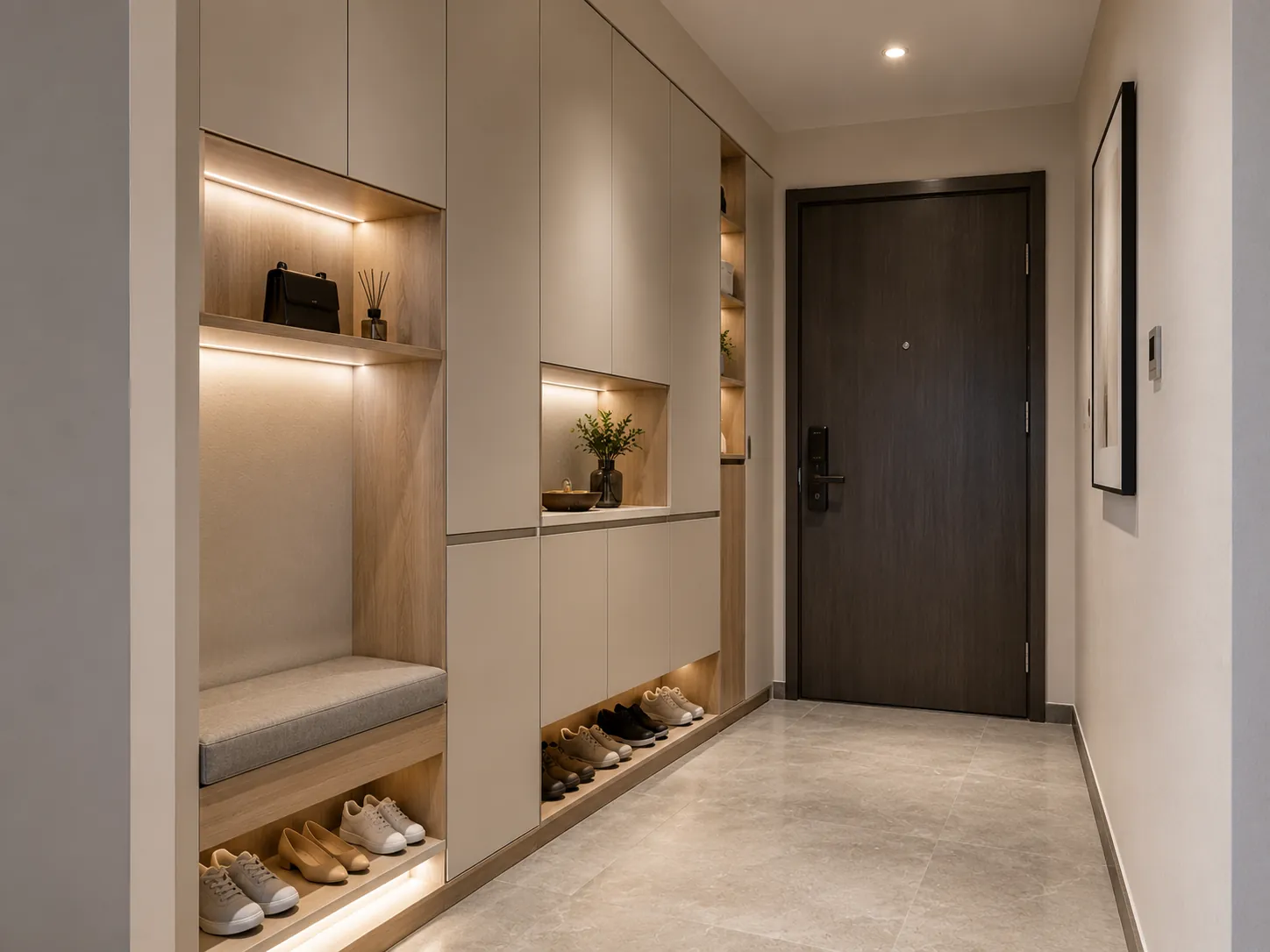
Start with the Front Door, Not the Cabinet Style
The front door is the first fixed condition of an entryway cabinet. If the door opens into the cabinet area, the design must leave enough clearance. If the entrance is narrow, the cabinet depth should be checked before the style is chosen. If there is a door casing, skirting board, wall unevenness, switch, socket, or security panel near the entrance, those details need to be considered before production.
This is why the best built in entryway cabinet ideas are not just about color or door style. They are about how the cabinet works with the front door every day.
Check How the Front Door Opens
A cabinet beside the front door should never make daily entry feel awkward. Before confirming the layout, check whether the main door opens inward or outward, where the handle side is, and whether the cabinet door, drawer, or bench will sit in the opening path.
For narrow apartments, a full swing cabinet door may not be the best choice near the entrance. Handleless doors, slim vertical doors, sliding elements, or open niches may help reduce conflict.
Measure the Walking Path Before Choosing Cabinet Depth
Cabinet depth is one of the most important planning points. A deeper cabinet may hold more shoes and coats, but it may also make the entrance feel tight. A shallow cabinet can keep the walking path more comfortable, but it may require angled shelves, slimmer shoe storage, or a different internal layout.
The right answer depends on the actual entrance width, family habits, shoe quantity, and whether the cabinet includes seating.
Look at Door Casing, Skirting, Switches, and Sockets
A built-in cabinet has to meet the building, not just the design drawing. Door casing may affect the side panel. Skirting may need to be removed, covered, or planned around. Switches and sockets may need reserved openings or relocation before installation.
These details sound small, but they often decide whether the final entrance cabinet looks built-in or patched onto the wall.
Built-In Entryway Cabinet Ideas by Storage Need
Useful built in entryway cabinet ideas should be planned around what actually lands near the door. In most homes, this includes daily shoes, outdoor coats, handbags, keys, umbrellas, small parcels, sports items, and sometimes pet supplies. If these items do not have a planned place, they will return to the floor or the nearest chair.
Shoe Storage for Daily Shoes, Guest Shoes, and Tall Boots
Shoe storage should not be treated as one single shelf zone. Daily shoes need easy access. Guest shoes can sit higher or deeper. Tall boots need more vertical space. Children’s shoes may need lower shelves. If the cabinet serves a large family, adjustable shelves are usually more practical than fixed equal-height shelves.
A good entryway shoe cabinet may combine closed storage for visual calm with one open bottom shelf for frequently used shoes.
Coat and Bag Storage Near the Door
Coats and bags should be close enough to the entrance to feel natural. If the hanging area is too far from the door, people may still drop items on a bench or dining chair. A tall cabinet section can work for coats, while open hooks or a recessed niche may be better for daily bags.
For a cleaner look, closed coat storage can be combined with a small open landing zone.
A Small Landing Zone for Keys, Mail, and Daily Items
A built-in entryway cabinet does not need a large countertop to be useful. A small open niche at hand height can hold keys, mail, sunglasses, or access cards. In apartments, this may be more valuable than a large display shelf because it solves a daily habit.
The landing zone should be visible enough to use, but not so exposed that it becomes another clutter shelf.
Seating That Does Not Block the Entrance
A bench is helpful only if it sits where people naturally stop to change shoes. If the bench blocks the walking path or sits too close to the door swing, it becomes uncomfortable. In narrow entrances, a floating bench, recessed seat, or compact seating niche can be more practical than a large built-in bench.
The Cabinet Depth Question: Useful, Comfortable, or Too Heavy?
Among built in entryway cabinet ideas, cabinet depth is where many designs succeed or fail. A cabinet that is too shallow may look neat but fail to store real shoes. A cabinet that is too deep may offer storage but make the entrance feel heavy or crowded.
The right depth is not only a measurement. It is a balance between storage capacity, walking comfort, and visual weight.
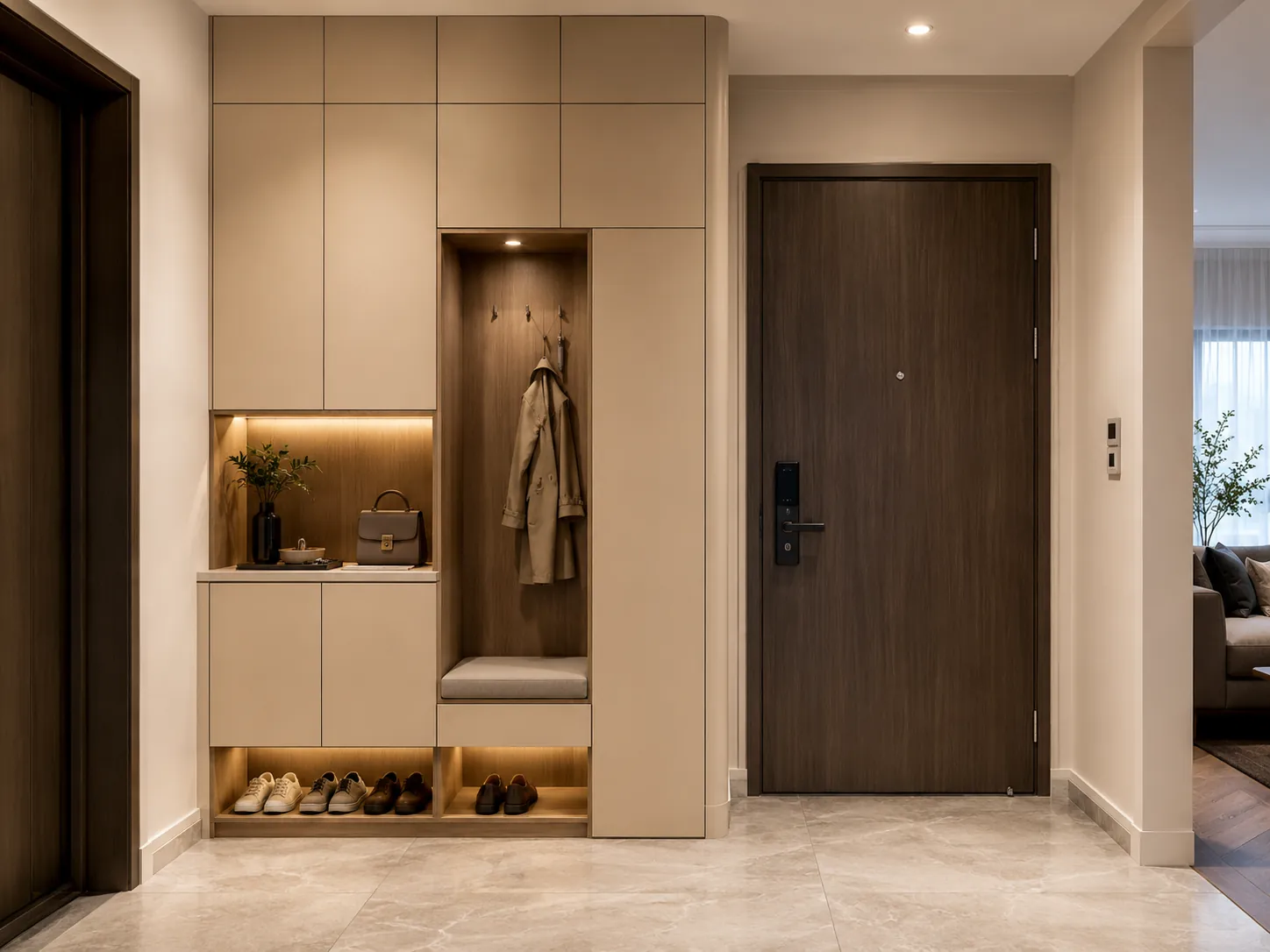
When a Shallow Cabinet Makes More Sense
A shallow cabinet can work well for narrow entryways, apartment corridors, and spaces where the front door opens close to the wall. It may use angled shoe shelves, slim compartments, or partial-height storage to keep the entrance open.
Shallow storage is also useful when the main goal is to hide daily shoes and small items rather than store every coat and seasonal item near the door.
When Full-Depth Storage Is Worth It
Full-depth storage may be worth considering in villa foyers, larger homes, or entryways with enough walking space. It can hold coats, bags, boots, cleaning items, or seasonal accessories. However, full-depth cabinets should still be checked against the door swing, hallway width, and drawer pull-out space.
For larger entryways, full-height cabinets can look refined when broken up with open niches, seating, lighting, or display zones.
How Open Niches Can Reduce Visual Weight
A full wall of closed cabinet doors can feel heavy near an entrance. Open niches can soften the design and make the cabinet easier to use. A niche near the seat can hold a bag. A lighted shelf can display a small object. An open bottom shelf can keep daily shoes accessible.
The key is balance. Too many open shelves may create clutter, while too many closed doors may feel flat and bulky.
Ventilation Matters When Shoes Are Hidden Behind Doors
Closed shoe storage makes an entryway look cleaner, but shoes still need airflow. If every shoe is sealed behind solid doors with no ventilation strategy, the cabinet may become harder to maintain.
Ventilation is not only a functional detail. It is part of long-term comfort.
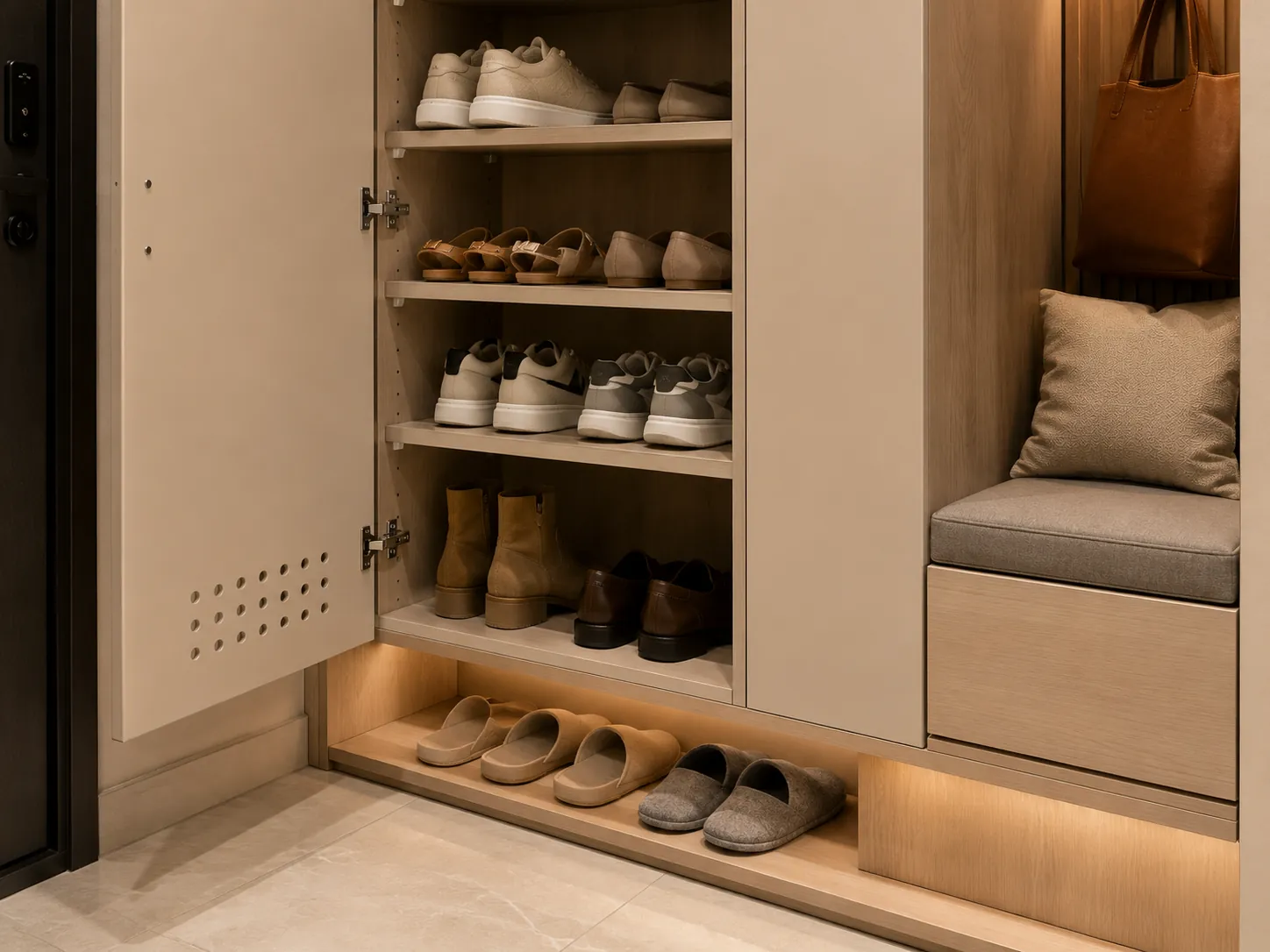
Closed Shoe Cabinets Need Airflow Planning
A closed shoe cabinet can still work well if airflow is considered. The design may use small ventilation holes, a recessed gap, louvered details, or a partially open bottom shelf. The best method depends on the project style, climate, material, and how many shoes are stored inside.
The goal is not to make the cabinet look technical. The goal is to hide the ventilation within the design.
Open Bottom Shelves, Louvers, or Ventilation Holes
An open bottom shelf is useful for daily shoes because it keeps the most frequently used pairs accessible. Louvered doors may improve airflow while adding texture, but they need to match the home style. Ventilation holes can be discreet when placed in less visible positions.
For high-end custom furniture, the ventilation method should feel intentional, not like an afterthought.
Adjustable Shelves Make the Cabinet Easier to Use
Shoes are not all the same height. Sneakers, heels, sandals, boots, and children’s shoes need different spaces. Adjustable shelves allow the cabinet to change with the household. They are especially useful in family homes, rental apartments, and project spaces where user habits may vary.
Door Swing, Drawers, and Seating: The Details That Decide Daily Comfort
A built-in entryway cabinet is used in a busy area. People enter, remove shoes, pick up bags, open drawers, check mirrors, and walk through the same space. If one detail is placed poorly, the cabinet may look good but feel inconvenient every day.
Avoid Cabinet Doors Fighting with the Front Door
Cabinet doors should not open into the front door path. This is especially important near apartment entrances, narrow corridors, and small foyers. If there is limited clearance, consider smaller door widths, sliding elements, handleless fronts, or open sections.
The cabinet should support the entry routine, not create a daily collision.
Leave Space for Drawer Pull-Outs
Drawers are useful for keys, shoe care items, gloves, pet leashes, and small accessories. But a drawer needs room to open. If it faces a narrow corridor or sits too close to the door, it may become difficult to use.
Before production, drawer locations should be checked in plan view, not only in the front elevation drawing.
Place the Seat Where People Naturally Stop
A seating area works best when it follows the natural movement of the entrance. If people usually stop just inside the door, the bench should be nearby. If the entryway opens into a hallway, seating may work better along the side wall.
The seat height, shoe shelf position, and nearby landing zone should feel connected. A bench without nearby shoe storage often becomes a display surface rather than a useful entryway feature.
Apartment and Villa Entryways Need Different Cabinet Logic
The same built in entryway cabinet ideas should not be copied into every home. An apartment entrance, a villa foyer, and a project apartment corridor may all need different solutions.
The cabinet should respond to the scale of the space, the number of users, and the level of visual presence expected at the entrance.
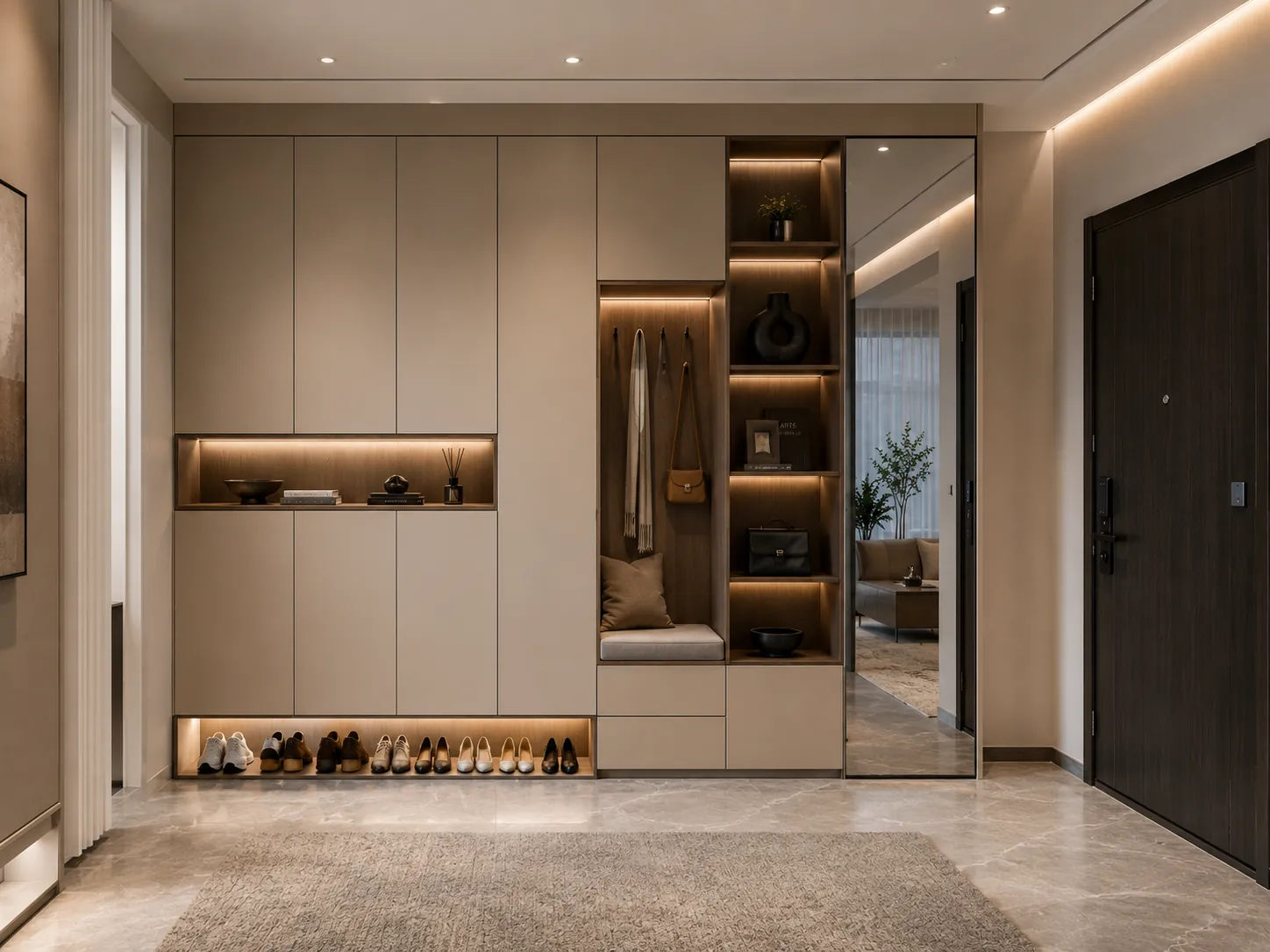
Apartment Entryways: Slim, Practical, and Carefully Zoned
Apartment entryways often need slim cabinets, shallow shoe storage, compact seating, and carefully placed open niches. The goal is usually to control clutter without shrinking the entrance. Light finishes, handleless doors, floating bases, and vertical storage can help the area feel more open.
For apartments, every centimeter near the door matters.
Villa Foyers: Larger Storage Walls with Display and Lighting
Villa foyers may allow larger cabinets, full-height storage walls, display zones, mirror panels, and integrated lighting. The cabinet can become part of the home’s first impression. However, large does not mean overloaded. A refined villa entrance usually balances closed storage with a few carefully placed open details.
Lighting can help soften the mass of a large cabinet wall and guide attention toward the entrance rhythm.
Project Spaces: Repeatable Details and Installation Control
For apartments, hotels, and residential projects, consistency is important. The cabinet design should be repeatable, durable, and easy to coordinate with site conditions. Door gaps, skirting treatment, ventilation, finish selection, and installation closure need to be controlled across multiple units.
In project work, a small detail repeated many times becomes a major quality signal.
Production Checklist Before Ordering a Built-In Entryway Cabinet
Before a custom entrance cabinet goes into production, the design should be checked against the real site. This is where a beautiful concept becomes a cabinet that can be manufactured and installed.
Confirm Site Measurements and Finished Floor Level
The wall width, ceiling height, floor level, and finished surface should be confirmed before production. If the floor or wall is not fully finished when measuring, the final cabinet may need adjustment later. For built-in furniture, even small site changes can affect the fit.
Confirm Skirting, Wall Unevenness, and Installation Closure
Skirting boards, uneven walls, door casings, and ceiling lines all affect installation. The design should decide whether the cabinet covers, meets, or works around these conditions. Side fillers, top fillers, and shadow gaps may be needed to make the cabinet look properly built in.
Installation closure is one of the details that separates custom furniture from loose furniture.
Confirm Storage Quantity, Door Style, Lighting, and Ventilation
Before confirming the order, list what the cabinet needs to store: daily shoes, boots, coats, bags, umbrellas, keys, parcels, sports items, or cleaning supplies. Then check whether the door style, lighting, ventilation, shelves, and seating match those needs.
This is also the right time to confirm material finish, hardware requirements, lighting color temperature, and whether any switches or sockets need reserved access.
Frequently Asked Questions
How deep should a built-in entryway cabinet be?
The right depth depends on the entrance width, shoe size, storage needs, and walking path. A narrow apartment entryway may need a shallower cabinet, while a larger villa foyer may allow deeper storage for coats, boots, and bags. Before production, cabinet depth should be checked against the front door swing and hallway clearance.
Should an entryway shoe cabinet have ventilation?
Yes, ventilation should be considered when shoes are stored behind closed doors. This can be handled through open bottom shelves, louvered details, ventilation holes, or small recessed gaps. The method should match the cabinet style and the project requirements.
Can a built-in entryway cabinet include seating?
Yes, seating can be included if the entrance has enough space and the seat does not block the door or walking path. A recessed bench, floating seat, or compact seating niche can work well in different home types.
What should be confirmed before ordering a custom entryway cabinet?
Before ordering, confirm wall measurements, ceiling height, finished floor level, skirting, door casing, switch and socket positions, door swing, shoe quantity, ventilation needs, lighting, material finish, and installation closure.
Are built-in entryway cabinets suitable for apartments?
Yes, but apartment entryways often need slimmer layouts, shallow shoe storage, compact seating, and careful door swing planning. The design should protect the walking path and avoid making the entrance feel smaller.
Final Thought: A Calm Entryway Starts Before the Cabinet Is Built
A calm entryway is not created by hiding everything behind doors. It is created by planning what happens at the door every day. Where do shoes go? Where does a bag land? Can the drawer open? Does the cabinet breathe? Does the seat feel natural? Can the installer close the cabinet neatly against the wall?
The most useful built in entryway cabinet ideas begin with these questions. Once the front door, walking path, cabinet depth, ventilation, and installation details are clear, the style decisions become easier and more meaningful.
For modern homes, apartments, villas, and project spaces, a built-in entryway cabinet should feel quiet because the practical work has already been done.
Project Checklist Before Planning Your Entryway Cabinet
If you are comparing built in entryway cabinet ideas for a real project, prepare a simple checklist before confirming the design:
- Front door opening direction
- Entrance width and walking path
- Wall width and ceiling height
- Door casing and skirting details
- Shoe quantity and shoe types
- Coat, bag, and daily item storage
- Seating position
- Drawer pull-out clearance
- Ventilation method
- Lighting requirements
- Switch and socket positions
- Installation closure
Sunrise Furnishing supports custom entrance cabinet planning for overseas homes, villas, apartments, hotels, and project clients. If your project needs a built-in entrance cabinet, the best starting point is not only the cabinet style, but the real dimensions, storage habits, and installation conditions of the entryway.