English
  日本語
日本語  العربية
  Deutsch
  Español
  Français
  한국어
한국어  Português
  Татар теле
  Русский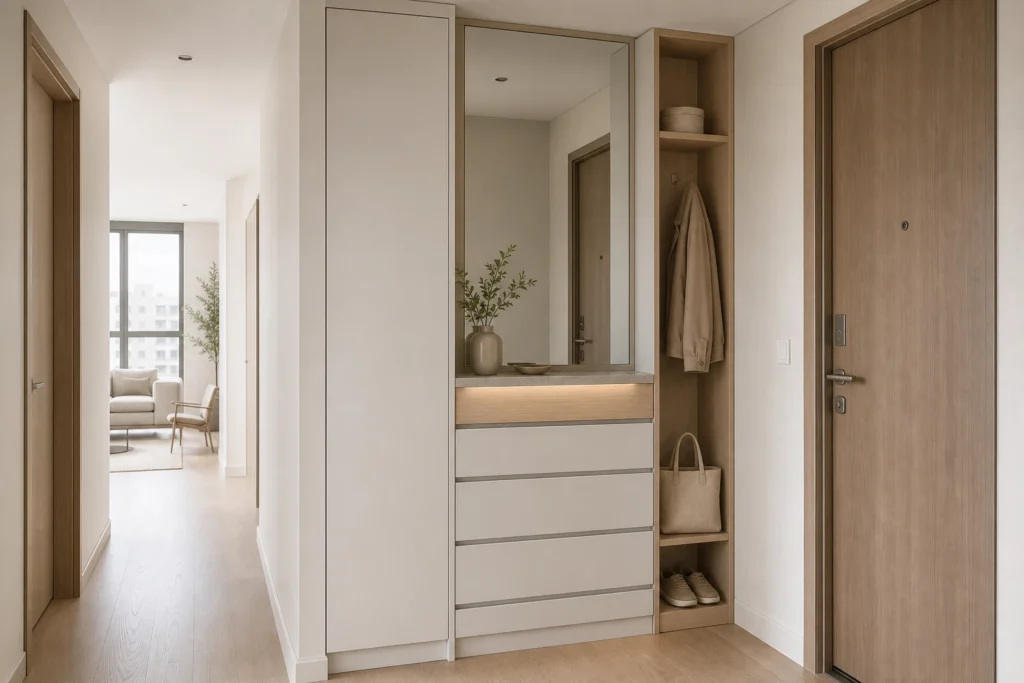
Narrow Entryway Cabinet for Compact Homes
A shallow, space-conscious storage system that keeps shoes and daily essentials organized without restricting the entrance.
Useful Storage in a Narrow Entrance
A narrow entryway cabinet uses limited wall depth carefully so the entrance remains comfortable to walk through. Instead of relying on deep standard cabinets, the design combines shallow shoe storage, a slim landing shelf, a mirror, and vertical compartments.
Shallow Depth Without Losing Function
Cabinet depth, door movement, and internal fittings are selected around the corridor width. Tilt-out shoe compartments, slim drawers, and shallow shelves can provide useful capacity while reducing obstruction in a compact apartment entrance.
Vertical Storage and Visual Lightness
A full-height mirror, light finishes, clean handleless fronts, and vertical cabinet proportions help the narrow space feel more open. Pale oak and subtle lighting add warmth without making the elevation visually heavy.
Practical Zones for Shoes and Daily Essentials
Frequently used shoes can be placed in tilt-out units, while keys and small items sit in a slim drawer or landing zone. A narrow tall compartment can store selected accessories or cleaning items according to the available depth.
Configured Around Apartment Circulation
The cabinet is planned around the clear walking path, entrance door swing, nearby room openings, switches, and skirting. A made-to-measure layout is especially useful where every few centimeters affect daily circulation.
Custom Support for Compact Residential Projects
Sunrise Furnishing can develop compact cabinet solutions from drawings, measurements, and functional requirements. Material and module choices can be coordinated for overseas apartments and other space-conscious residential projects.
Frequently Asked Questions
The practical depth depends on the storage type, footwear size, hardware, and available corridor width. Shallow shelves or tilt-out shoe compartments can reduce depth, while the final dimensions should be checked against door movement and comfortable circulation.
Yes. Tilt-out compartments, angled shelves, and carefully planned vertical zones can store frequently used footwear within a shallow cabinet. Capacity depends on shoe size, cabinet width, and the selected internal arrangement.
A well-planned cabinet can keep the entrance visually calm by using light finishes, clean fronts, a mirror, and controlled open areas. Maintaining a clear walking path and avoiding excessive cabinet depth are important to preserve a comfortable feeling.
Yes. The design can account for door swing, handles, switches, sockets, skirting, and nearby openings. Accurate dimensions and photos are needed so modules, open shelves, and fillers can be positioned appropriately.
Please provide the wall width and height, maximum available depth, corridor width, door swing, nearby openings, site photos, and required storage. These details help determine which shallow storage solutions are suitable for the entrance.
Plan the Cabinet Around Your Entrance
Share the entrance dimensions, drawings, preferred finishes, and storage requirements to begin a focused custom cabinetry discussion.