English
  日本語
日本語  العربية
  Deutsch
  Español
  Français
  한국어
한국어  Português
  Татар теле
  Русский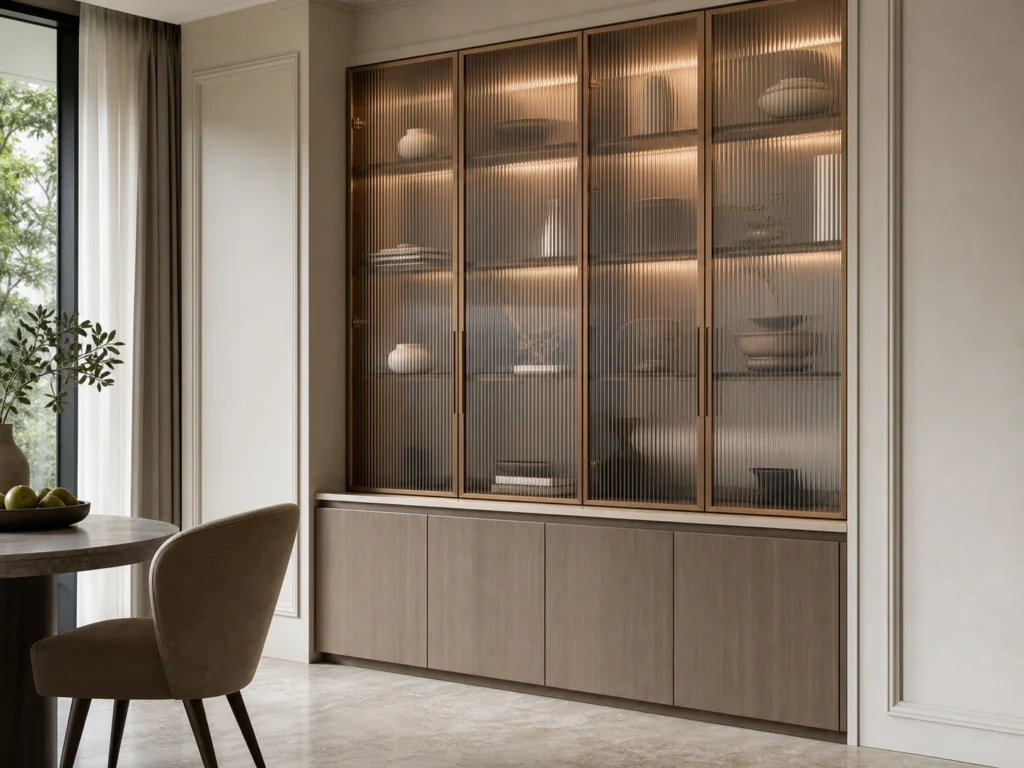
Fluted Glass Display Cabinet with Closed Base
A custom display cabinet pairing softly textured glass doors with closed lower storage for dining rooms, living rooms and quiet display corners.
Upper Display Storage with a Calmer Closed Base
A fluted glass display cabinet with closed base storage is designed for interiors that need both presentation and control. The upper cabinet keeps selected objects visible behind textured glass, while the lower closed section hides items that do not need to stay on display.
For dining rooms, living rooms, apartment corners and refined project interiors, this fluted glass display cabinet series is useful when a full clear-glass cabinet would feel too exposed. The related article on fluted glass cabinet doors with a closed base can support visibility, storage and lighting decisions before production.
Soft Visibility Behind Textured Glass Doors
Fluted glass helps soften the view of dinnerware, books, ceramics, collectibles or decorative objects. Items remain suggested through the glass texture, but the vertical ribbing reduces the hard outline that can appear with fully clear doors.
The visibility level depends on the glass texture, lighting direction, object color and cabinet depth. For projects that need a quieter appearance, the glass density, frame proportion and shelf layout can be reviewed together before production.
Lower Cabinets for Less Decorative Items
The closed base gives the display cabinet a more grounded and organized appearance. Serving pieces, table linens, board games, seasonal accessories, cables or everyday household items can be kept behind solid fronts instead of competing with the upper display area.
The lower section can be planned with hinged doors, internal adjustable shelves, drawers, divided compartments or a combination of storage types. Drawer height, shelf spacing and handle position should match what the client actually needs to store.
Framed Glass Doors with Refined Vertical Lines
The framed glass doors create a clear vertical rhythm that works well with the fluted texture. Slim metal frames, painted frames or wood-tone frames can make the cabinet feel lighter or more architectural, depending on the surrounding interior.
Door width, mullion position, hinge choice and handle profile should be coordinated with the display height and the closed base proportion. This keeps the cabinet balanced instead of making the glass section feel visually detached from the lower storage.
Glass Texture, Frame and Cabinet Finish Options
Fluted glass can be paired with matte lacquer, stained wood veneer, warm grey panels, oak tones, walnut tones or metal-accented frames. The final finish should respond to the wall color, floor material, adjacent dining furniture and the type of objects displayed inside.
For overseas projects, finish samples and cabinet detail photos are useful before final approval. Reviewing glass texture, frame color, handle profile and internal shelf material together helps the product feel intentional from a distance and considered up close.
Display Lighting Without Harsh Glare
Warm internal lighting can help objects read softly behind fluted glass. Instead of using strong exposed strips, the lighting can be positioned along shelves, vertical side panels or concealed channels so the glass texture glows without becoming the main feature.
Lighting temperature, strip position, shelf thickness and door frame depth should be checked together. The goal is a controlled display mood for evening use, not a bright showcase effect that overwhelms the cabinet or the room.
For Dining Rooms, Living Rooms and Display Corners
This cabinet can work as a dining room display wall, a living room storage feature, a refined apartment corner or a hospitality display zone. It is especially useful where the room needs visual interest but still benefits from a calm lower storage base.
Sunrise Furnishing can support custom sizing, elevation drawings, material selection, glass and frame options, lighting coordination, packing notes and overseas project communication. Helpful starting inputs include wall dimensions, ceiling height, preferred glass texture, finish direction, storage list and site photos.
Frequently Asked Questions
Fluted glass softens the outline of items rather than making them fully hidden. Objects, colors and lighting can still be perceived, but the ribbed texture gives the display a quieter look than clear glass. Samples are helpful when the desired visibility level is important.
Yes. The lower base can use hinged doors, drawers, internal shelves or mixed storage. Drawers are useful for linens, accessories and smaller household items, while doors with adjustable shelves may suit larger serving pieces or less frequently used items.
Yes. Warm internal lighting can be planned with concealed strips, side lighting or shelf lighting to reduce direct glare. The light position, glass texture and shelf material should be checked together so the cabinet feels refined rather than overly bright.
Options can include different fluted glass textures, slim metal or wood-tone frames, matte lacquer, stained veneer, warm grey panels, oak or walnut finishes, handle profiles and internal shelf materials. Final choices should match the room design and display purpose.
Useful inputs include wall width, ceiling height, site photos, nearby furniture, preferred cabinet finish, desired glass visibility, lighting preference and a list of items to display or store. These inputs help confirm the proportions and internal layout.