 English
  日本語
日本語  العربية
  Deutsch
  Español
  Français
  한국어
한국어  Português
  Татар теле
  Русский
 Fluted glass cabinet doors for display storage are often chosen because they soften what is inside the cabinet. They let you see shape, light and color, but they do not show every label, handle, stack or small object as clearly as transparent glass. That is useful, but it does not solve the whole storage problem.
A display cabinet still has to live with real items: serving pieces, books, bottles, seasonal tableware, extra linens, chargers, candles and things that are useful but not always beautiful. This is why a closed base matters. The fluted glass can handle the upper display zone, while the solid lower section holds the items that would make a full-height glass cabinet look busy.
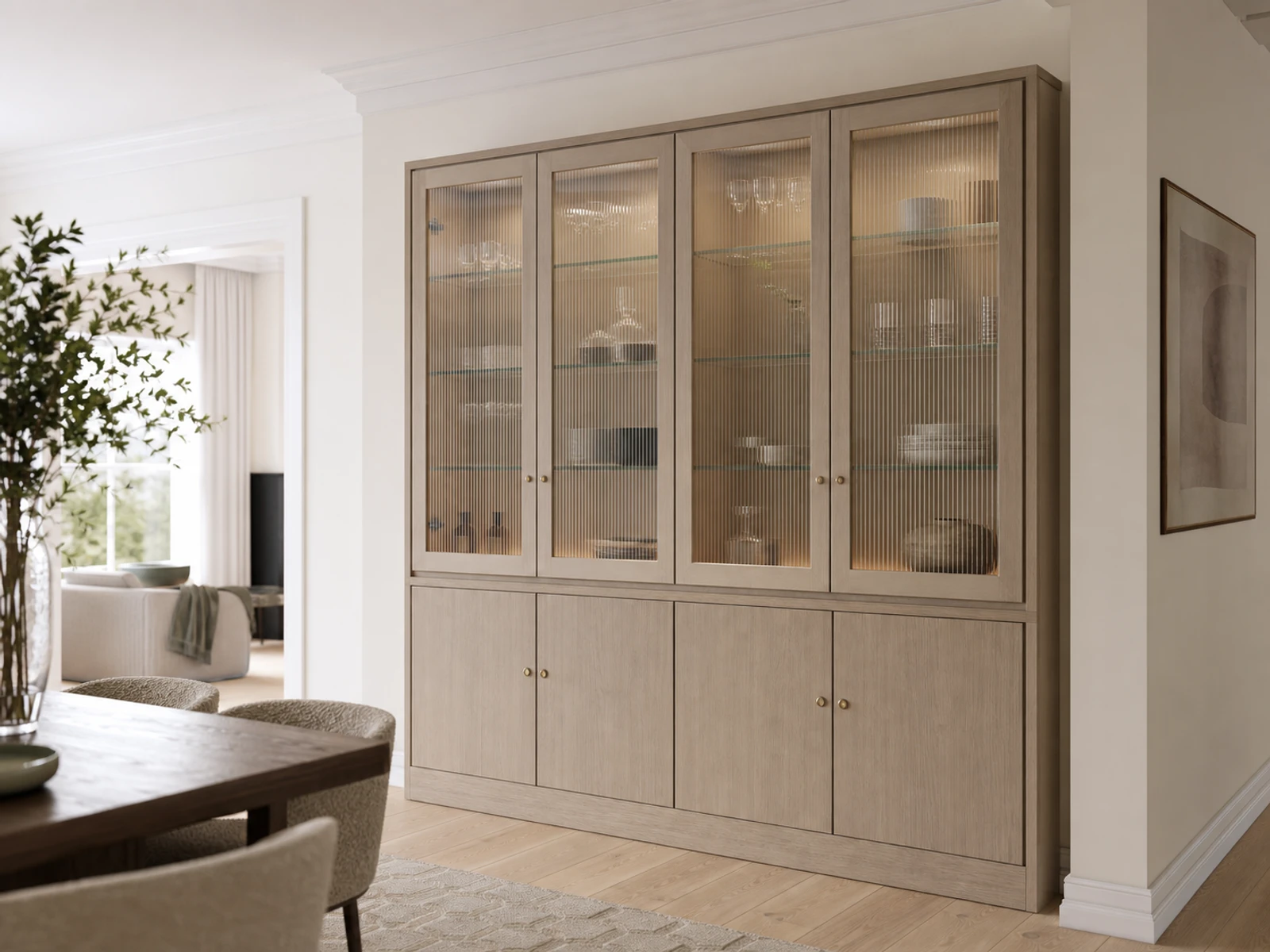
Why Fluted Glass Cabinet Doors for Display Storage Need a Closed Base
The main mistake with glass display storage is assuming that everything behind the door should be on show. In a showroom image, every shelf can be styled. In a lived-in home, the cabinet has to hold objects with different sizes, colors and visual weight. Some items deserve to be part of the display. Others simply need a good place to live.
Fluted glass helps by blurring small details, but it still leaves the cabinet visually active. Tall bottles, dark books, bright packaging and uneven stacks can still read through the texture. If the entire cabinet is glass from top to bottom, the viewer still senses the volume and movement behind the doors.
Not every stored item deserves a glass door
Upper shelves are usually better for intentional display: glassware, ceramics, a restrained group of books, a few decorative objects or neatly arranged serving pieces. These are the items that benefit from softened visibility. Their shapes remain readable, and the vertical texture of the glass gives them a gentle screen.
Lower storage works differently. It often holds heavier or less decorative items: spare dishes, table linens, small appliances, board games, cleaning supplies for a dining area, pet items or extra household stock. These objects are useful, but they can make a display cabinet look restless when they sit behind glass.
The base handles the visual weight
A closed base gives the cabinet a calmer bottom line. It visually anchors the furniture, hides the heavier storage zone and lets the upper glass doors feel more deliberate. This is especially helpful in dining rooms, living rooms and hallways where the cabinet is part of the daily view.
For a product direction like a fluted glass display cabinet with closed base, the important idea is not simply more storage. It is the division of roles: the upper part edits what the room sees; the lower part absorbs what the room does not need to see every day.
What Fluted Glass Can Hide, and What It Still Shows
Fluted glass is not private in the way a solid door is private. It changes the clarity of the view. The vertical ribs bend light and interrupt detail, so the eye reads outlines more than exact surfaces. This makes it useful for display storage because the cabinet can feel lighter than solid cabinetry while still being less exposed than clear glass.
Shape and color stay visible
Behind fluted glass, large silhouettes still show. A tall vase, a dark bottle, a stack of books or a colorful bowl will still influence the cabinet face. If the objects are arranged with enough breathing room, this can be attractive. If the shelves are packed tightly, the fluting may soften the details but cannot remove the feeling of crowding.
Back panel color also matters. A light back panel can make objects read more clearly, while a darker or warmer back panel can reduce contrast. Shelf depth matters too. Objects placed too close to the door may appear more visible; items set slightly back may look softer through the glass.
Small clutter belongs below
The closed base is where small visual noise should go. Mixed packaging, folded textiles, chargers, children’s items, paperwork, spare table settings and practical household objects are often better hidden. This does not mean the base has to look heavy. A simple flat door, a subtle frame, or a finish that matches the room can keep the lower section quiet.
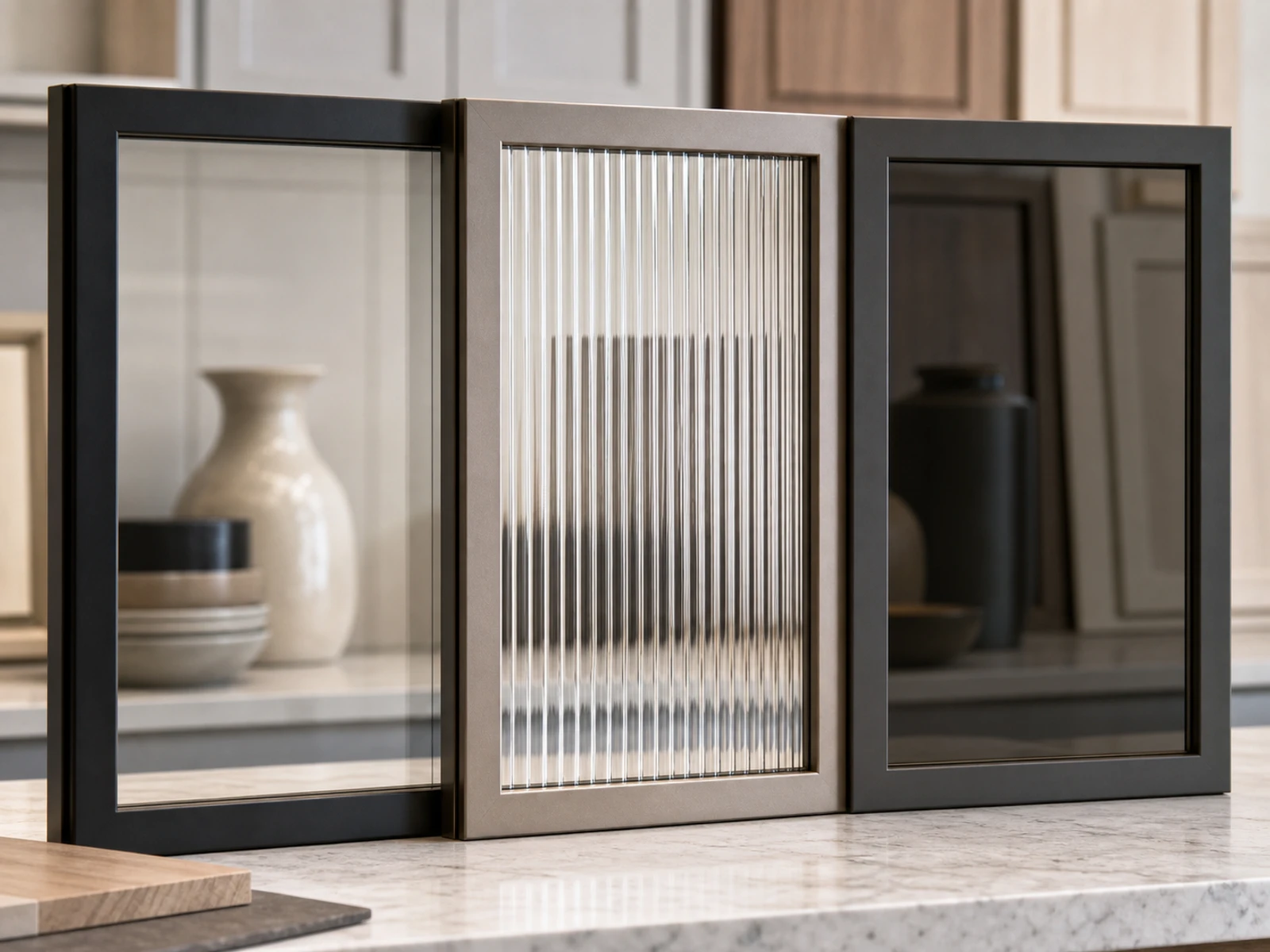
Clear, Fluted and Smoked Glass Behave Differently
Choosing glass for a cabinet is really choosing a visibility level. Clear glass, fluted glass and smoked glass can all work for display storage, but they create different expectations.
| Glass type | What it shows | What it softens | Best use |
|---|---|---|---|
| Clear glass | Full detail, color and shelf styling | Very little | Curated display, collectibles and formal glassware |
| Fluted glass | Shape, movement, light and partial color | Labels, small details and uneven edges | Display storage that should feel softer and less exposed |
| Smoked glass | Darker silhouettes and reflective surfaces | Bright colors and some shelf detail | Moodier rooms or cabinets where contrast is controlled |
Clear glass is for intentional display
Clear glass works best when the shelves are meant to be seen clearly. It is honest and direct. The challenge is that it asks for more discipline. If the contents are uneven, the cabinet will show that immediately.
Fluted glass softens the view
Fluted glass is more forgiving. It is a good middle ground for homeowners who want the lightness of glass without the pressure of fully styled shelves. It works especially well above a closed base because the glass area can stay focused on the best display items.
Smoked glass changes brightness and contrast
Smoked glass can reduce brightness and create a stronger mood, but it also changes how objects and lighting appear. In a dark hallway or a compact apartment, smoked glass may feel heavier than expected. It should be checked with the room’s actual light conditions before production.
Proportion Makes the Upper-and-Lower Layout Work
A cabinet with fluted glass above and closed storage below works best when the proportions are intentional. If the glass doors are too tall and the base is too short, the lower section may feel like an afterthought. If the base is too tall, the cabinet may lose the display feeling that made glass attractive in the first place.
Keep the display zone at eye level
The most useful display area is usually near eye level. This is where glassware, ceramics and decorative pieces can be appreciated without forcing the viewer to look down. The fluted glass can then create a softened display layer across the part of the cabinet people notice first.
Door divisions should follow the logic of the shelves behind them. If the frame cuts through important display areas or creates awkward narrow panels, the cabinet can feel busy even when the glass is textured. A clean vertical rhythm usually works better for fluted glass because it respects the direction of the ribbed surface.
Let the lower doors stay quiet
The lower base should not compete with the glass. In many homes, a simpler door style works well: flat panel, restrained shaker detail, or a frame that repeats the upper cabinet without adding too much pattern. Hardware should also be considered. Large handles can add visual weight; integrated pulls or simple knobs may keep the base calmer, depending on the room style.
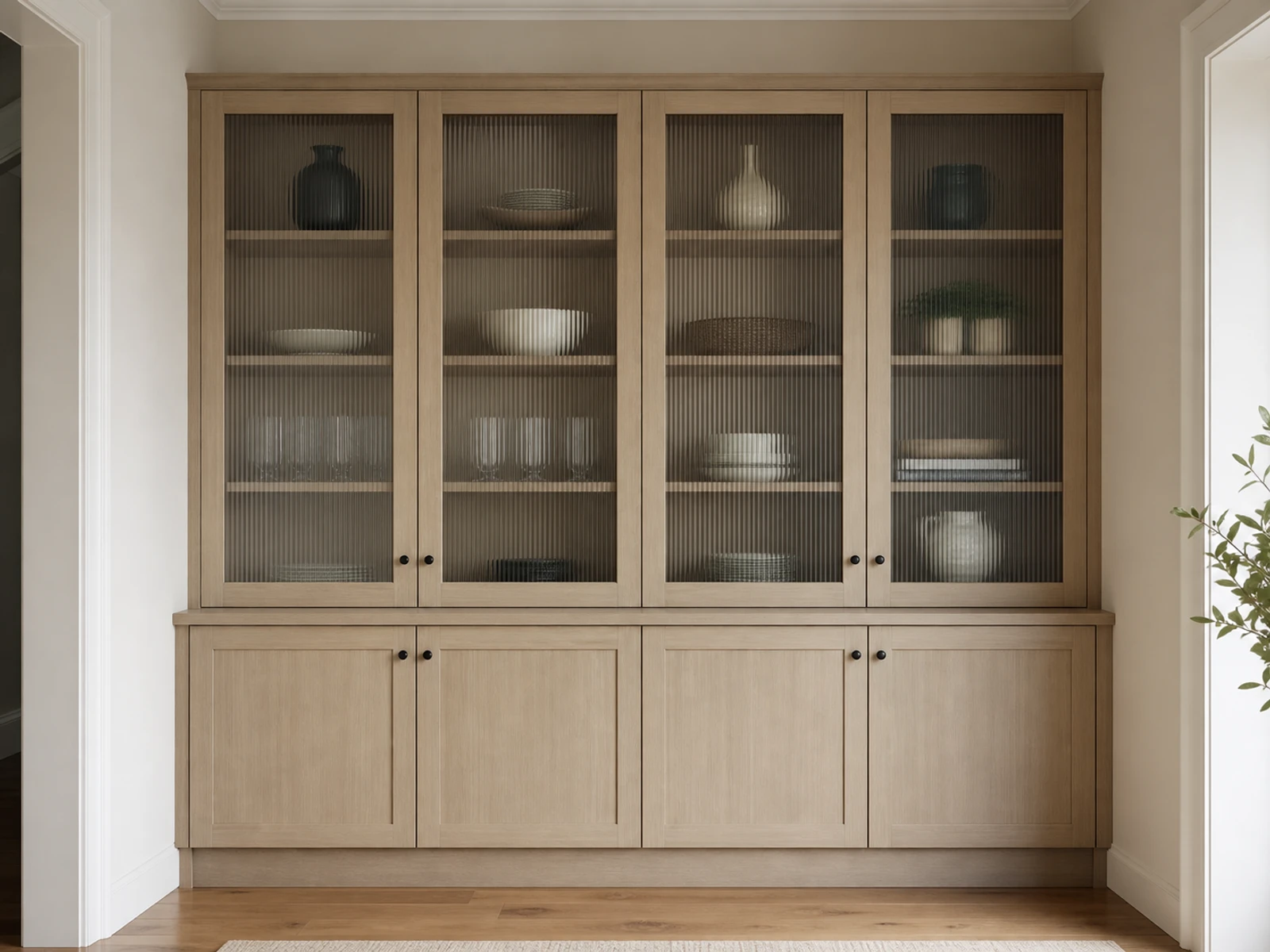
Lighting Should Support the Display, Not Expose the Storage
Lighting can make fluted glass more interesting, but it should be used carefully. A bright light placed directly behind textured glass can make objects and shadows more noticeable. A softer light, placed to the side or along a vertical interior line, can give the cabinet depth without turning every shelf into a stage.
Use soft light behind textured glass
For upper display shelves, warm or neutral cabinet lighting can work well when it supports the objects rather than overpowering them. The goal is not to make the entire cabinet glow. The goal is to help the glass, frame and display pieces read as one controlled composition.
Check the back panel and shelf depth
The back panel affects the lighting result. A reflective or high-contrast back panel may make the interior feel more active. A matte or softly toned back panel can make the contents feel calmer. Shelf depth also matters because objects that sit close to the glass can cast stronger shapes.
In custom production, lighting should be confirmed before the cabinet is built. Wire routes, switch position, shelf thickness, door clearance and maintenance access all need to be considered. These details are not dramatic, but they are what make the finished cabinet usable.
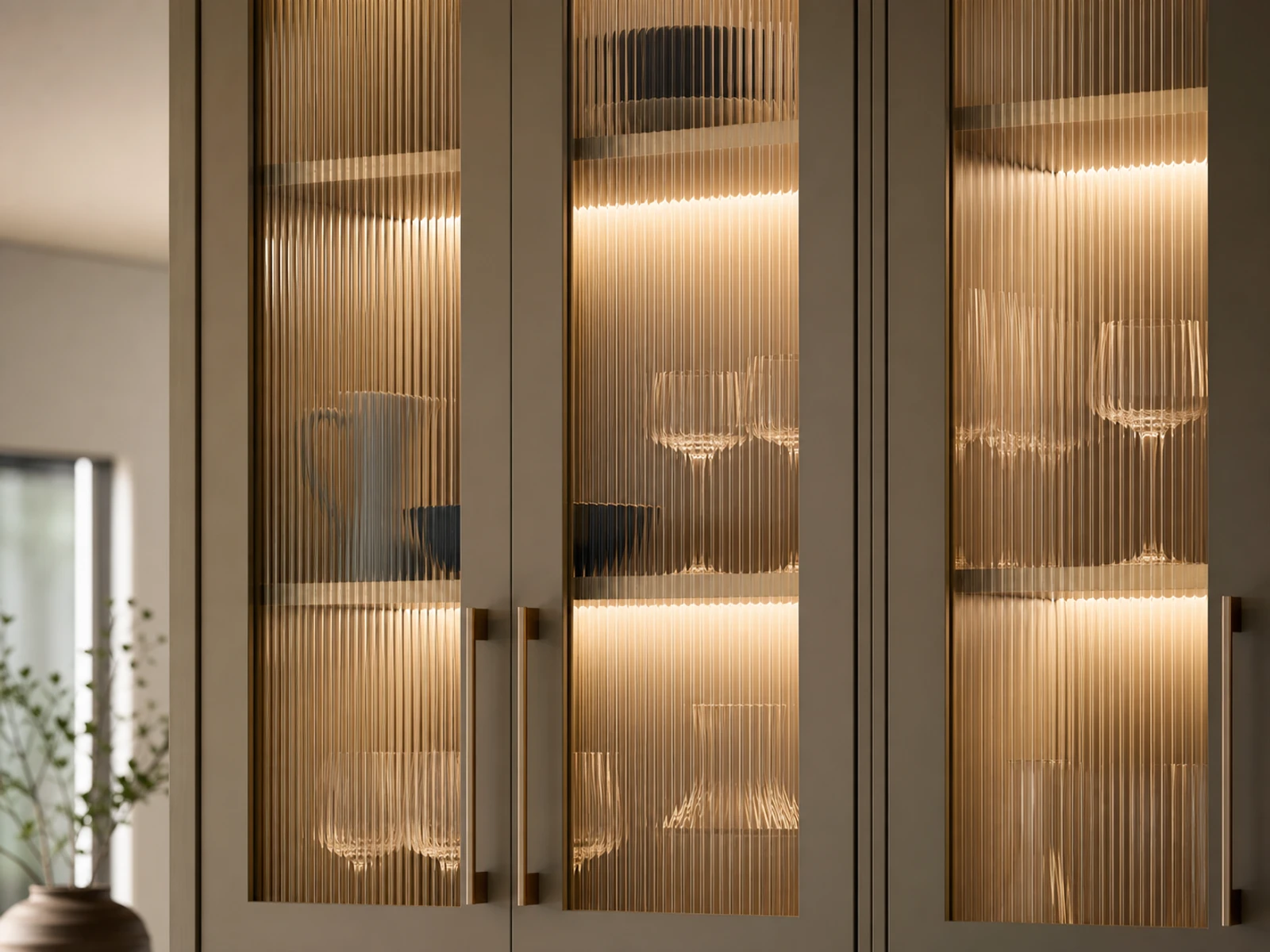
Where This Cabinet Layout Works Best
The upper-glass, lower-closed layout is useful in rooms where display and daily storage overlap.
Dining rooms and sideboard walls
In a dining room, upper fluted glass can show glassware, serving bowls or a small collection of ceramics. The closed base can hold table linens, extra dishes, less decorative serving pieces or seasonal items. This keeps the dining wall useful without making it look like open storage.
Living rooms and hallway storage
In a living room, the cabinet may need to work with books, objects, media accessories and household items. Fluted glass can soften the upper shelves, while the base hides practical storage. In hallways, the same idea is helpful because people see the cabinet in passing. The surface should feel calm at a glance.
Apartments and compact homes
In apartments, one cabinet often has to do several jobs. A full glass cabinet may show too much. A full solid cabinet may feel too heavy. Fluted glass doors above a closed base can provide a middle position: some display, some concealment, and a lighter face than a completely solid storage wall.
What to Confirm Before Custom Production
Before ordering fluted glass cabinet doors for display storage, the cabinet should be reviewed as a complete system. Glass type is only one part of the decision.
Glass sample, frame and hardware
Ask to confirm the glass texture direction, frame material, frame finish, door thickness and hardware type. A narrow metal frame, a painted frame and a wood-look frame can make the same fluted glass feel very different. Hinges and handles should also suit the weight and use frequency of the doors.
Closed base function and drawings
The closed base should be planned around what it will actually store. Adjustable shelves, drawers, internal dividers or deeper compartments may be useful depending on the room. Drawings should show door swing, shelf spacing, lighting position, base height, installation conditions and wall alignment.
For overseas projects, product photos are helpful, but they are not enough. A glass sample, finish confirmation and clear cabinet drawings reduce expectation gaps before production begins.
Frequently Asked Questions
Are fluted glass cabinet doors private?
Fluted glass cabinet doors are more private than clear glass, but they are not the same as solid doors. They blur details and soften outlines, while larger shapes, colors and shadows can still be visible.
Is fluted glass better than clear glass for display storage?
It depends on how much you want to show. Clear glass is better for fully curated display. Fluted glass is better when you want a lighter cabinet face but do not want every detail inside to be seen clearly.
What should be stored behind fluted glass?
Objects with clean shapes usually work best: glassware, ceramics, books with simple spines, bowls or decorative pieces. Mixed small items, packaging and practical household storage usually work better in the closed base.
Why add a closed base to a glass display cabinet?
A closed base hides the items that would make a full glass cabinet look busy. It also gives the cabinet visual weight at the bottom, so the upper glass doors can feel more intentional.
Does lighting work behind fluted glass?
Yes, but it should be soft and planned with the back panel, shelf depth and object placement. Strong lighting can make clutter more visible, so the lighting design should support the display rather than expose everything.
Planning a Calmer Display Cabinet
Fluted glass works best when it has a clear role. It is not meant to hide everything. It is meant to soften the display area, reduce the sharpness of shelf detail and keep the cabinet visually lighter than solid doors.
A closed base completes that role. It gives practical storage a place to go, keeps the lower half of the cabinet steady, and lets the upper glass doors focus on the objects worth showing. For custom cabinetry projects, the best result usually comes from planning the glass, frame, lighting and closed storage together instead of choosing each part separately.
If you are comparing fluted glass cabinet doors for display storage, review the cabinet as an upper-and-lower system: what should be seen, what should be softened, and what should simply be stored out of view.