English
  日本語
日本語  العربية
  Deutsch
  Español
  Français
  한국어
한국어  Português
  Татар теле
  Русский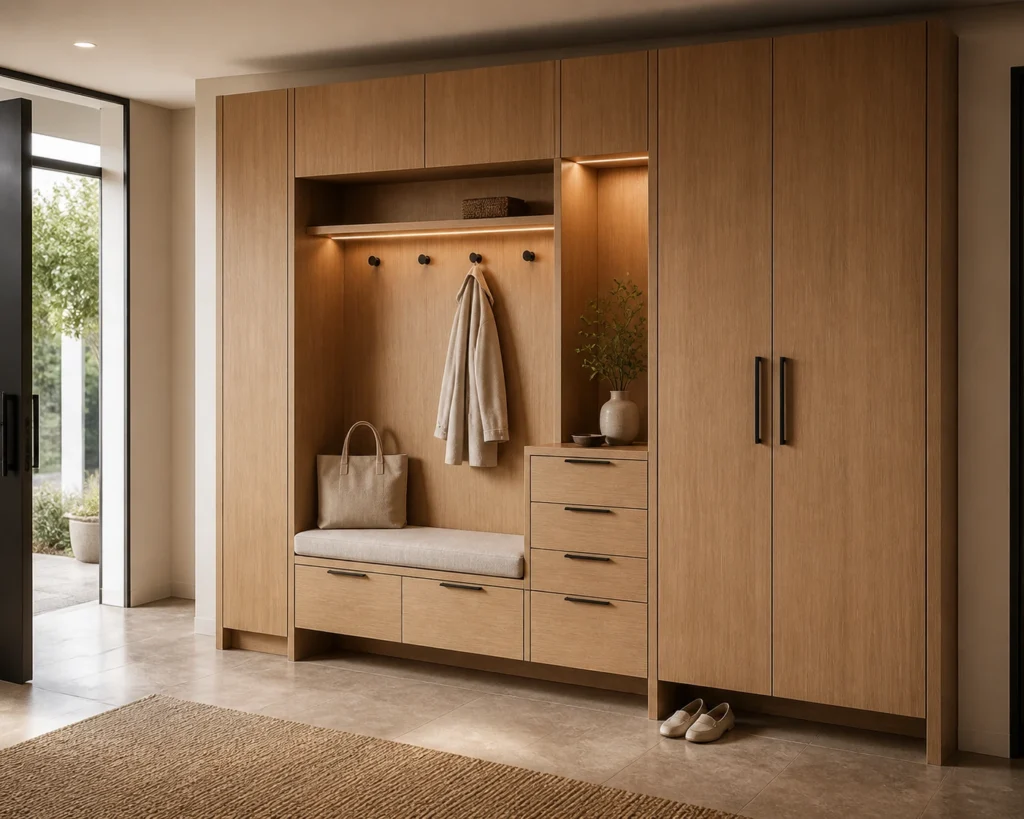
Modern Oak Entryway Cabinet with Bench and Coat Storage
A warm custom entryway cabinet combining bench seating, shoe storage, coat storage, drawers and open daily-use niches for apartments, villas and family homes.
A Warm Entry Cabinet for Daily Arrivals and Departures
This modern oak entryway cabinet with bench is planned for homes that need an organized entrance without making the corridor feel heavy. The layout brings together a sitting bench, lower shoe storage, coat and bag zones, drawers, open niches and closed cabinet areas in one built-in wall system.
As a custom Entrance Cabinet project, the cabinet can be adjusted around wall width, cabinet depth, bench height, door swing, corridor clearance and socket location. For pre-order decisions around shoe zones, bench use and daily clutter control, the related entryway cabinet storage planning guide helps buyers check habits and site conditions before drawings are approved. This keeps it suitable for apartments, villas and family homes where the entryway needs both a calm first impression and practical everyday storage.
Modern Oak Surfaces That Soften the Entrance
The oak finish gives the entryway cabinet a warm and natural surface, which works well in homes where the entrance connects directly to a living room, corridor or stair area. Flat cabinet doors, clean vertical lines and restrained hardware keep the cabinet modern instead of rustic.
Oak tone, grain direction, door panel style and handle detail should be reviewed together with the floor, wall color and nearby interior doors. A lighter oak can keep a narrow entry bright, while a slightly warmer oak can make a villa or family entrance feel more settled.
Bench Seating Built Into the Cabinet Layout
The bench area gives users a defined place to sit while changing shoes, which is especially useful in family homes and apartment entrances. Bench height, width and cushion thickness can be adjusted according to user height, shoe-changing habits and the available entryway width.
The bench should not block the walking path or the opening direction of the main door. During drawing review, it is useful to confirm the distance from the bench edge to the opposite wall, the height of any coat hooks above it and whether the lower shoe cabinet will use swing doors, drawers or open shelves.
Shoe Shelves Planned with Depth and Ventilation
Shoe storage can be planned with closed doors, open shelves, slanted shelves or mixed zones for daily shoes and less-used pairs. Shelf depth, spacing and access should match the shoe types used by the family, including boots, sneakers and slippers.
Ventilation can be supported with narrow gaps, open shelf sections, perforated details or a partially open lower zone. These details should be confirmed before production so the shoe cabinet remains practical while keeping the front elevation clean and aligned with the oak entryway design.
Closed Storage, Hooks and Bag Zones in One System
Coat storage can be handled with a closed tall cabinet, open hooks near the bench or a combination of both. A closed cabinet keeps seasonal coats out of sight, while an open hook rail supports daily jackets, scarves and bags that need quick access.
Hook height, bag shelf position and vertical coat depth should be planned around real family use. For narrow entryways, open hooks can reduce door swing conflicts, while a deeper villa entrance may allow a full-height coat cabinet beside the bench and shoe storage zone.
Daily Storage for Keys, Wallets and Small Accessories
Drawers help keep the entryway organized by giving small items a fixed location. Keys, wallets, sunglasses, pet accessories, shoe-care items and delivery cards can be stored near the bench or open niche instead of spreading across the entrance surface.
A key tray, shallow drawer or open niche can be added near the natural hand-height area. If charging or smart-home accessories are needed, socket position and cable access should be confirmed during measurement so the cabinet can be produced with a clean and serviceable layout.
Drawings, Measurement Review and Overseas Coordination
Sunrise Furnishing can support custom entryway cabinet dimensions, oak finish selection, bench planning, shoe storage structure, hook and drawer layout, packing and overseas project coordination. The most useful starting information includes wall width, ceiling height, cabinet depth, entry door swing, corridor clearance and socket positions.
Before production, the project team should confirm bench height, shoe shelf depth, ventilation details, coat cabinet depth, drawer quantity, handle style and any open niche lighting. Clear drawings and material confirmation help the cabinet fit the site and support daily use after installation.
Frequently Asked Questions
Yes. Bench height and width can be adjusted according to user height, entryway size and the surrounding walking clearance. Cushion thickness and bench depth can also be reviewed during the drawing stage.
Yes. Vent gaps, open shelf sections or perforated details can be planned depending on the cabinet elevation and the level of visibility the project requires.
Yes. The cabinet can include closed coat storage, open hooks or both. The choice depends on entryway depth, door swing, daily jacket use and whether the family prefers hidden or open storage.
Yes. Oak gives the entrance a warm surface and works well in family homes, apartments and villas. The final finish should be matched with the floor, wall color, lighting and expected daily cleaning.
Wall width, ceiling height, cabinet depth, bench area, door swing, corridor clearance and socket location should be measured. It is also useful to confirm skirting, wall unevenness and any nearby switches.