English
  日本語
日本語  العربية
  Deutsch
  Español
  Français
  한국어
한국어  Português
  Татар теле
  Русский
 A walk-in closet can have lights and still feel dark. That is why many homeowners search for walk in closet lighting ideas after realizing that a brighter ceiling light does not always solve the problem. The room may look bright when you stand at the entrance, but the shelves, drawers, hanging sections, corners, mirrors, and glass door wardrobes can still feel shadowed in daily use.
The real issue is usually not the number of lights. It is the relationship between lighting and cabinet structure. A custom wardrobe has depth, shelves, doors, drawers, clothes, accessories, finishes, and sometimes glass panels. Each of these can block, absorb, reflect, or redirect light. If lighting is planned only as a decorative layer, the closet may look beautiful in photos but still feel frustrating when you are trying to find a black shirt, choose a tie, check fabric color, or open a drawer.
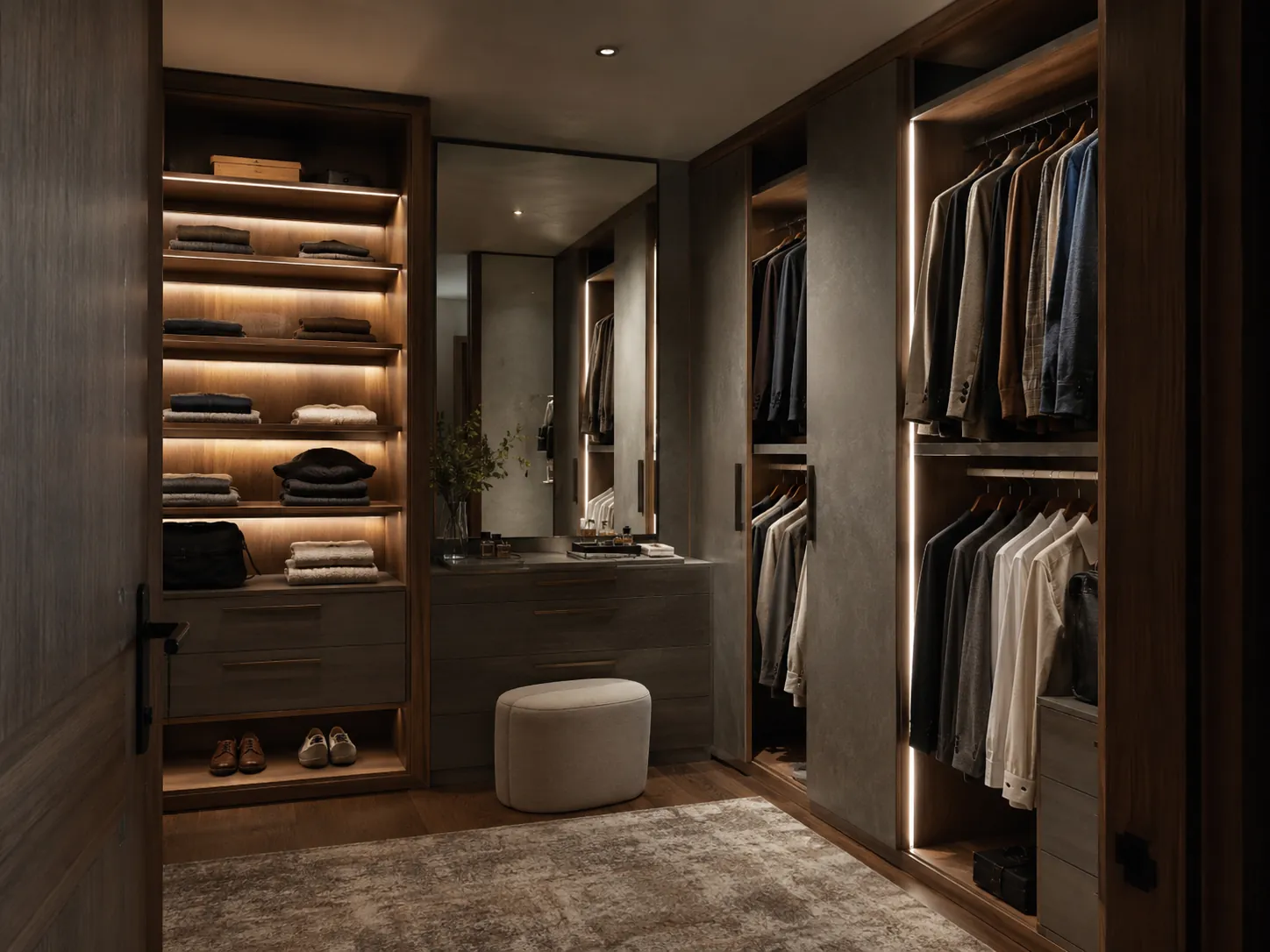
For a custom walk-in closet, lighting should be planned around how the wardrobe is built and how the space is used. That means thinking about dark shelves, drawer interiors, hanging rods, mirror zones, glass glare, dark cabinet finishes, sensor positions, wiring paths, and LED grooves before the final cabinet design is confirmed.
Quick answer: A walk-in closet usually still feels dark because the light does not reach the actual storage zones. Ceiling lights can brighten the room, but shelves, hanging clothes, drawers, corners, glass doors, mirrors, and dark finishes need more targeted lighting.
A Bright Ceiling Light Does Not Mean a Bright Closet
A ceiling light can brighten the room, but it often stops at the surface of the closet. It fills the walkway, the ceiling, and the open space between cabinets. What it does not always reach is the inside of the wardrobe.
This is why a walk-in closet may feel bright at first glance but still feel dark when you begin using it. Deep shelves create shade. Long hanging clothes block top-down light. Tall cabinet doors can cast shadows. Drawer interiors become dark pockets. If the lighting plan depends only on one central ceiling fixture, the room may be lit, but the storage zones remain underlit.
For custom wardrobes, this matters because the cabinet itself changes how light behaves. A wardrobe is not an empty room. It is a built environment made of panels, shelves, rails, doors, compartments, and finishes. Every surface can shape the final lighting effect.
A common mistake is to solve every dark closet problem by adding a stronger ceiling light. That may make the room brighter, but it can also create glare, especially near mirrors or glass wardrobe doors. Meanwhile, the lower shelves and drawers may still be difficult to see. A better lighting plan starts by asking where the shadows are formed.
Common mistake: Do not solve every dark closet problem by adding a stronger ceiling light. A stronger light may create glare while shelves and drawers remain dark.
The Darkest Areas Are Usually Inside the Storage Zones
The darkest parts of a walk-in closet are usually not in the middle of the room. They are inside the storage zones. That is why useful closet lighting should begin with a simple inspection: where do you actually lose visibility?
Deep shelves are one of the first problem areas. Folded clothes, bags, and shoe shelves can sit far back inside the cabinet. A ceiling light may hit the front edge of the shelf but fail to illuminate the back. The deeper the shelf, the more obvious this problem becomes.
Hanging sections are another common shadow zone. Clothes are not flat objects. They overlap, move, and absorb light. Long garments can block light from reaching the back panel or lower storage below. If the only light comes from above, the front row of clothing may look visible while the inner area remains dim.
Drawers create a different problem. When a drawer opens, your body and the drawer front may block overhead light. Small accessories such as watches, jewelry, belts, scarves, ties, and sunglasses need direct visibility. Without drawer lighting, these areas can become little shadow boxes.
Corner cabinets and tall wardrobe units also deserve attention. Corners are naturally harder to light because the cabinet panels create deeper angles. Tall units can look dramatic, but without vertical lighting or internal shelf lighting, the upper and lower zones may feel disconnected.
Better Walk In Closet Lighting Ideas Start with How You Use the Space
The best walk in closet lighting ideas do not begin with the lamp. They begin with the action. What do you need to do inside the closet every day?
If you need to find clothes quickly, the lighting should help you see the full height and depth of the hanging zone. If you need to compare fabric colors, the lighting should be even enough to avoid strong shadows or color distortion. If you store accessories in drawers, the light should reach into the drawer when it opens. If you use the mirror for daily dressing, the light should help your face and clothing appear clear without harsh glare.
This user-action approach is more useful than simply choosing a decorative fixture. A chandelier may look attractive in the center of a closet, but it cannot replace lighting inside deep shelves or drawers. A beautiful pendant may add atmosphere, but it will not automatically help you find a dark belt in a drawer or see the back row of shoes.
For a custom wardrobe, lighting should be matched to the function of each zone:
- Shelf lighting helps folded clothes, bags, and shoes remain visible.
- Vertical lighting helps hanging sections, especially long garment areas.
- Drawer lighting helps small accessories and shallow compartments.
- Mirror lighting helps daily dressing.
- Display lighting helps glass-door wardrobes and open compartments feel refined.
This is where custom wardrobe lighting becomes different from ordinary room lighting. The goal is not only to make the room bright. The goal is to make each storage action easier.
Shelf Lighting Fixes What Ceiling Lights Cannot Reach
Shelf lighting is one of the most practical ways to solve a dark walk-in closet. It brings light directly into the storage area instead of relying on light to travel from the ceiling into a deep cabinet.
Under-shelf LED lighting is especially useful for folded clothing areas. When placed correctly, it can illuminate the shelf below without exposing the light source too strongly. This helps users see the texture, color, and stack of clothing more clearly.
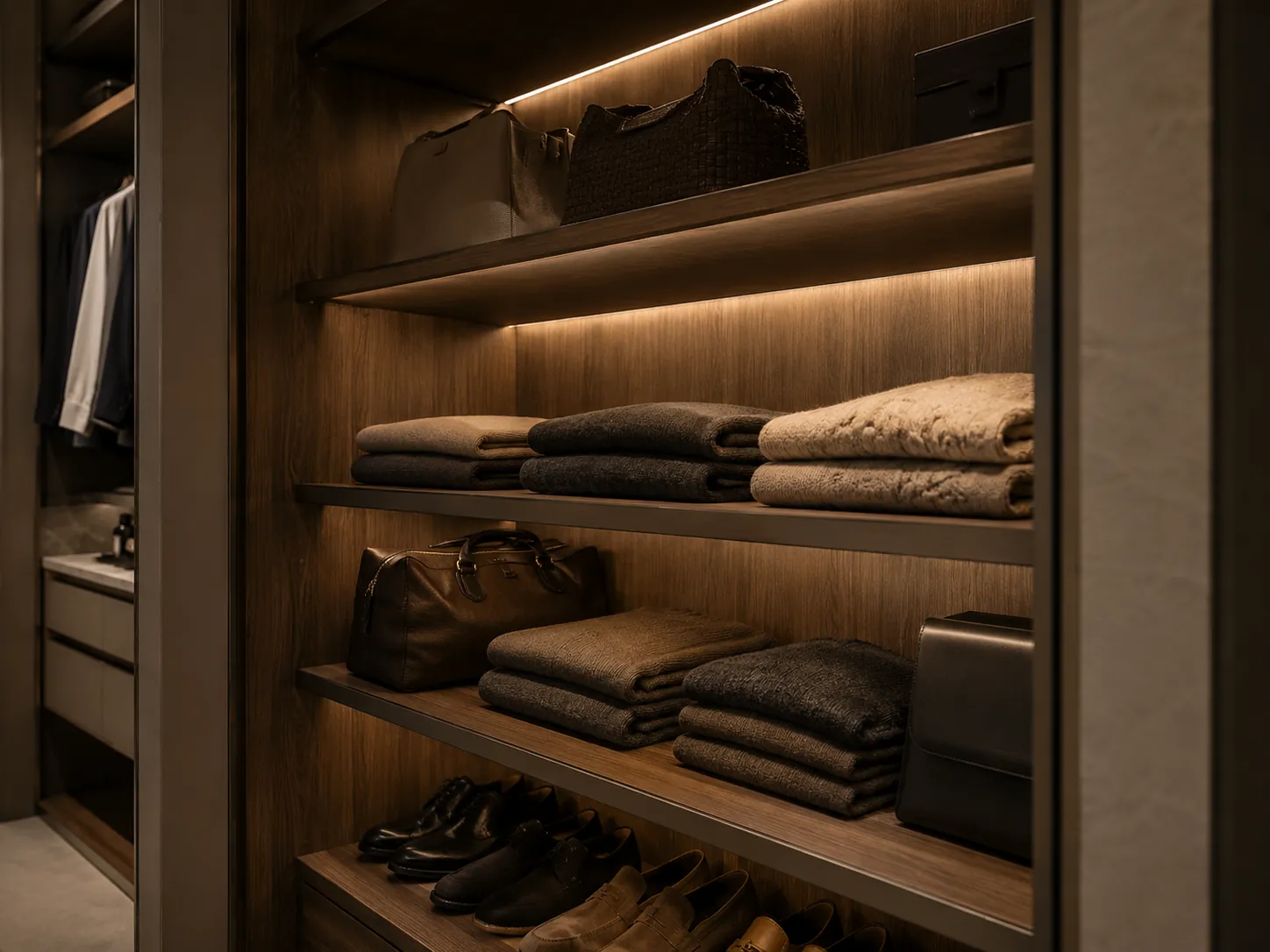
For bag, shoe, and accessory shelves, shelf lighting can also create a more refined display effect. However, the purpose should not be only decoration. Display lighting should still make items easier to identify and reach. If a shelf looks beautiful but casts shadows on the items below, the lighting is not fully working.
In custom wardrobe production, LED grooves should be discussed before the cabinet is built. A hidden LED strip usually needs a planned groove, channel, diffuser, wiring path, and power connection. If these details are considered too late, the final result may require surface-mounted lights or visible wires, which can reduce the clean appearance of a high-end wardrobe.
This is why shelf lighting should be treated as part of cabinet planning, not as a last-minute accessory.
Hanging Areas Need Vertical Light, Not Just Light from Above
Hanging areas often look simple on a drawing, but they create many lighting problems in real use. Shirts, coats, dresses, and trousers hang in layers. Once the wardrobe is filled, the clothing itself can block light from above.
This is why top lighting alone may not be enough for hanging sections. A light placed only at the top of the cabinet can illuminate the upper part of the clothes, while the lower area remains shadowed. In long garment sections, this can make it difficult to distinguish dark fabrics or see details near the lower part of the clothing.
Vertical LED lighting can help by distributing light along the side of the cabinet. When planned into the side panel or inner frame, it can make the hanging area feel more evenly lit. It also helps deep wardrobe sections because the light is not trying to reach everything from a single top point.
Dark finishes make this even more important. Walnut, dark oak, charcoal gray, black, and deep bronze finishes can feel rich and architectural, but they also absorb more light than pale finishes. In these closets, a balanced lighting plan is essential. One strong light may create contrast, but layered light can make the whole wardrobe easier to use.
A manufacturer-informed lighting plan should consider the hanging rod position, cabinet depth, side panel design, LED channel location, and whether the light source will be visible when the user stands in front of the wardrobe.
Drawer Lighting Matters More Than Many People Expect
Drawer lighting is often underestimated. Many homeowners focus on the main closet area first, then realize later that drawers are some of the hardest places to see.
A drawer is different from an open shelf. When it opens, the drawer front, the cabinet frame, and the person standing in front can all block overhead light. If the drawer stores small accessories, the problem becomes more noticeable. Watches, jewelry, belts, ties, sunglasses, cosmetics, and small organizers need clear, close lighting.
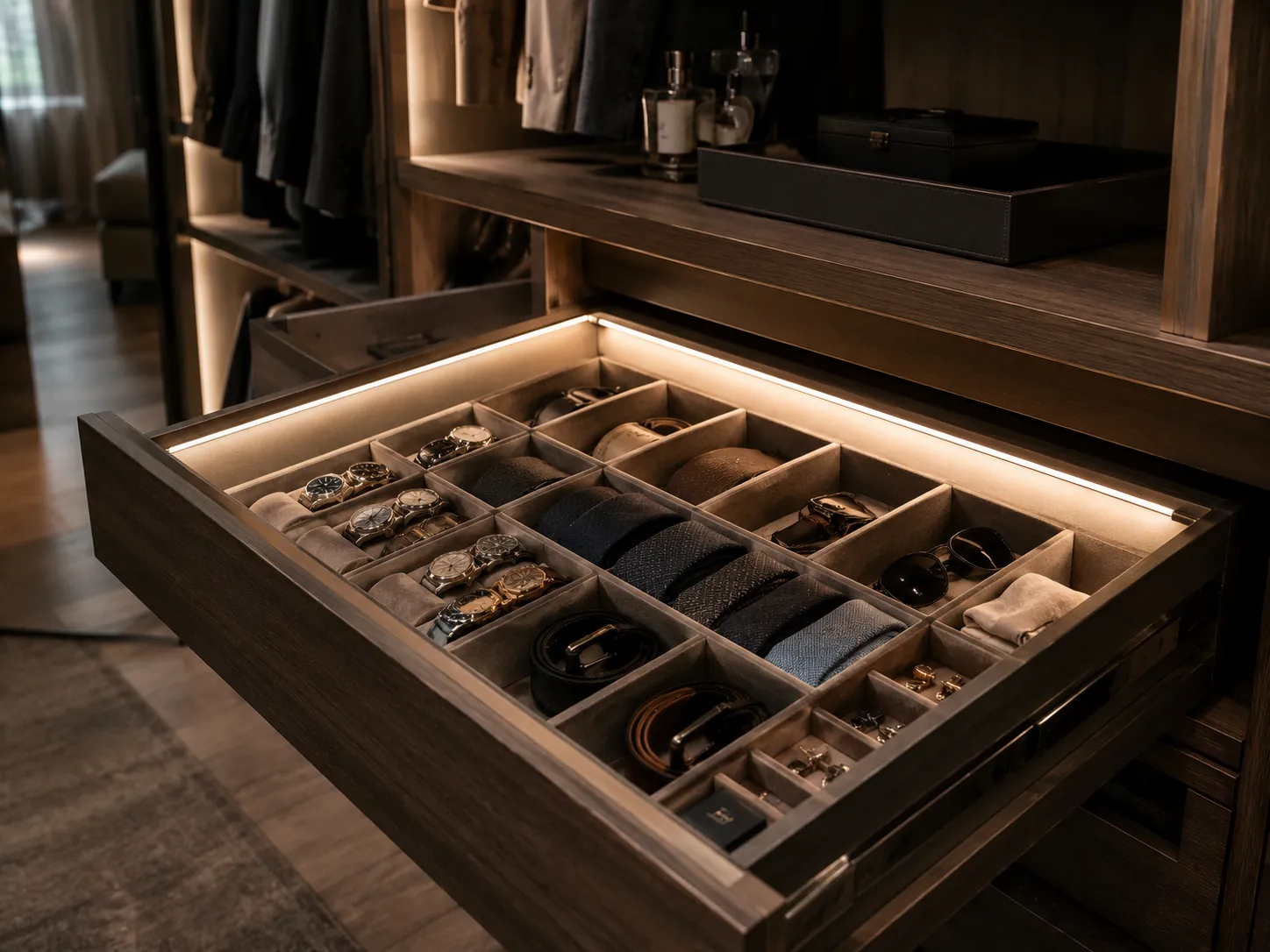
Integrated drawer lighting can make these areas easier to use. For high-end custom wardrobes, it also makes the closet feel more considered. The light should be soft and controlled, not harsh. A shallow drawer does not need aggressive brightness. It needs enough direct light to reveal small items without glare.
Drawer sensors should be planned before production whenever possible. Sensor position, wiring route, drawer box structure, and transformer access can all affect the final result. If the drawer lighting is added after the wardrobe is installed, the solution may be less clean and harder to maintain.
For a luxury walk-in closet with accessory drawers, this detail can separate a beautiful wardrobe from a practical one.
Glass Doors and Mirrors Can Make Lighting Feel Harsh
Glass doors and mirrors can make a walk-in closet feel more open and refined, but they can also create lighting problems. A light that looks soft in an open cabinet may become harsh when reflected in glass.
Direct LED strips are one of the main causes. If a visible LED strip faces the glass door or the user’s eye line, the reflection can feel sharp. This can make the closet look less refined, even if expensive materials are used. The issue is not the LED itself. It is the placement, angle, diffuser, and cabinet detail around the light.
Mirror lighting needs a different approach. A mirror in a dressing area should help the user see clothing, face, and proportions clearly. If light comes only from above, it can create shadows. If light is too strong from one side, it can distort the dressing experience. Softer, balanced lighting around the mirror usually feels more useful.
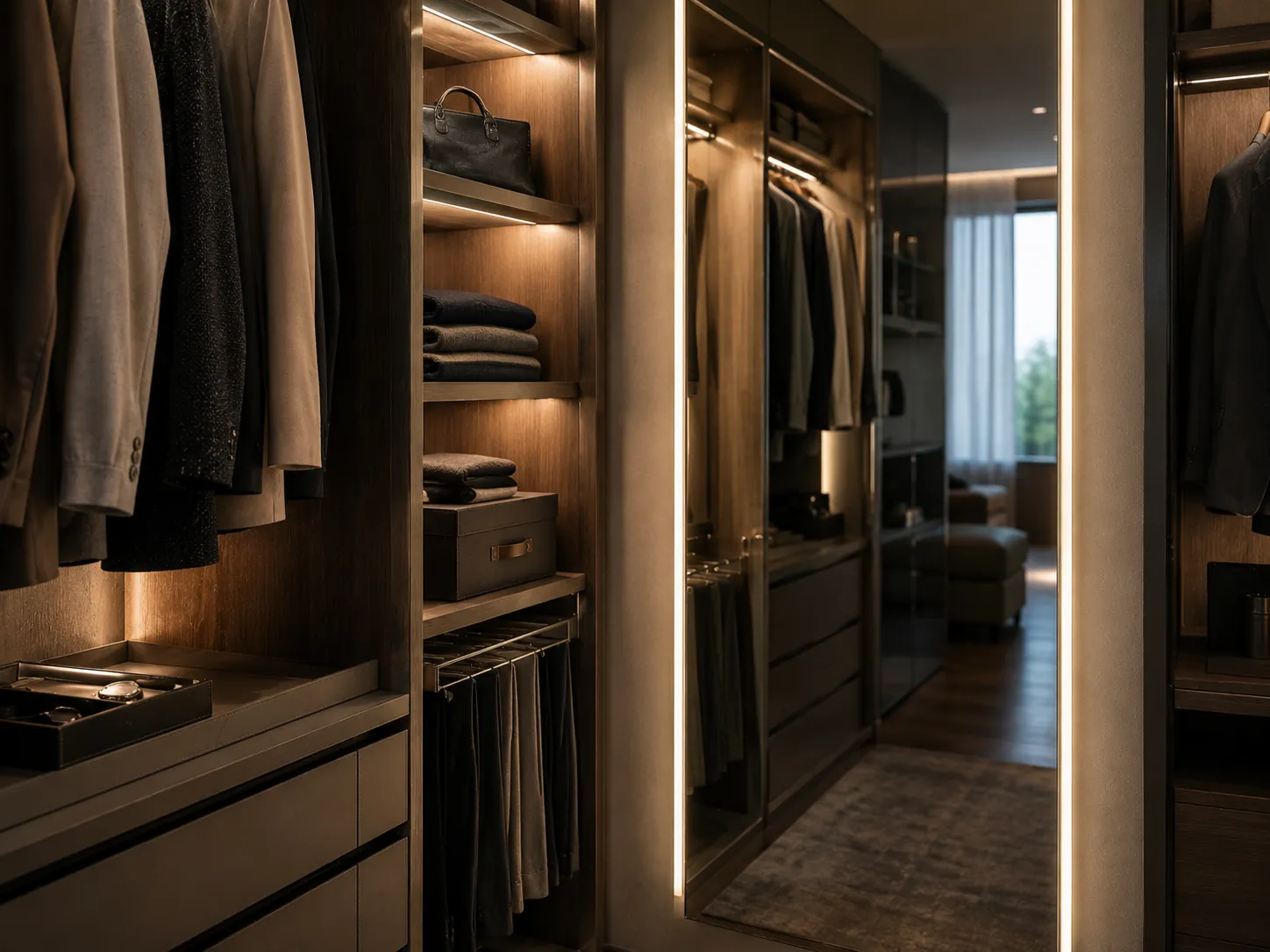
Glass-door wardrobes also need careful display lighting. The goal is to highlight clothes, bags, or accessories without turning the cabinet into a bright display box. High-end closet lighting often feels quiet. It reveals texture and shape without shouting.
For custom wardrobes, glass glare should be discussed early. Door type, glass tone, LED position, cabinet depth, and display shelf layout all influence the final effect.
Dark Wood, Black, and Deep Gray Closets Need a Different Lighting Plan
Dark wardrobes are popular in high-end homes because they feel calm, architectural, and refined. Dark wood, black, charcoal, and deep gray finishes can make a walk-in closet look more private and luxurious. But they also absorb more light.
This is why dark closets need a different lighting plan from white or pale wood wardrobes. A bright ceiling light may create strong contrast, but the cabinet interiors can still feel heavy. The goal is not to flood the room with light. The goal is to layer the light so that important storage zones remain visible.
For dark finishes, side lighting and shelf lighting often work better together. Shelf lighting helps horizontal storage areas. Vertical lighting helps hanging zones. Mirror lighting helps daily dressing. Drawer lighting helps small accessories. When these layers are balanced, the wardrobe can keep its deep, quiet atmosphere without becoming difficult to use.
The material finish should also be considered. A matte dark surface absorbs light differently from a glossy or reflective surface. Glass, metal trim, mirrored panels, and stone surfaces can reflect light in different ways. This is why lighting should be reviewed together with cabinet finish samples, not after all materials are finalized.
Dark finish note: Dark wood, black, and charcoal wardrobes often need more layered lighting because dark surfaces absorb more light than light-colored finishes.
What to Check Before Finalizing Walk-In Closet Lighting
Before confirming a custom wardrobe design, the lighting plan should be reviewed with the cabinet structure. This does not mean every closet needs complicated lighting. It means the main dark zones should be identified before production.
Start with the shelves. Which shelves are deep? Which ones will store dark clothing, shoes, bags, or folded items? These areas may need shelf lighting or open compartment lighting.
Then look at the hanging sections. Are they short hanging zones, long garment zones, or double hanging areas? Will clothes block the light? Would side lighting improve visibility?
Next, review the drawers. Do accessory drawers need integrated lighting? Will the drawer lighting be sensor-controlled? Where will the wiring go?
Glass and mirrors should also be checked. Will the lighting reflect directly on glass doors? Will the mirror area create shadows when someone is dressing? Is the light soft enough for daily use?
Finally, ask about technical access. Where will LED grooves be hidden? Can the transformer be reached later if maintenance is needed? Have switch and sensor positions been confirmed? Has the wiring path been coordinated with the cabinet design and local installation conditions?
A practical walk-in closet lighting review may include:
- Which shelves still look dark?
- Which hanging areas need side lighting?
- Do drawers need sensor lighting?
- Where are LED grooves and wires hidden?
- Can the transformer be accessed later?
- Will glass doors or mirrors create glare?
- Does the lighting plan suit the cabinet finish?
- Has the lighting been confirmed before wardrobe production?
These questions make the lighting plan more useful and reduce the risk of last-minute changes.
Frequently Asked Questions
Why does my walk-in closet still feel dark after adding lights?
Your walk-in closet may still feel dark because the light does not reach the storage zones. Ceiling lights can brighten the room, but shelves, hanging clothes, drawers, corners, and dark cabinet finishes can still create shadows. A better solution is to plan lighting around each wardrobe zone, not only around the ceiling.
What is the best lighting for deep closet shelves?
Deep closet shelves often need under-shelf LED lighting or hidden shelf lighting. This brings light directly into the cabinet instead of relying on overhead light. For custom wardrobes, LED grooves, wiring, and diffusers should be planned before production for a cleaner result.
Are LED strips a good idea for walk-in closets?
LED strips can be a good option for walk-in closets when they are properly hidden, diffused, and positioned. They work well for shelves, side panels, display areas, and some drawer systems. However, exposed LED strips can look harsh or create glare, especially near glass doors and mirrors.
Should drawer lighting be included in a custom wardrobe?
Drawer lighting is useful when the wardrobe includes jewelry, watches, belts, ties, sunglasses, or other small accessories. It helps the user see items clearly when the drawer opens. Sensor position, wiring, and drawer structure should be confirmed before production.
How do I avoid glare on glass wardrobe doors?
To reduce glare, avoid placing visible LED strips where they shine directly toward the glass or the user’s eye line. Use hidden channels, diffusers, softer lighting, and careful side or shelf lighting. The glass type, cabinet depth, and LED position should be reviewed together.
Final Thoughts: A Walk-In Closet Needs More Than Light
A walk-in closet does not become useful simply because it has lights. It becomes useful when lighting is planned around the way the wardrobe is built and used.
If shelves are deep, they need targeted light. If drawers store small accessories, they may need integrated drawer lighting. If the closet uses glass doors, mirrors, or dark finishes, glare and shadow should be considered early. If LED grooves, sensors, wiring, and transformer access are required, they should be discussed before the wardrobe is produced.
For homeowners, designers, contractors, and project buyers planning a custom walk-in closet, lighting should be part of the cabinet conversation from the beginning. Sunrise Furnishing can support custom closet and wardrobe planning with cabinet structure, storage zones, material finishes, and built-in lighting details considered together before production.