English
  日本語
日本語  العربية
  Deutsch
  Español
  Français
  한국어
한국어  Português
  Татар теле
  Русский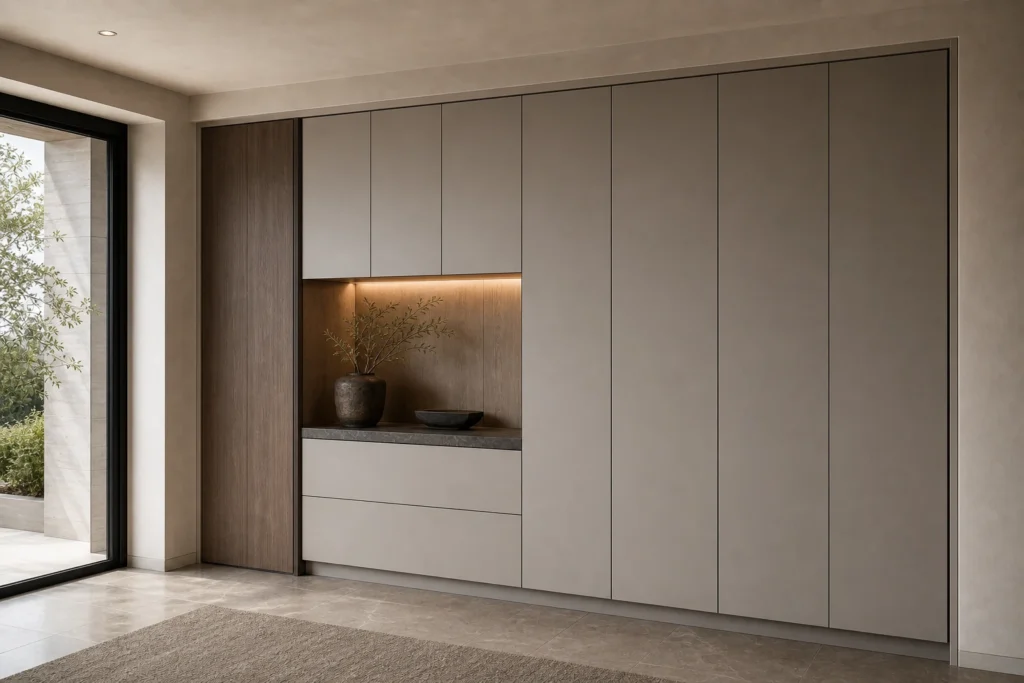
Built In Entryway Cabinet for Architectural Storage
Flush, floor-to-ceiling cabinetry planned around wall recesses, circulation, and the surrounding interior architecture.
Cabinetry Integrated with the Architecture
A built in entryway cabinet is designed as part of the architecture rather than placed in front of it. Floor-to-ceiling proportions, flush door lines, and a controlled open niche create a composed elevation while using the wall depth for practical storage.
Planning the Recess and Finished Alignment
Accurate planning considers recess width, finished floor level, ceiling condition, wall straightness, skirting, switches, and nearby door frames. Fillers, end panels, and shadow gaps are coordinated so the installed cabinet relates cleanly to the surrounding surfaces.
A Quiet Material and Door Language
Smoked oak, muted lacquer, dark metal reveals, and a stone landing shelf create depth without visual clutter. Handleless full-height doors support the integrated appearance, while the illuminated niche provides a deliberate focal point.
Hidden Storage Behind a Flush Elevation
Behind the calm exterior, the cabinet can contain adjustable shoe shelves, hanging space, drawers, bags, cleaning items, and seasonal storage. Internal zones are planned to use the recess efficiently and keep the entrance visually ordered.
Technical Coordination for Built-In Installation
Built-in cabinetry requires clear dimensions and installation tolerances. Shop drawings can identify cabinet modules, fillers, service points, and opening clearances so the design can be reviewed before manufacturing and site installation.
Custom Manufacturing for Overseas Projects
Sunrise Furnishing works with overseas homeowners, designers, and project teams to translate architectural concepts into manufacturable cabinetry. Drawings, finish selections, and packaging can be coordinated according to the project scope.
Frequently Asked Questions
Measurements should include the recess width, height, and depth at multiple points, together with floor, ceiling, skirting, door-frame, switch, and service conditions. Architectural drawings and site photos are useful, while final site verification is recommended before confirming production dimensions.
A flush appearance can be planned through coordinated cabinet depth, fillers, end panels, door thickness, and shadow gaps. The final result also depends on site preparation and installation accuracy, so the cabinet and wall conditions should be reviewed together.
The interior can include adjustable shoe shelves, coat hanging, drawers, bag storage, utility compartments, and seasonal storage. The arrangement is customized according to cabinet depth, household needs, and any structural or service restrictions inside the recess.
Yes. Concealed LED lighting can be planned for an open niche or selected interior zones, subject to the electrical arrangement and local installation requirements. Power points, switches, drivers, and cable routes should be confirmed during technical coordination.
Please provide architectural drawings, verified dimensions, finish references, desired functions, site photos, and installation expectations. This information allows the cabinet modules, tolerances, packaging, and documentation to be developed around the project conditions.
Plan the Cabinet Around Your Entrance
Share the entrance dimensions, drawings, preferred finishes, and storage requirements to begin a focused custom cabinetry discussion.